

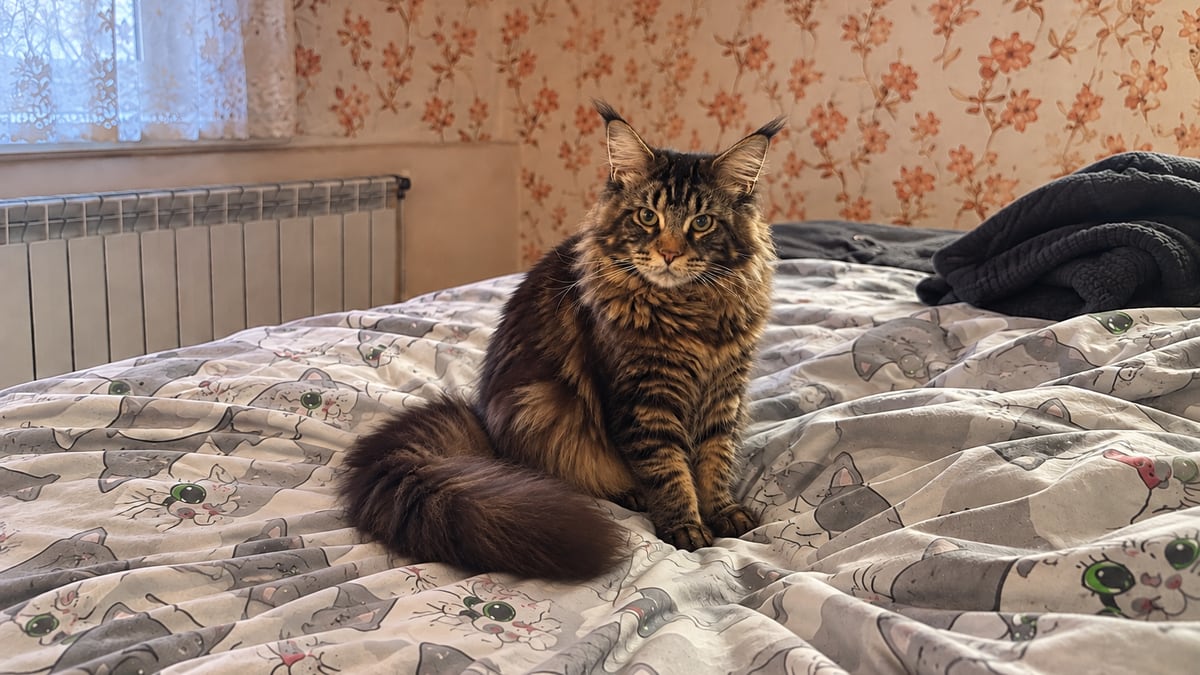
The short answer
By International Cat Care’s chart, a cat’s first year equals about 15 human years, and at two a cat is 24. After that, every cat year adds 4 human years: a 10-year-old cat is about 56, and a 15-year-old about 76. The 2021 AAHA/AAFP vet guidelines count a cat as a senior from 10; International Cat Care and Cats Protection start at 11.
How to convert cat years to human years
International Cat Care puts the rule in one line: the first two years of a cat’s life equal 24 human years, and every year after that equals 4. So start at 24 for a two-year-old and add 4 for each birthday after that. A 6-year-old cat is 40, and an 11-year-old is 60.
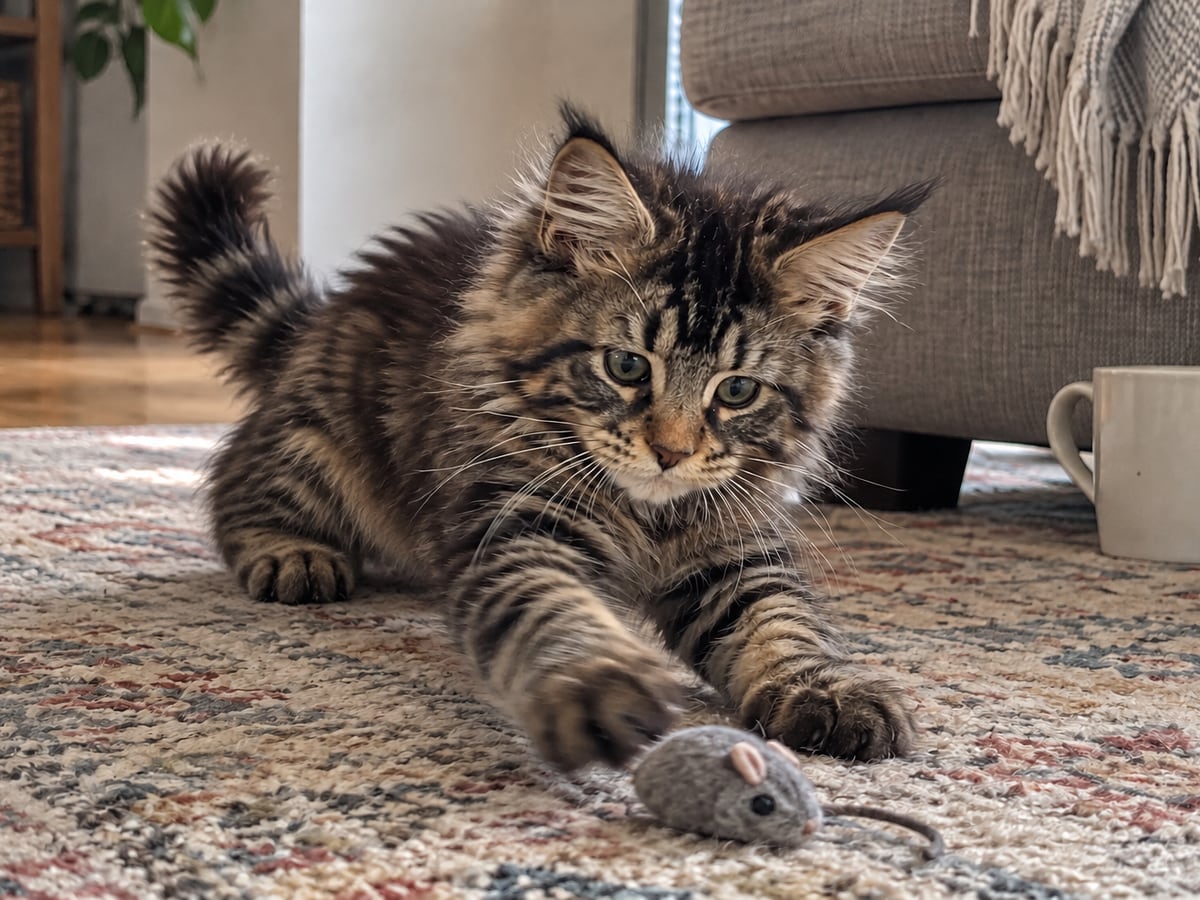
The first two years count for so much because that is when a cat grows up. Cats Protection explains that cats mature much more in their first year than in the rest of their lives, and compares it to people, who age more and more slowly as the years go by. By its chart, a kitten is roughly 1 in human years at one month, 10 at six months and 15 at twelve months.
You may have heard that one cat year equals seven human years. The charts from International Cat Care and Cats Protection don’t work that way. By the seven-year rule a one-year-old cat would be 7, while both charts put them at 15. A two-year-old would be 14, and the charts say 24.
Cat years to human years chart
International Cat Care’s chart runs from one month to 25 years. The third column shows the life stage the charity gives each age.
By the chart, a 15-year-old cat is 76 in human years and a 20-year-old is 96. Cats Protection gives the same figure at 21: a human age of 100.
| Cat’s age | Human age | Life stage |
|---|---|---|
| 0–1 month | 0–1 year | Kitten |
| 2 months | 2 years | |
| 3 months | 4 years | |
| 4 months | 6 years | |
| 5 months | 8 years | |
| 6 months | 10 years | |
| 7 months | 12 years | Junior |
| 12 months | 15 years | |
| 18 months | 21 years | |
| 2 years | 24 years | |
| 3 years | 28 years | Adult |
| 4 years | 32 years | |
| 5 years | 36 years | |
| 6 years | 40 years | |
| 7 years | 44 years | Mature |
| 8 years | 48 years | |
| 9 years | 52 years | |
| 10 years | 56 years | |
| 11 years | 60 years | Senior |
| 12 years | 64 years | |
| 13 years | 68 years | |
| 14 years | 72 years | |
| 15 years | 76 years | Super senior |
| 16 years | 80 years | |
| 17 years | 84 years | |
| 18 years | 88 years | |
| 19 years | 92 years | |
| 20 years | 96 years | |
| 21 years | 100 years | |
| 22 years | 104 years | |
| 23 years | 108 years | |
| 24 years | 112 years | |
| 25 years | 116 years |
The life stages of a cat
The 2021 feline life stage guidelines from two US veterinary associations, AAHA and AAFP, divide a cat’s life into four age-based stages: kitten from birth up to 1 year, young adult from 1 to 6 years, mature adult from 7 to 10, and senior from 10 years on. An end-of-life stage can come at any age.
International Cat Care and Cats Protection use six stages, and their senior stage starts a year later, at 11. In both, a cat is mature from 7 to 10, senior from 11 to 14 and super senior from 15. Cats Protection also calls cats of 15 and over geriatric. So whether a 10-year-old cat counts as a senior depends on whom you ask.
How long do cats live on average?
Cats in the UK live 11.7 years on average. The figure comes from a 2024 VetCompass study at the Royal Veterinary College, which looked at 7,936 cats under veterinary care that died in 2019. International Cat Care puts the average at around 12 to 14 years and says it’s not unusual for some cats to reach their late teens or early twenties.
In the same study, female cats lived 1.3 years longer than males, 12.5 years against 11.2, and crossbred cats lived 11.9 years against 10.4 for purebred cats. The Burmese and the Birman lived longest, at 14.4 years, and the Sphynx shortest, at 6.7.
Cats Protection also notes that neutered cats live on average 1.07 years longer than cats who aren’t neutered.
How to tell how old a cat is
If you’ve adopted an adult cat and nobody knows their age, ask your vet. Cats Protection says a vet gives the best estimate, from the cat’s teeth, eyes, coat and body condition.
Kittens are easier, because they change week by week. Their eyes open between 5 and 14 days old, and a kitten whose eyes have turned grey, green or yellow is likely to be seven weeks or older, Cats Protection says. PDSA adds that adult teeth begin to appear at 3 months, and all 30 should be through by around 6 to 7 months.
What changes as your cat gets older
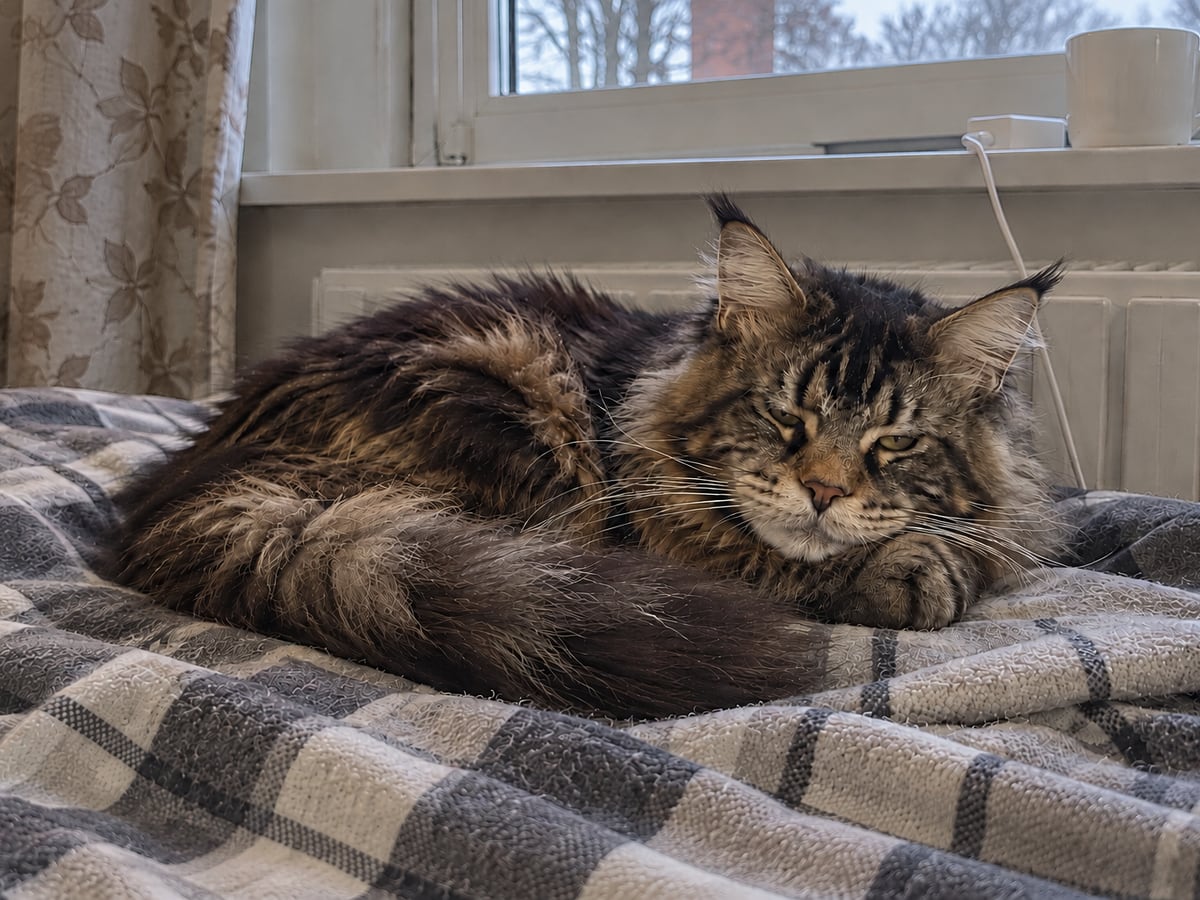
Older cats sleep more and are generally less active. International Cat Care says they hunt less and spend less time outside. They may be less keen to play, groom themselves less, become fussy with food or eat less, and be more vocal. Their sense of smell and taste fades too.
Cats Protection’s list of usual changes adds a few details. Light sleep may increase while deep sleep decreases, muscle tone drops, and an older cat may pee or poo more or less often than before. Some cats become more dependent on you. Some of these changes are part of ageing and others can be signs of a health problem, Cats Protection says, so tell your vet about any you notice.
Several of them can also be signs of arthritis. Among its main signs, International Cat Care lists jumping up or down less often or refusing to, being slow on the stairs, stiff legs after sleeping or resting, accidents outside the litter tray, sleeping more, playing less and grooming less. Cats Protection says a coat that looks more and more unkempt can be a sign of pain in the joints or the mouth.
Teeth need watching too. Cornell Feline Health Center reports that between 50 and 90% of cats older than four have some form of dental disease. A cat with inflamed gums may be hesitant to eat or stop eating, turn their head oddly while eating, drool or have bad breath.
How often should an older cat see the vet?
FelineVMA, formerly the AAFP, recommends a check-up at least once a year for kittens, young adults and mature adults, and at least every six months for seniors. Cats Protection says elderly cats usually need check-ups more often than younger ones, and from around seven or eight years old your vet may recommend one twice a year.
International Cat Care says that as cats get older, their weight, urine and blood pressure must be checked at every visit. One reason is the kidneys. Chronic kidney disease is one of the most common diseases in older cats, though estimates vary: Cornell Feline Health Center says it affects up to 40% of cats over 10 and 80% of cats over 15, while International Cat Care puts it at around 20 to 50% of cats over 15.
What to write down for the vet
Your vet sees your cat at check-ups, and you see them every day. Cats Protection suggests noting any changes before the appointment: appetite or thirst, activity, the state of the coat. It also suggests filming your cat going up and down the stairs, which can help the vet spot arthritis.
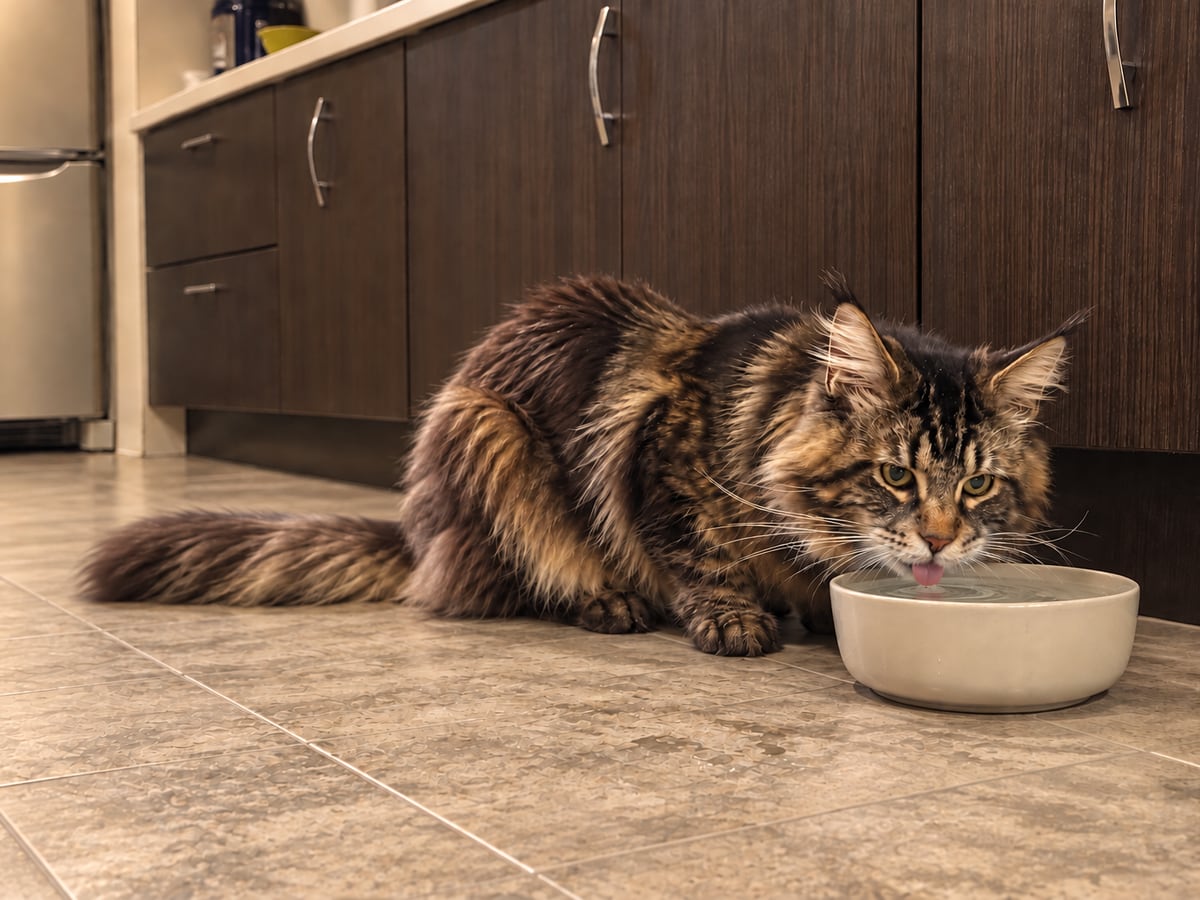
Watch food and water closely. Cats Protection advises tracking how much an older cat eats and drinks in a day, because any big change in appetite or thirst should be checked by a vet.
Its list of changes never to ignore includes losing weight, not eating, eating more or always being hungry, drinking a lot of water, vomiting or diarrhoea, peeing around the house, blood in pee or poo, yowling or seeming confused, and wobbly back legs. A suddenly bloated stomach should be checked by a vet urgently.
Cornell Feline Health Center lists weight loss, a bigger appetite, and more thirst and urination as the most common signs of hyperthyroidism, an overactive thyroid. With diabetes, the two signs owners notice most at home are weight loss despite a good appetite, and more thirst and urination. Kidney disease can look similar, so your vet is the one to find out what is behind a change.
Put a date next to each note. A line like “17 March: water bowl empty by lunchtime” tells the vet more than “drinking a bit more lately”. Lapka Care is a diary for notes like these, and it puts everything that matters for the vet into one PDF.
What a month of notes on an older cat can look like
3 March: 5.4 kg at the yearly check-up. Eats well, sleeps most of the afternoon by the radiator.
17 March: the water bowl is empty by lunchtime two days running. It used to last all day.
24 March: gets onto the sofa via the footstool now, not in one jump. Filmed a minute on the stairs for the vet.
2 April: still drinking more, 5.1 kg on the bathroom scales. Booked a check-up and took these notes along.
Notes like these give the vet dates instead of impressions. Drinking more, losing weight and jumping less are all on the lists above, and the notes show when each was first noticed.
Questions people ask
Is a 10-year-old cat old?
By the 2021 AAHA/AAFP guidelines, yes: a cat is a senior from 10. International Cat Care and Cats Protection call a 10-year-old cat mature and start the senior stage at 11. Cats Protection adds that cats start to be considered old once they reach the mature stage at 7, but don’t start slowing down until 11. In human years a 10-year-old cat is about 56.
How old is a 1-year-old cat in human years?
About 15, by the charts from International Cat Care and Cats Protection. At six months a cat is about 10 in human years, and at 18 months about 21.
At what age is a cat an adult?
The AAHA/AAFP guidelines count a cat as a kitten up to 1 year and a young adult from 1 to 6 years. International Cat Care ends the kitten stage at 6 months, calls cats from 7 months to 2 years juniors, and adults from 3 years.
How long do Maine Coons live?
PDSA gives the Maine Coon an average lifespan of 12 to 15 years. It lists hip dysplasia, kneecaps that slip out of place and a heart condition, hypertrophic cardiomyopathy, among the breed’s possible health problems, and says cats with the first two are more likely to develop osteoarthritis.
How old is a 15-year-old cat in human years?
76, by International Cat Care’s chart. Both International Cat Care and Cats Protection call cats of 15 and over super seniors. By International Cat Care’s chart, a 16-year-old cat is 80.
Do cats sleep more as they get older?
Yes. Cats Protection lists sleeping more among the usual signs of ageing: light sleep may increase while deep sleep decreases. Sleeping more by day and being restless at night is also one of its signs of cognitive dysfunction, along with disorientation and toileting outside the litter tray, and it says these signs can come with other health conditions too. Tell your vet if you notice them.
Sources
- International Cat Care — How to tell your cat’s age in human years
- International Cat Care — Special considerations for senior cats
- International Cat Care — Arthritis in cats
- International Cat Care — Chronic kidney disease (CKD) in cats
- Cats Protection — How long do pet cats live?
- Cats Protection — Elderly cats: care guide for older cats
- Cats Protection — Elderly cats (guide, PDF)
- Cats Protection — Kitten ageing chart
- FelineVMA (formerly AAFP) — 2021 AAHA/AAFP Feline Life Stage Guidelines
- FelineVMA — Feline life stages (brochure, PDF)
- Royal Veterinary College, VetCompass — Life expectancy of cats in the UK (2024, PDF)
- Cornell Feline Health Center — Chronic kidney disease
- Cornell Feline Health Center — Hyperthyroidism
- Cornell Feline Health Center — Feline diabetes
- Cornell Feline Health Center — Feline dental disease
- PDSA — Should my kitten’s teeth fall out?
- PDSA — Maine Coon