
The short answer
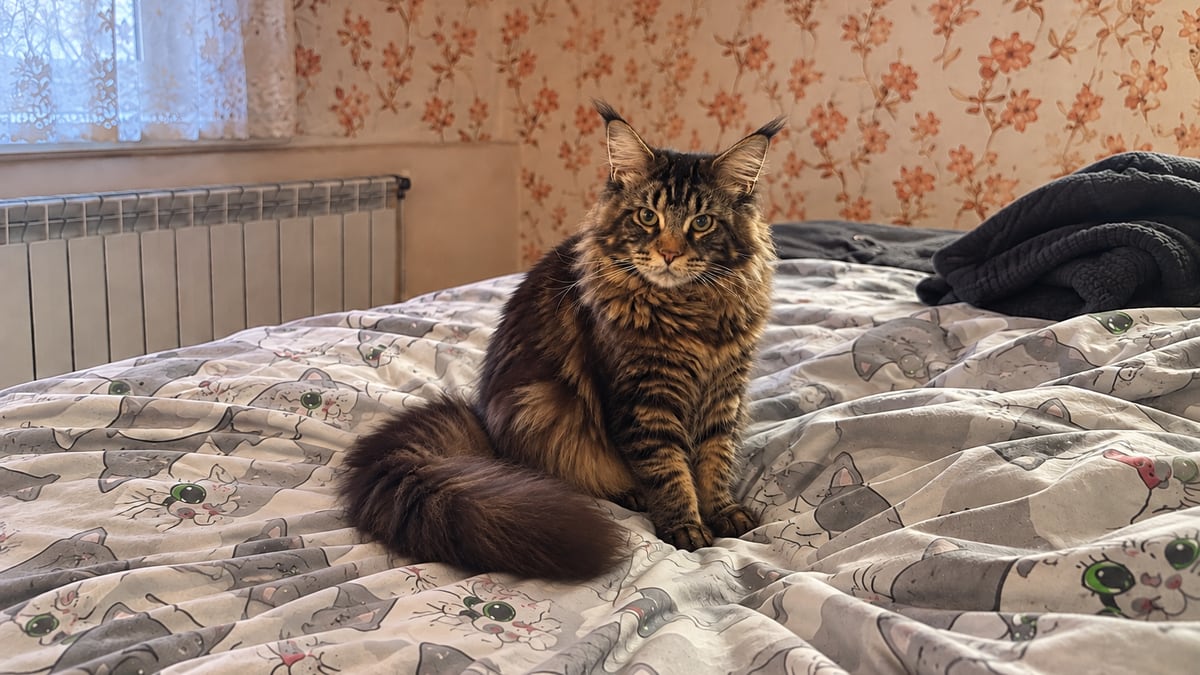
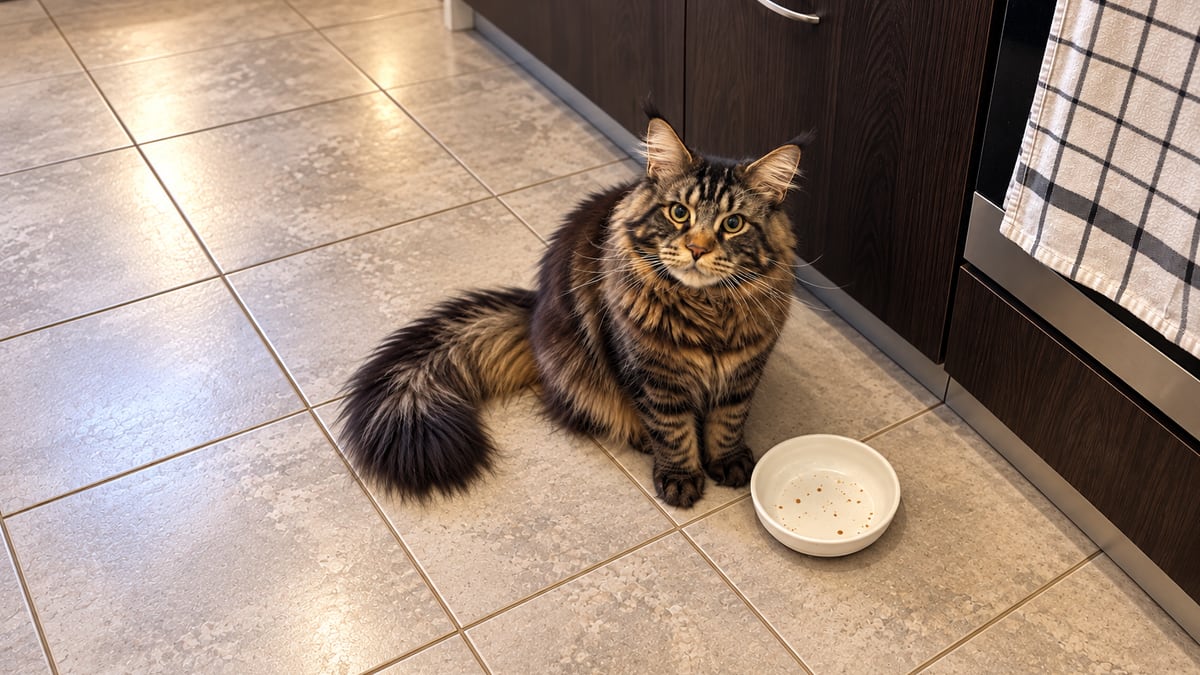
Start with the feeding guide on the food pack, then adjust it to your cat’s age, weight and how active they are, Cats Protection says. As a check, WSAVA’s chart puts an average healthy 4 kg adult cat at 225–250 kcal a day. Cornell says one or two meals a day suit most adult cats, while International Cat Care prefers five or more small portions. Kittens of 8 to 12 weeks need at least four meals a day.
How much to feed a cat a day
There is no single right amount. Cats Protection says how much your cat should eat depends on their age, weight and how active they are, and Cornell Feline Health Center adds that cats vary greatly in how much food they need to stay at a healthy weight.
So the pack is where you start. Cats Protection, International Cat Care and Battersea all point to the feeding guide on the food, and International Cat Care calls it a starting point: you adjust your cat’s daily ration from there. Cornell notes that the instructions on pet food labels are based on the needs of the average cat, so if your cat uses less energy than average, you may be feeding more than necessary. Cats Protection suggests checking your cat’s weight now and then, so you can see whether the amount is right.
Two things change the number. PDSA says to feed the amount for your cat’s ideal weight, not their actual weight, which matters if they are already on the heavy side. And Cats Protection notes that once neutered, cats typically need less energy, so it suggests cutting the daily amount after neutering to stop them gaining weight.
If your cat keeps asking for more, PDSA suggests weighing out the whole day’s portion in the morning. Everything they get that day then comes out of it.
Cat feeding chart: calories a day by weight
If you want a number to check the pack against, WSAVA, the World Small Animal Veterinary Association, publishes the calorie needs of an average healthy adult cat in ideal body condition. The table below copies its chart, from 1 to 7 kg.
Read it as a guide. WSAVA says cats are individuals, and some need more or less to stay trim. Cornell Feline Health Center gives an equation that is commonly used: 30 times the cat’s weight in kilograms, plus 70. For a 5 kg cat that comes to 220 kcal a day, a little below WSAVA’s 250 to 290 kcal. The two methods don’t agree exactly, so treat any figure as a starting point. Your vet can tell you your cat’s ideal weight, Cornell says.
To turn calories into grams you need the energy content of the food. If it isn’t on the pack, Cornell says a call to the manufacturer is the most direct way to find out.
| Cat’s weight | Calories a day |
|---|---|
| 1 kg | 100–130 kcal |
| 1.5 kg | 130–150 kcal |
| 2 kg | 160–170 kcal |
| 2.5 kg | 180–190 kcal |
| 3 kg | 200–210 kcal |
| 3.5 kg | 215–230 kcal |
| 4 kg | 225–250 kcal |
| 4.5 kg | 240–270 kcal |
| 5 kg | 250–290 kcal |
| 5.5 kg | 260–310 kcal |
| 6 kg | 265–330 kcal |
| 6.5 kg | 275–350 kcal |
| 7 kg | 280–370 kcal |
How much wet food and dry food to feed a cat
Cats Protection says the choice between wet and dry is entirely down to your cat’s preference, and suggests offering both in separate bowls to see which they go for. International Cat Care generally recommends a variety of both for healthy cats. Battersea notes that dry food can help oral health and wet food helps a cat get enough water, and says research suggests a mixed diet may reduce the risk of obesity compared with dry food alone.
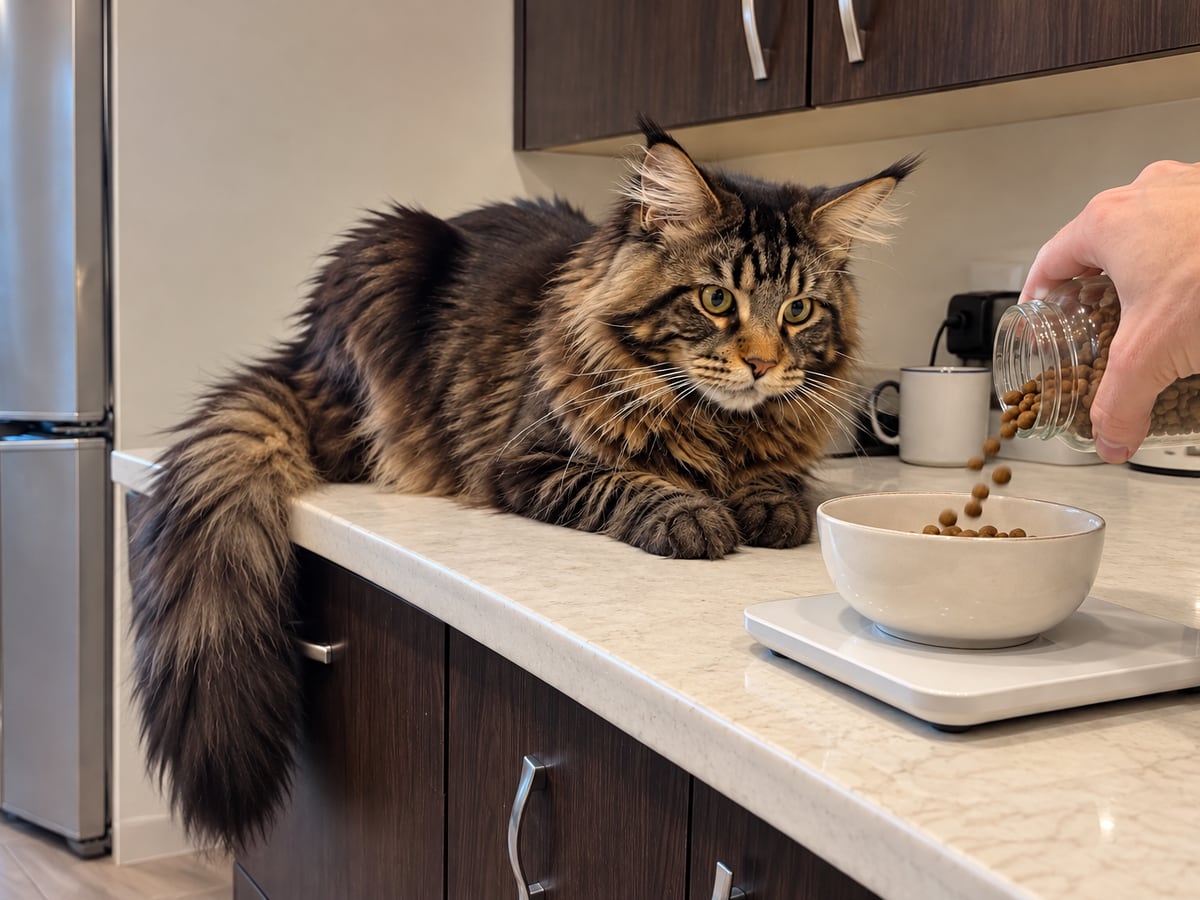
The two look very different in the bowl. Canned food is at least 75 percent water, Cornell says. Dry food is very energy-dense, so the right amount may look small, International Cat Care says. Even with a scoop or measuring cup it’s easy to overfill, so weigh dry food on kitchen scales. It takes less than a couple of minutes.
If you feed both, PDSA says to work out the portion sizes from the packets so the total stays right. For kittens on wet and dry food, PDSA says to use the same brand.
How often to feed a cat
Here the sources don’t quite agree. Cornell Feline Health Center says that once a cat is an adult, at about one year, feeding once or twice a day is appropriate in most cases. Cats Protection says adult cats should get fresh wet food at least twice a day and dry food at least once.
International Cat Care and Battersea go further. Where possible, International Cat Care says, it’s best to feed little and often: split the daily ration into at least five portions, spread over the full 24 hours with timed and puzzle feeders. PDSA, writing about overweight cats, says at least two meals, ideally more.
What about leaving a full bowl out? PDSA says lots of cats prefer to graze through the day. But if your cat eats the whole day’s allowance in one go and begs for more, it may be better to feed two meals and split the allowance in half. Cornell says free feeding dry food may suit some cats, while in others it leads to overeating and weight gain, and International Cat Care says cats with unrestricted access to food may overeat. Whichever you choose, Cornell’s advice is to find a schedule that works for you and your cat and keep it consistent.
How much to feed a kitten by age
Kittens have small stomachs, so they eat little and often. International Cat Care says kittens of 8 to 12 weeks need at least four meals a day, kittens of three to six months at least three, and young cats over six months at least two small meals.
Battersea suggests four or five small meals of wet and dry kitten food from 9 weeks, dropping to three at around 5 months. Cornell says kittens usually do best on three meals a day until six months, and on two a day from six months to a year. PDSA says some are happy with two meals by six months.
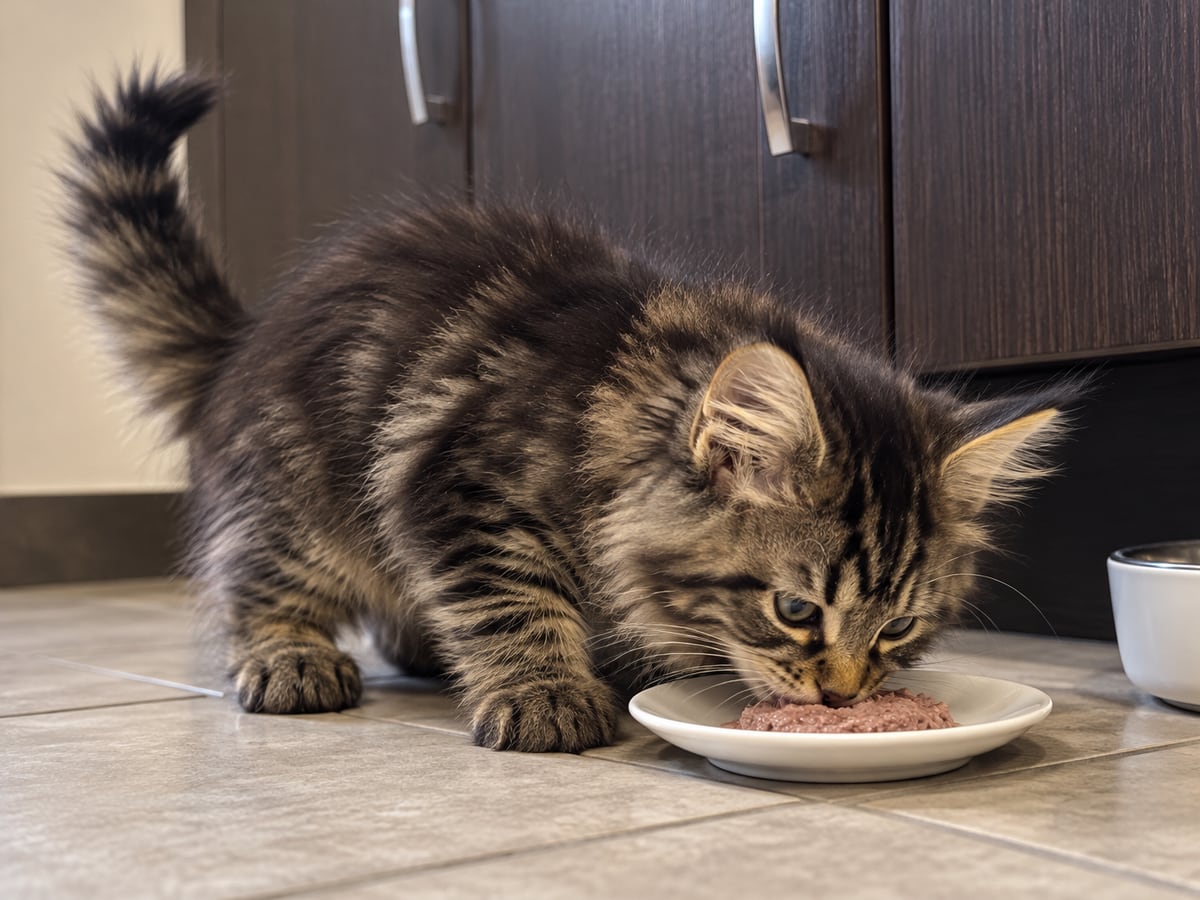
For the amount, PDSA says the feeding guide on the kitten food pack tells you how much your kitten needs each day for their age. It suggests wet food two or three times a day, with dry food in between. PDSA counts cats as kittens for their whole first year.
A two-month-old kitten is about the age weaning ends: International Cat Care says it is usually complete by around 8 weeks. Before that, Cats Protection says, very young kittens who are not yet weaned onto solid food cannot go more than a few hours without milk.
Treats count too
WSAVA says treats should make up no more than 10% of a cat’s daily calories, and Cornell’s rule of thumb is 10 to 15 percent. For a 4 kg cat, WSAVA’s table puts the limit for treats at 22 kcal a day.
Human food uses that up fast. WSAVA lists 28 g of cheddar at 120 calories and 28 g of tuna canned in water at 36. It also says many cats are lactose intolerant, so milk and dairy are best avoided.
On days with treats, PDSA says to reduce the main meals to match. WSAVA adds that treats should never replace a meal.
How much to feed a cat to lose weight
First check that your cat really is overweight. International Cat Care counts a cat as overweight at 10 to 19% above their ideal weight, and scores body condition from 1, very thin, to 5, obese, with 3 as ideal. Cornell describes a rib check: run both hands, palms down, along the ribcage on each side. In an obese cat, International Cat Care says, a thick layer of fat makes the ribs hard to feel and there is no waist. PDSA says over a third of cats in the UK are overweight.
Then talk to your vet before you cut anything. International Cat Care says not to restrict food without discussing it with your veterinary team, because sudden food restriction can make cats ill. Losing weight too quickly is dangerous too, because a cat can develop fatty liver disease. Cornell says any weight-loss plan should be carried out under a vet’s direction, aiming for a gradual loss of perhaps one or two percent of body weight a week. International Cat Care says a very overweight cat may take up to a year to reach their ideal body condition.
A few things help along the way. International Cat Care suggests cutting down treats, weighing each portion on kitchen scales and more play: most cats love chasing a wand toy. And if you realise you’ve been overfeeding by accident, PDSA says to reduce meal sizes slowly over a couple of weeks.

How much to feed an older cat
PDSA considers a cat a senior from around eleven. Cornell, which counts senior cats from 10, says they should keep the same feeding routine unless the vet says otherwise.
As smell and taste fade, an older cat may lose their appetite slightly, International Cat Care says. It suggests little and often, around four to six meals a day as a starting point, with food at room temperature: gently warming it to just below body temperature can make it more appealing. Don’t leave uneaten wet food out for more than an hour.
PDSA says to keep a close eye on how much an older cat eats and drinks each day. If they start eating less or drinking more, it could be a sign of a health problem. If you’re worried, PDSA says, contact your vet.
When a change in appetite means a vet visit
One skipped meal isn’t usually a worry. Cats Protection says the occasional off day is not too worrying for an otherwise healthy cat, though you should watch them closely and try to tempt them to eat. Going two days without eating can cause serious health problems.
Cats Protection says to call your vet if your cat doesn’t eat for over 24 hours, doesn’t drink for over 24 hours, has skipped a meal and also not drunk any water, has vomiting or diarrhoea while not drinking, is very lethargic or vomiting repeatedly, or eats significantly less than usual. Overweight cats who stop eating suddenly are at higher risk of fatty liver. Cornell says not eating can have a severe impact on a grown cat’s health in as little as 24 hours.
Kittens can’t wait as long. Cats Protection says a kitten who has not eaten for 12 to 24 hours, or drunk water for 12, should see a vet as soon as possible, and sooner with vomiting or diarrhoea. For a kitten younger than six weeks, Cornell says, 12 hours without food can be life-threatening.
Eating more is a reason to call too. PDSA says to contact your vet if your cat has been hungrier than usual or is looking for food all the time, and to mention anything else you’ve noticed: weight loss or gain, drinking and peeing more, vomiting or diarrhoea, or lethargy. Cats Protection says any sudden change in eating or drinking habits is worth a call to the vet, to rule out medical causes.
A note with a date helps here. “Tuesday: left half of breakfast. Wednesday: nothing until the evening” tells a vet more than “off her food lately”. Lapka Care is a diary for notes like these, and it puts everything that matters for the vet into one PDF.
What a month of feeding notes can look like
1 June: 4.8 kg. The vet thinks 4.5 kg would be ideal for her frame. The day’s food is now weighed in the morning and split into four small meals.
8 June: treats are now a few biscuits taken from the day’s portion. Ten minutes with the wand toy after dinner.
22 June: 4.75 kg. Asks for food at six in the morning, but eats what she’s given and no more.
29 June: left most of breakfast and skipped lunch, ate a little in the evening. Watching her closely tomorrow.
Weights with dates show whether she is losing weight as slowly as vets advise. The missed meal sits right beside them, so if it happens again, there is something concrete to show the vet.
Questions people ask
How much wet food should a cat eat a day?
Start with the feeding guide on the pack. Canned food is at least 75 percent water, Cornell says, so a day’s portion looks much bigger than the same calories in dry food. If you also give dry food, PDSA says to work out the portions from both packets so the total stays right.
How much dry food should a cat eat a day?
Less than you might expect. International Cat Care says dry food is very energy-dense, so the right amount may look small. Take the amount from the pack, weigh it on kitchen scales rather than using a scoop, and check your cat’s weight over the next few weeks.
Is it OK to leave food out all day?
For some cats, Cornell says, but in others free feeding dry food leads to overeating and weight gain. Any food left out for grazing should be replaced with fresh food every day. In its advice on older cats, International Cat Care says not to leave uneaten wet food out for more than an hour.
How much should a 2-month-old kitten eat?
The kitten food pack gives the daily amount for their age, PDSA says, and it goes into several meals. International Cat Care says at least four meals a day at 8 to 12 weeks, and Battersea suggests four or five small meals from 9 weeks. Most kittens have finished weaning by around 8 weeks.
Should I feed my cat less after neutering?
Usually, yes. Cats Protection says neutered cats typically have reduced energy needs, and suggests reducing the daily amount to stop them gaining weight. PDSA says the same: neutered cats need fewer calories, so they can be prone to weight gain if their diet is not adjusted.
Can cats drink milk?
It’s best not to. WSAVA says many cats are lactose intolerant, so milk and dairy products should be avoided. What a cat needs is water: Cats Protection says to make sure they always have a bowl of it, and to replace the water at least once a day.
Sources
- WSAVA — Calorie needs for an average healthy adult cat in ideal body condition (PDF)
- WSAVA — Feeding treats to your cat (PDF)
- Cats Protection — Feeding your cat
- Cats Protection — How long can cats go without food?
- International Cat Care — Feeding your cat or kitten
- International Cat Care — Life stage guide to caring for your new kitten (PDF)
- International Cat Care — Obesity in cats
- International Cat Care — Special considerations for senior cats
- Cornell Feline Health Center — Feeding your cat
- Cornell Feline Health Center — How often should you feed your cat?
- Cornell Feline Health Center — Obesity
- Cornell Feline Health Center — Ask Elizabeth: care of obese cats
- Cornell Feline Health Center — Anorexia
- PDSA — The best diet for your cat
- PDSA — Kitten diet and behaviour
- PDSA — Obesity in cats
- PDSA — Increased appetite in cats
- Battersea — Feeding your cat