
The short answer
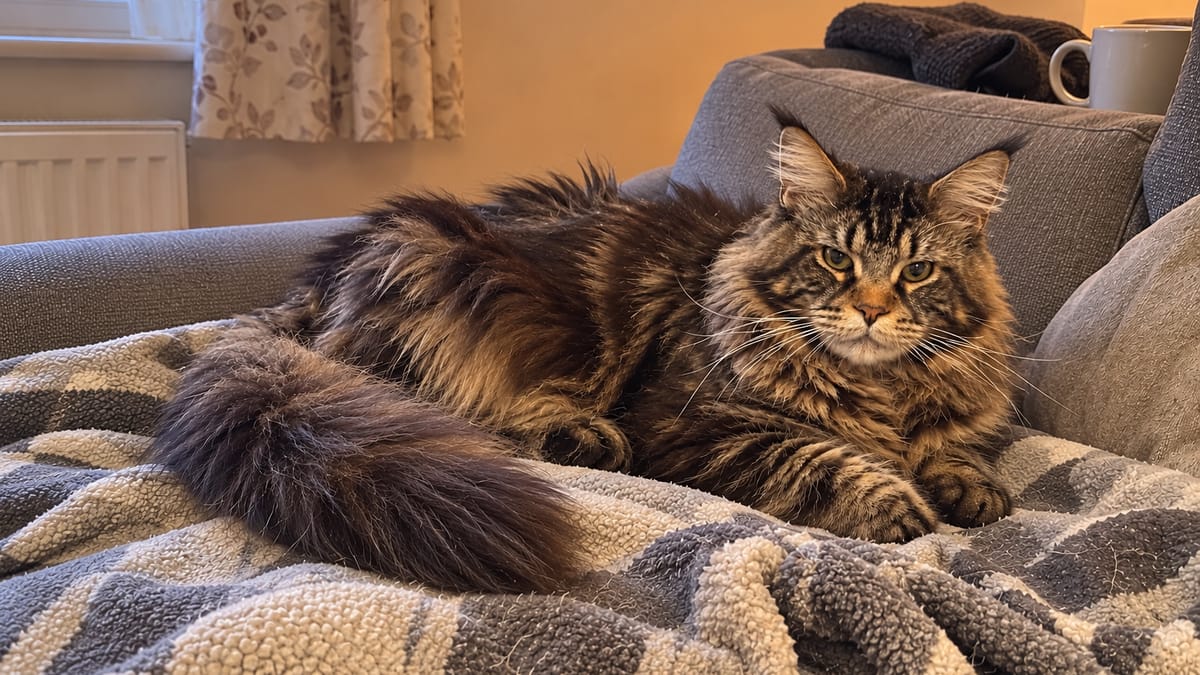
Most of it is normal. Cats Protection says all cats shed, usually all year round, and more heavily in spring and autumn as the coat changes for the season. PDSA adds that indoor cats often shed all year round. Regular brushing removes loose fur before it lands on the sofa. See your vet if you notice bald patches or thinning fur, red, irritated or flaky skin, or your cat grooming or scratching excessively.
Is it normal for a cat to shed a lot?
Yes, up to a point. Cats Protection says it’s completely normal for cats to lose some of their fur, and that all cats shed: it’s a natural part of the hair growth cycle. Dead or damaged hair comes out so healthier hair can grow in its place. Shedding also stops old hair tangling into mats, and cats shed more heavily at certain times of year to keep themselves warm or cool.
Your cat helps it along. International Cat Care says a cat’s tongue is covered with backwards-facing spines that remove loose hair and dirt, and that cats usually moult all year round, to varying degrees.
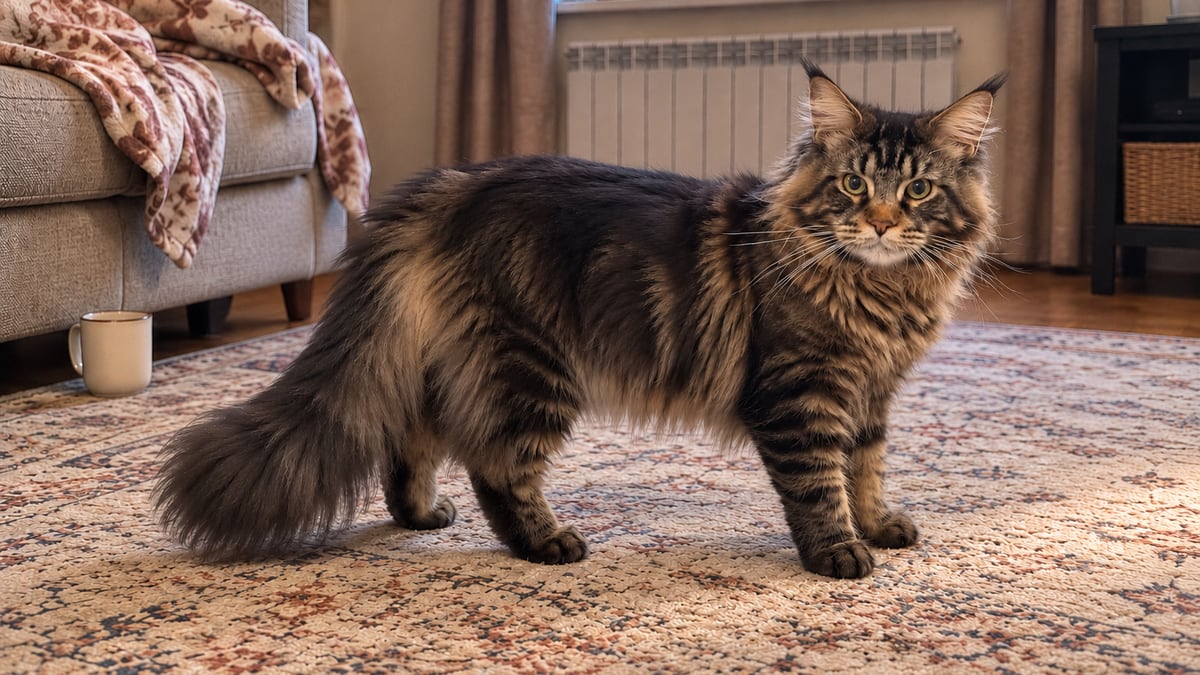
How much counts as a lot depends on the cat. PDSA says some animals shed more than others, depending on breed, coat type, season, diet and stress levels, so the thing to learn is what’s normal for yours. Then a change stands out.
Cat shedding season, and shedding a lot in summer
Cats Protection says cats usually shed all year round, but more heavily in spring and autumn. Changes in daylight and temperature trigger the switch. In spring the thick winter coat comes out to make way for a thinner summer one, and in autumn the summer coat goes to make way for the thicker winter coat again.
So a lot of fur as the weather warms up is what that looks like: the winter coat coming out. Cats Protection says even a short-haired cat may need brushing twice a week in spring and autumn, when they shed the most. For medium and long-haired cats, Battersea suggests brushing around two to three times a week, and more in summer.
Why your indoor cat sheds all year, even in winter
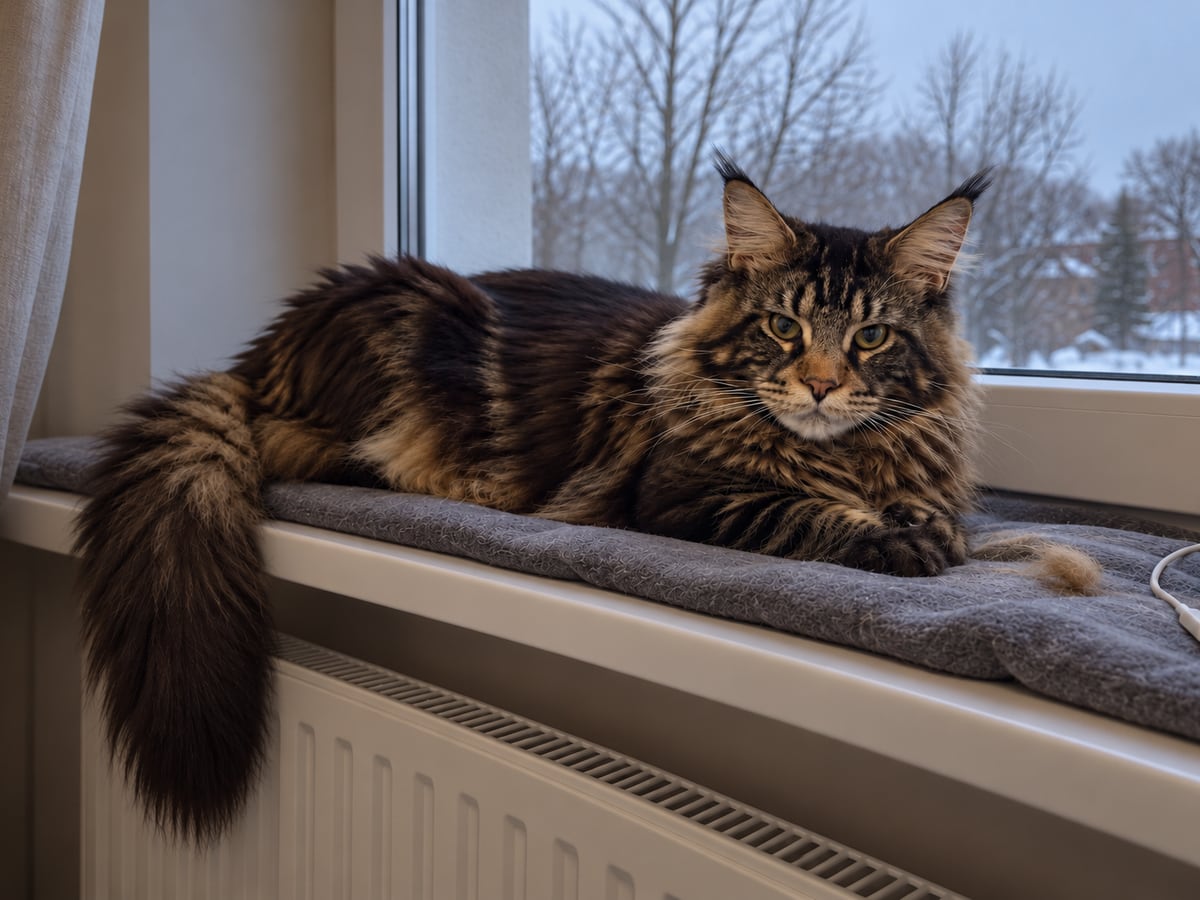
A cat who lives indoors may hardly have seasons at all. Cats Protection says indoor cats may shed more consistently throughout the year, because they are less exposed to natural light cycles and seasonal temperature changes. PDSA says the same: how often a cat moults can depend on how much daylight they get, which is why indoor cats often shed all year round.
So fur on the blanket in January, with the heating on and the lamps lit, is often that same steady shedding. PDSA lists exposure to heat and light among the things that affect moulting.
Why is my cat shedding so much all of a sudden?
Think of the season first. Cats Protection says it’s normal for cats to shed quite a lot, especially during the seasonal changes in spring and autumn.
PDSA lists other things that change moulting: the time of year, exposure to heat and light, anxiety and stress, pregnancy, and other health conditions.
Cats Protection says the only time to be concerned about your cat’s fur falling out is when you notice bald patches or thinning fur, red, irritated or flaky skin, or excessive grooming or scratching. These could be caused by allergies, parasites such as fleas, stress or underlying health issues, and your vet can find out which. PDSA adds one more: new fur that doesn’t grow back in its place.
Fleas, itchy skin and stress
Itching makes a cat lose more fur. PDSA says regular flea treatment stops the scratching, which can also increase the amount of hair a pet sheds. Cats Protection says the most common allergy in cats is to flea bites, and that not having obvious fleas does not rule out a flea allergy.
A flea comb shows you more than your eyes do. International Cat Care suggests combing first to check for flea dirt: tiny black comma-shaped specks that run red if you add a drop of water. If you find any, it says to speak to your vet team about flea control.
PDSA also names signs of allergy to watch for: scratching, carpet surfing, or shaking the head a lot. If you notice any of them, contact your vet.
Stress shows in the coat too. PDSA says many cats will over groom and develop bald patches when they are stressed.
Shedding or overgrooming: how to tell
Shed fur ends up around the house. Fur your cat pulls out leaves gaps on the cat. Cats Protection says that in most cases of hair loss the cat is removing the fur themselves, by grooming or scratching, and that cats can be secretive and precise about it, sometimes leaving bald areas with very clear edges.
International Cat Care says the most common places are the belly, the legs, particularly the insides of the back legs, and the flank, often in matching patches on both sides. Run your fingers over the patch. Where hair has been groomed off, what’s left feels spiky and sharp. Where it has fallen out, the remaining hair feels soft and normal.
Either way it’s a vet visit. PDSA says any form of fur loss probably means your cat has a condition that makes them uncomfortable and needs treatment from your vet. International Cat Care says to contact your vet team as soon as possible if you notice your cat over-grooming. Cats Protection suggests noting when it happens and what came before and after, and showing your vet a video of it.
Cat shedding a lot and dandruff
A few flakes in shedding season can be normal. A Cats Protection vet says dandruff can be normal in healthy cats as long as it isn’t excessive, and that some cats show more of it at certain times of year, often alongside shedding.
A lot of it is a different matter. PDSA says a large amount might mean your cat can’t groom themselves properly, because of arthritis, pain or stiffness, or being overweight, or that they have a skin problem such as fleas, allergies, an infection, ringworm, mites or lice.
The two charities draw the line in slightly different places. PDSA says to contact your vet if you notice your cat has dandruff; the Cats Protection vet recommends an examination if there’s an excessive amount. If you’re not sure, ask.
Cat shedding a lot and losing weight
Weight loss makes this a question for the vet. International Cat Care lists the classic signs of an overactive thyroid (hyperthyroidism): weight loss, a good or increased appetite, increased thirst, restlessness, and a poor and unkempt coat. It is usually seen in middle-aged and older cats, and rarely in cats under 7 years old.
PDSA says hormonal diseases such as hyperthyroidism can sometimes cause fur loss. A thin, scruffy coat can point to other things as well. Cats Protection says that if your cat looks in poorer condition and their coat looks thin or matted, it can be a sign of an underlying health condition, and to book an appointment with your vet.
International Cat Care says to contact your vet team if your cat shows any of these signs. Your vet finds out which it is: an overactive thyroid is confirmed with a blood test that measures thyroid hormones.
How to reduce cat shedding: brushing
You can’t stop it, and it isn’t worth trying. Cats Protection says shedding is a natural process that keeps the coat healthy, and its one simple tip is regular brushing, which removes loose fur before it falls out. The fur then goes in the bin instead of on the floor.
How often depends on the coat, and the charities differ a little. Cats Protection says around once a week for a short-haired cat and every day for a long-haired one. PDSA says long-haired breeds need brushing daily, and medium and short-haired breeds a few times a week. International Cat Care says that if you groom your cat daily while they are moulting, you can remove most of the loose hair for them.
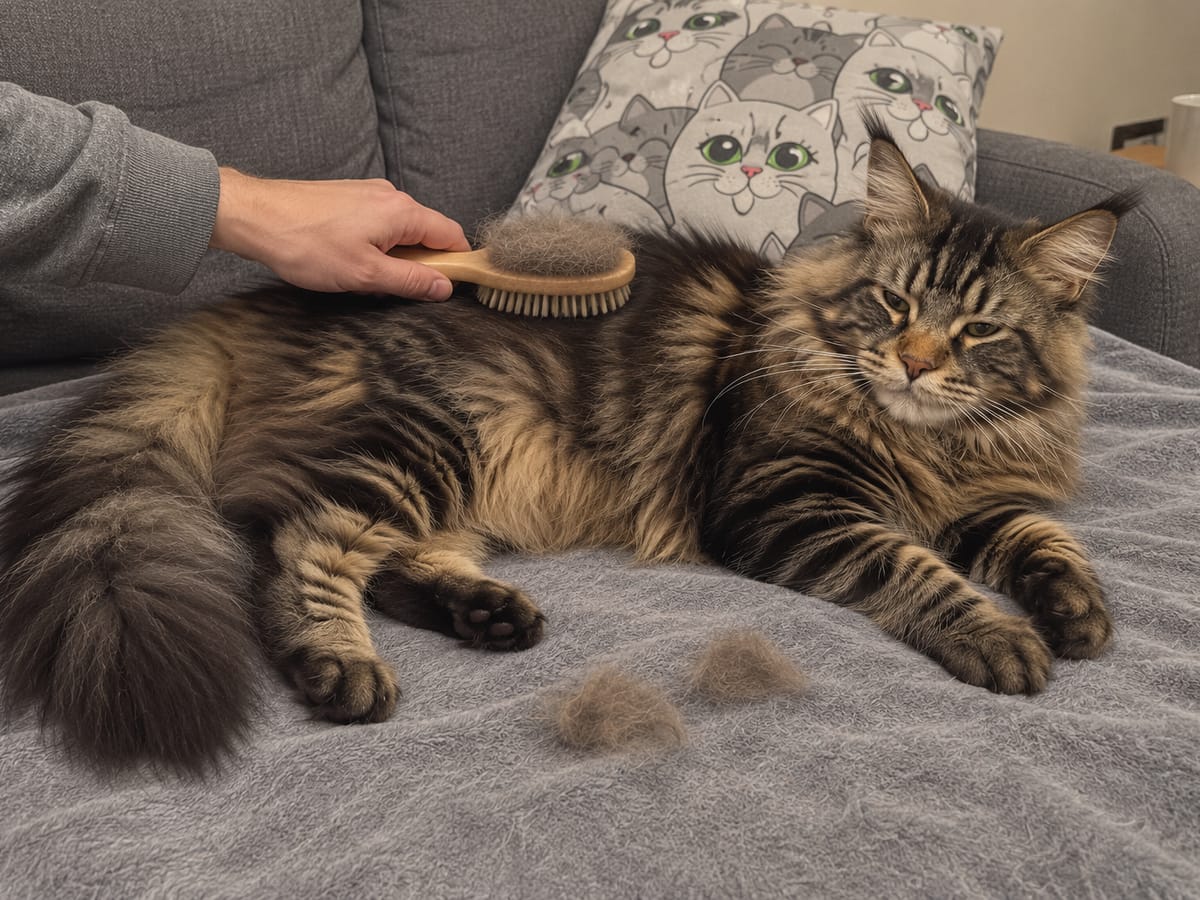
Pick a calm moment. PDSA suggests a time when your cat is most relaxed, with treats along the way. International Cat Care says to brush in the direction the hair grows, from the head towards the tail, then finish with a damp cotton or rubber glove to lift the loose hairs left on top.
Stop before your cat has had enough. International Cat Care lists the signs: skin rippling or twitching, a swishing or thumping tail, ears flicking or turning back, sudden freezing, licking the lips, growling or hissing. If you see them, stop and try another day. Battersea says to let your cat walk away whenever they want.
Long-haired, older and overweight cats
A long coat needs the most help. Cats Protection says old hair that isn’t shed gets tangled and matted with the rest of the fur, which is particularly a problem for long-haired cats. International Cat Care says knots are common under the “armpits” and between the back legs, where the skin is very thin and sensitive, and between the toes and pads. Don’t reach for scissors: when fur is badly matted it’s very hard to see where the skin ends, and you could cut your cat. Severe mats often have to be shaved off by the vet team, and PDSA says not to tackle mats at home but to use a reputable groomer.
Some cats can’t keep up with their own coat. A Cats Protection vet says obesity, arthritis or dental disease can make it hard for a cat to groom properly, which leads to poor coat condition, matting and dandruff. And if your cat suddenly grooms less or more than usual, Cats Protection says to make an appointment with your vet to be on the safe side.
Food plays a part. PDSA says a good diet supports a healthy coat and skin, that it’s worth reviewing your cat’s diet from time to time, and that the yearly health check is a good moment to ask about it. There are supplements with omega 3 and 6, but the Cats Protection vet says to get advice from your vet before giving one.
Hairballs in shedding season
Much of the loose fur gets swallowed. International Cat Care says it either passes through the gut or comes back up as a hairball, and that grooming your cat can help prevent or reduce hairballs. The Cornell Feline Health Center says hairballs are more frequent in the seasons when cats shed their coats, and that long-haired breeds such as Persians and Maine Coons are at significantly greater risk than short-haired ones.
A hairball once every week or two is nothing to worry about, according to a vet quoted by Cornell. Call your vet without delay if your cat is lethargic and refuses to eat for more than a day or so, or keeps retching without bringing anything up.
Less cat hair on the sofa and your clothes
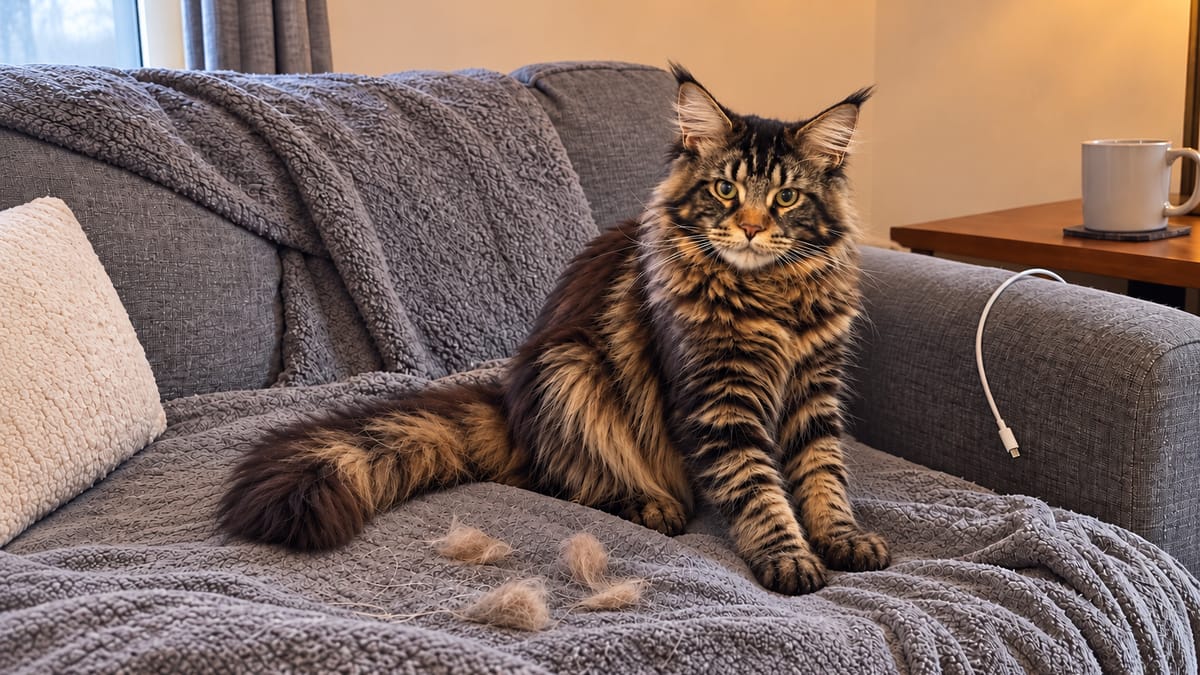
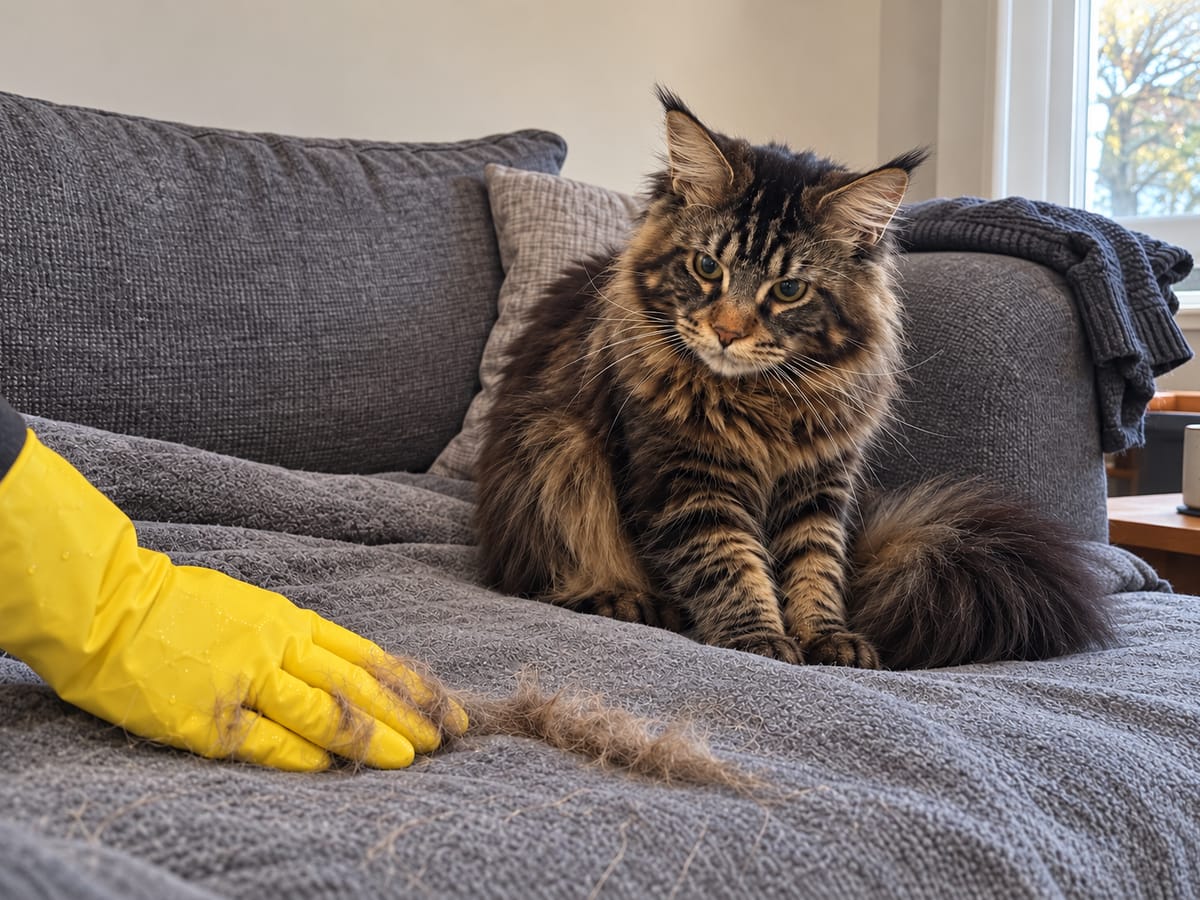
Some fur will always be there, so make it easy to pick up. PDSA’s tips: hoover regularly, keep a lint roller for your clothes, and try a rubber glove dampened with clean water, brushed over the fabric so the hair sticks to it. A dry sponge, a little damp, works on furniture, and sticky tape will do when you have nothing else to hand.
Put a throw over your cat’s end of the sofa. PDSA says it’s much easier to wash than the sofa; shake it out first so the fur doesn’t clog the washing machine. Your cat’s own blankets are different. Cats prefer familiar smells, so PDSA suggests brushing the hair off them rather than washing them every week.
When to see the vet, and what to write down
See your vet if you notice any of these: bald patches or thinning fur; red, irritated or flaky skin; scratching or grooming far more than usual; fur that doesn’t grow back; a lot of dandruff; weight loss; or a coat that looks thin, matted or unkempt. PDSA says to contact your vet about any change in your cat’s coat.
Go as soon as possible if there’s a wound. Cats Protection says that if your cat has been licking or scratching one area more than usual and there is a wound, arrange an appointment with your vet as soon as possible. Don’t try home remedies first: Cats Protection says ones your vet hasn’t recommended could make the condition worse, and skin creams made for people may be toxic for cats.
Tell the vet what else you’ve seen. PDSA lists a rash, scabs or patches of dark skin, dry, scaly skin, itchiness, losing whiskers, sleeping more than usual, drinking more than usual, or eating more or less than usual. Cats Protection says the vet may also ask about changes to your cat’s lifestyle and diet. Lapka Care is a diary for notes like these, and it puts everything that matters for the vet into one PDF.
What a few weeks of notes on shedding can look like
2 April: brushing Mango twice a week now. A handful of fur each time, skin clean, no bald bits.
16 April: less fur on the throw. Eating and drinking as usual.
21 April: thin patch on the inside of his back leg, the hairs left feel short and spiky. He licks it in the evenings, after the neighbour’s dog barks. Video saved.
The notes show where the ordinary spring moult ended and something new began, with the times and a video ready for the vet.
Questions people ask
Is it normal for cats to shed when you pet them?
Yes. Cats Protection says stroking helps loosen and remove dead or damaged fur, so it’s normal for some to come away in your hand. You’re simply speeding the shedding along.
How much shedding is too much?
It’s less about the amount than about what’s normal for your cat. PDSA says to be concerned if new fur doesn’t grow back where it fell out. Bald patches, thinning fur, irritated or flaky skin and a lot of scratching or grooming are the signs Cats Protection says to take to your vet.
Can stress make a cat shed more?
It can. PDSA lists anxiety and stress among the things that affect moulting, and says many cats over groom and develop bald patches when they are stressed. If you see bald patches, see your vet first: International Cat Care says the vet will look for an underlying medical problem before anything else.
Will a bath reduce cat shedding?
A brush does that job. International Cat Care says that if your cat is healthy there is no reason to bath them, and most don’t tolerate it well. Cats Protection says it’s very unlikely your cat will ever need a bath.
Is there a cat that doesn’t shed?
No. Cats Protection says no breed of cat is entirely non-shedding. Low-shedding breeds such as the Sphynx, Cornish Rex, Devon Rex, Russian Blue, Oriental Shorthair and Bengal shed much less, and the fine fur or dander they do shed may just be harder to spot.
Sources
- Cats Protection — Why do cats shed their fur?
- Cats Protection — Grooming your cat
- Cats Protection — Skin problems in cats
- Cats Protection — How can I reduce cat dander in my home?
- International Cat Care — Grooming your cat
- International Cat Care — Over-grooming in cats
- International Cat Care — Hyperthyroidism in cats
- PDSA — Why and when pets moult
- PDSA — How often should you groom your pet?
- PDSA — Hair loss (alopecia) in cats
- PDSA — Dry skin and dandruff on cats
- Battersea — How to groom your cat
- Cornell Feline Health Center — A hairy dilemma