
The short answer
Often because reaching has become hard or sore. As cats age and stiffen, many struggle with the back, the back legs and the base of the tail, so the coat there turns scruffy or matted. International Cat Care says less grooming may point to long-term pain from arthritis or dental disease, so tell your vet. At home, brush gently with a soft brush and tease out small mats, never cut them.
Why is my old cat not grooming herself?
A cat washes with the whole body. International Cat Care says most cats spend a significant part of their day grooming, and their bodies bend and flex so they can reach every part with ease. That bending is what age takes away.
Cats Protection says that as a cat gets older they may not be as flexible as they used to be, which makes it difficult to look after their coat, and they may start to look a bit more bedraggled. International Cat Care says that as cats age and become less flexible, they often struggle to keep up their usual grooming routine, and you may notice matting over the lower spine and hindquarters.
Cats Protection counts a cat as senior from 11. Cornell Feline Health Center points out that changes in an older cat are often gradual, and asks owners not to put them down to old age, because they can be signs of common diseases or dental problems.
Old cat not grooming: arthritis and stiff joints
Arthritis is very common in older cats, International Cat Care says. Cats Protection puts a number on it: around 90% of cats aged over 12 years old have some degree of arthritis that shows on x-rays.
It shows in the coat. Cats Protection lists difficulty grooming, especially the middle of the back and the tail, and less grooming around the back legs, which leaves the coat unkempt. PDSA describes matted fur in the hard-to-reach places: the back, the back legs and the base of the tail. Sometimes it goes the other way, and a cat overgrooms the fur over a painful joint, International Cat Care says.
The other signs are quiet. Cats Protection mentions resting more, not wanting to jump or climb, stiffness straight after a rest that eases as they move, and signs that get worse in cold or damp weather. Cats are very good at hiding arthritis, it says, and the changes are often subtle.
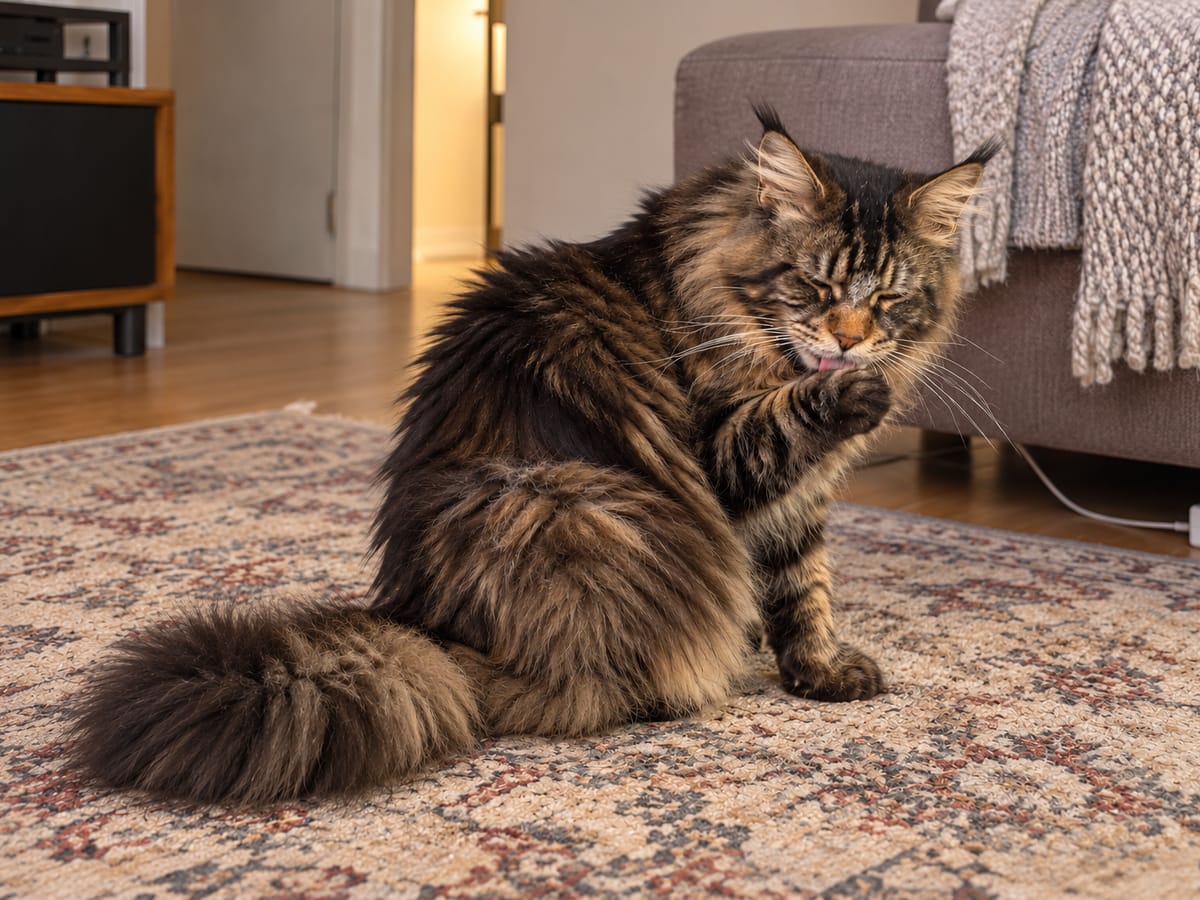
Teeth, weight and other reasons a cat stops washing
A cat grooms with the tongue, so a sore mouth gets in the way too. Cats Protection says a coat that looks increasingly unkempt may be a sign of pain in the joints or in the mouth. International Cat Care lists the signs of dental disease: bad breath, drooling, a “chattering” jaw, reduced appetite and pawing at the mouth.
Weight plays a part. PDSA says a cat who can’t groom properly may be dealing with arthritis, pain or stiffness, or being overweight. Cats Protection adds that extra weight puts more strain on joints that already hurt.
And sometimes it is something else. Cornell Feline Health Center says a sudden lack of grooming may signal a health problem. Which of these it is, only your vet can tell.
Old cat not grooming well: what the coat tells you
An ungroomed coat changes in patches. The front of your cat may look fine while the hard-to-reach places go scruffy or matted, and PDSA names them: the back, the back legs and the base of the tail.
Flakes are a clue. PDSA says cats like to keep themselves clean, and while a small amount of dandruff can be normal, a large amount might mean your cat isn’t able to groom properly. It suggests contacting your vet if you notice dandruff, and telling them about other changes too, such as grooming less, fur loss or a greasy coat.
Mats are more than a look. Cornell Feline Health Center says longhaired cats can become uncomfortably matted, and Cats Protection says mats are particularly common in long-haired cats.
How to help a senior cat with grooming
Do the washing they can’t. Cornell Feline Health Center says older cats can benefit from more hands-on help once their own grooming begins to wane. Gentle brushing or combing, it says, removes loose hairs and stimulates circulation and the skin’s oils, which brings the shine back to the coat.
Cats Protection suggests brushing long-haired cats every day and short-haired cats once or twice a week. International Cat Care recommends a soft brush and a fine comb. Go gently: Battersea says not to brush too vigorously, especially over the joints, the hindquarters and the spine, because older cats get thinner there and it may hurt where the bones stick out.
Watch how they take it. Cats Protection says a cat in pain may be sensitive to being touched in some places. International Cat Care lists signs that a cat isn’t comfortable, such as suddenly freezing or tensing, ears flicking or turning backwards, or growling. If you see them, stop and try again another day, and reward the relaxed moments with praise and treats.
A brush is also a chance to look closely. Cats Protection suggests checking the skin for fleas, ticks, lumps or bumps that may need a vet check.
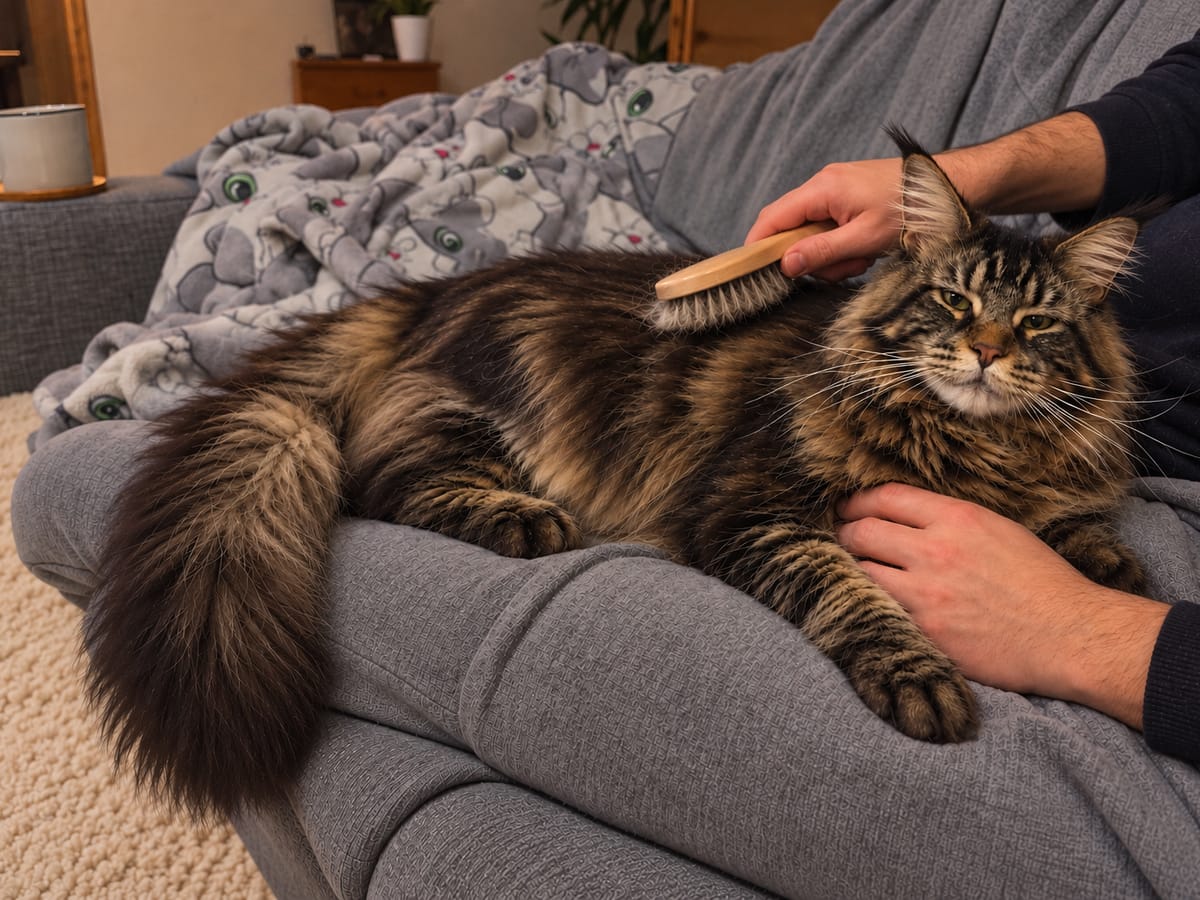
Mats: tease them out, never cut them
International Cat Care says to always tease mats out rather than cut them away with scissors, because it is very easy to damage your cat’s skin that way. Once fur is really matted, it says, it is extremely difficult to see where the skin ends and the hair starts.
Your vet can help with any of them. Cats Protection suggests asking your vet about the best way to remove mats. International Cat Care says severe mats often need to be shaved off by the veterinary team, which often requires sedation or a general anaesthetic.
Regular grooming can help keep mats away in the first place, International Cat Care says, and it removes loose hair, which helps prevent hairballs.
Old cat not cleaning itself: eyes and the back end
Some places need a wipe, not a brush. Battersea says cats can be very particular about hygiene, and a cat may be distressed when they can’t clean themselves. It suggests gently wiping the back end with cotton pads moistened with warm, not hot, water.
International Cat Care says you may need to clean discharge from the eyes, ears and back end regularly, with moist cotton pads. Cats Protection suggests a damp cloth for the eyes. For a longhaired cat, International Cat Care and Battersea both suggest a trim around the back end to keep it clean.
A bath is rarely the answer. International Cat Care says that if your cat is healthy there is no reason to bath them, and most don’t tolerate it well.
Long claws on an older cat
Claws are part of grooming too. Cats Protection says older cats can find it hard to scratch enough to keep their claws in good condition, so the claws may become thicker and longer. It suggests trimming them every two to four weeks, so they are less likely to catch in furniture or carpets or damage the paws.
International Cat Care says senior cats can struggle to retract their claws, and claws can overgrow, curl round and embed in the pads. Talk to your vet first, it says, because overgrown claws can sometimes point to a medical problem such as arthritis or hyperthyroidism, and a vet can show you how to trim them safely at home.
Senior cat care tips: make the home easier
Every jump that hurts less helps. Cats Protection suggests boxes or pieces of furniture as steps up to your cat’s favourite places, and a cosy, well-padded bed that’s easy to get in and out of, somewhere safe and warm.
For a senior cat with arthritis, the litter box matters. International Cat Care suggests a tray with at least one low side and soft, sandy litter. Cats Protection says rough litters such as gravel or wood pellets can be uncomfortable for elderly cats and that a soft, sand-like litter is best, and PDSA says low sides make it easier to climb in and out.
Lift your cat only when you have to. Cats Protection says picking up a cat with arthritis will likely be painful for them, and when you do, support their whole body.
Keep their weight healthy. Cats Protection calls it one of the most important ways to help a cat with arthritis.
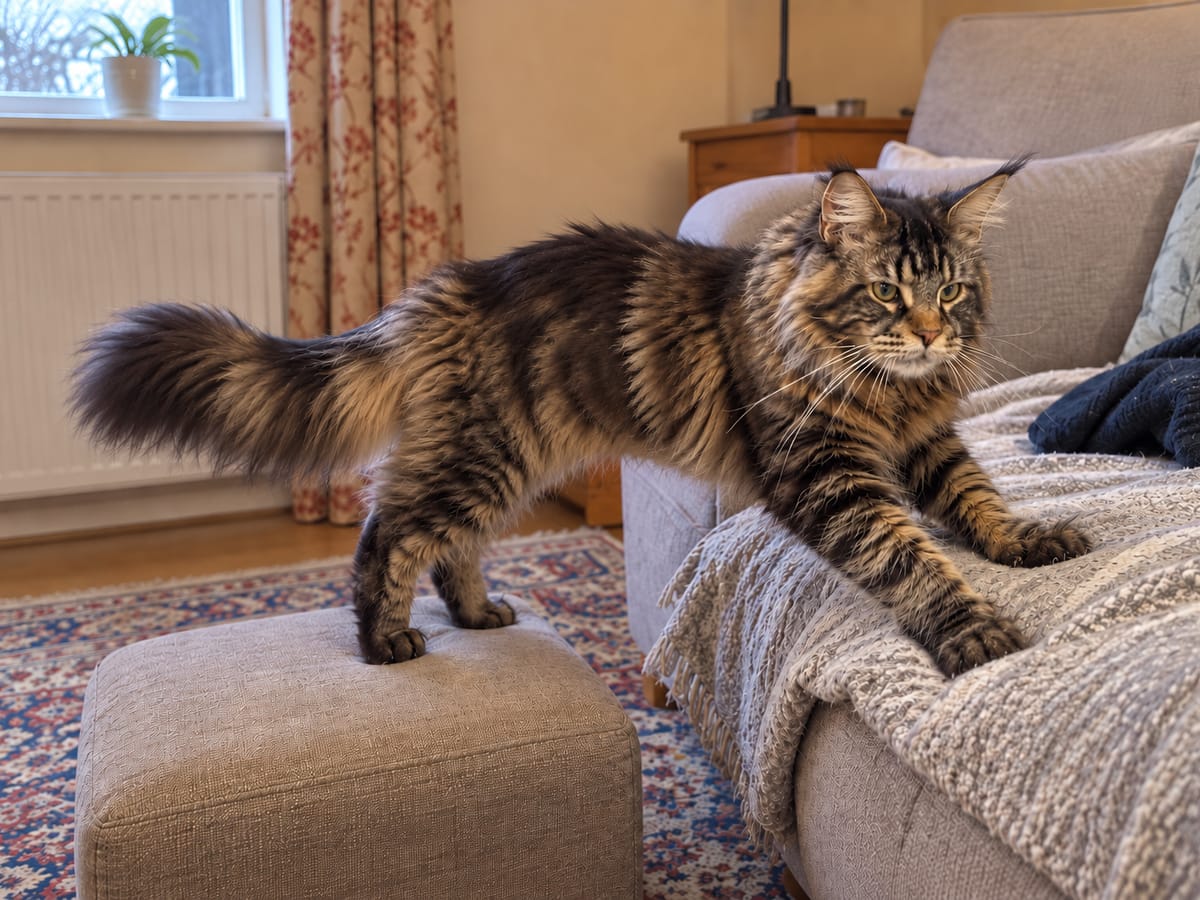
When to take an old cat who’s stopped grooming to the vet
Tell your vet when the grooming drops off. Cats Protection says to contact your vet if you’re concerned about your cat’s lack of grooming, and Cornell Feline Health Center says any change in behaviour or health, sudden or gradual, warrants a visit without delay.
International Cat Care asks you to make an appointment if an older cat shows signs such as changes in grooming, loss of appetite, weight loss, drinking more, stiffness, limping or difficulty jumping, tiredness, or lumps anywhere on the body. Cats Protection’s list also has changes in appetite or thirst, sudden changes in behaviour, and changes in mobility and toileting.
Don’t put it off. PDSA says arthritis is a painful condition that can be well managed with some simple changes, and Cats Protection says pain relief is the recommended treatment. Never give your cat human anti-inflammatories, even ibuprofen: Cats Protection says they can be highly toxic to cats and even fatal. PDSA warns that paracetamol is highly toxic to cats too, and International Cat Care says the only medication you should give your cat is what your vet has prescribed.
Regular checks help as well. Cats Protection says that from around seven or eight years old your vet may suggest a check-up twice a year, and PDSA suggests every 6 to 12 months for an older cat.
What to write down for the vet
Grooming fades slowly, so a note helps you see it. PDSA suggests thinking back to what your cat was like a few months or years ago, because cats hide pain and the signs often get missed.
Write down where the coat has changed, when you last saw your cat wash, any mats or flakes, and how they manage jumps and the litter tray. Lapka Care is a diary for notes like these, and it puts everything that matters for the vet into one PDF.
What a few weeks of notes can look like
3 October: found a small mat at the base of Tosha’s tail and teased it out. The fur on the lower back looks greasy.
10 October: five minutes of brushing on my lap. Fine on the shoulders, tensed near the hips, so I stopped.
15 October: didn’t jump onto the windowsill, used the chair instead. White flakes along the spine.
19 October: a second mat in the same place. Booked the vet.
The notes show the coat and the jumping changing together, in the same part of the body. That gives the vet much more to go on than “he looks a bit scruffy”.
Questions people ask
Why is my old cat not grooming himself anymore?
Often because reaching has become hard or sore. International Cat Care says less grooming may point to long-term pain from arthritis or dental disease, and PDSA adds being overweight. Cornell Feline Health Center says a sudden lack of grooming may signal a health problem, so let your vet know.
Is it normal for a senior cat to stop grooming?
It’s common, but it’s still worth a vet visit. Cats Protection says older cats may not be as flexible and can start to look bedraggled. It also says an increasingly unkempt coat may be a sign of pain in the joints or the mouth, and suggests contacting your vet if you’re concerned.
Should I bathe an old cat who doesn’t wash?
Usually not. International Cat Care says a healthy cat has no need for a bath and most don’t tolerate it well. Brush gently instead, and wipe the eyes and the back end with moist cotton pads. Battersea suggests warm, not hot, water.
What litter box suits a senior cat with arthritis?
One that’s easy to step into. International Cat Care suggests at least one low side and soft, sandy litter, and Cats Protection says rough litters such as gravel or wood pellets can be uncomfortable for elderly cats. Put it where your cat can reach it without a climb.
How often should an older cat see the vet?
Cats Protection says that from around seven or eight years old your vet may suggest a check-up twice a year. PDSA suggests every 6 to 12 months for an older cat, and Cornell Feline Health Center calls six-month check-ups for geriatric cats great. Between visits, any change in grooming is a reason to call.
Can I give my old cat painkillers for stiff joints?
Only what your vet prescribes. Cats Protection says never to give your cat human anti-inflammatories, even ibuprofen, because they can be highly toxic to cats and even fatal. PDSA says paracetamol is highly toxic to cats too.
Sources
- Cats Protection — Elderly cats: care guide for older cats
- Cats Protection — Arthritis in cats
- International Cat Care — Special considerations for senior cats
- International Cat Care — Arthritis in cats
- International Cat Care — Grooming your cat
- Battersea — Caring for an older cat
- PDSA — Arthritis in cats
- PDSA — Dry skin and dandruff on cats
- Cornell Feline Health Center — Loving care for older cats