
The short answer
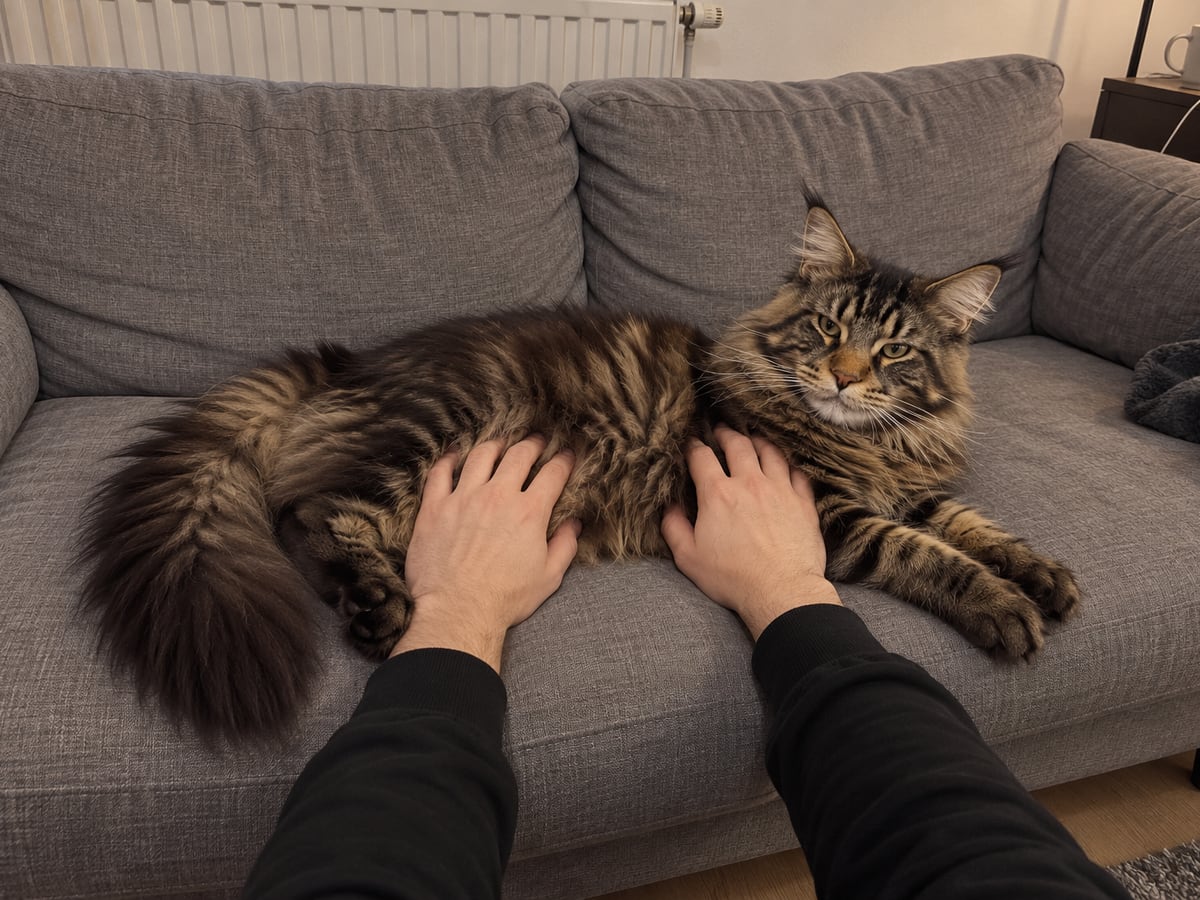
Feel, don’t look. Run your hands along your cat’s sides: PDSA says you should feel the ribs with a light touch, and the spine and hip bones without seeing them. The tummy should go in, and from above you should see a waist. If you have to press through a layer of fat to find the ribs, your cat may be carrying extra weight, not extra fur. Cats Protection puts the average cat at about 4 kg.
Is my cat overweight or just fluffy?
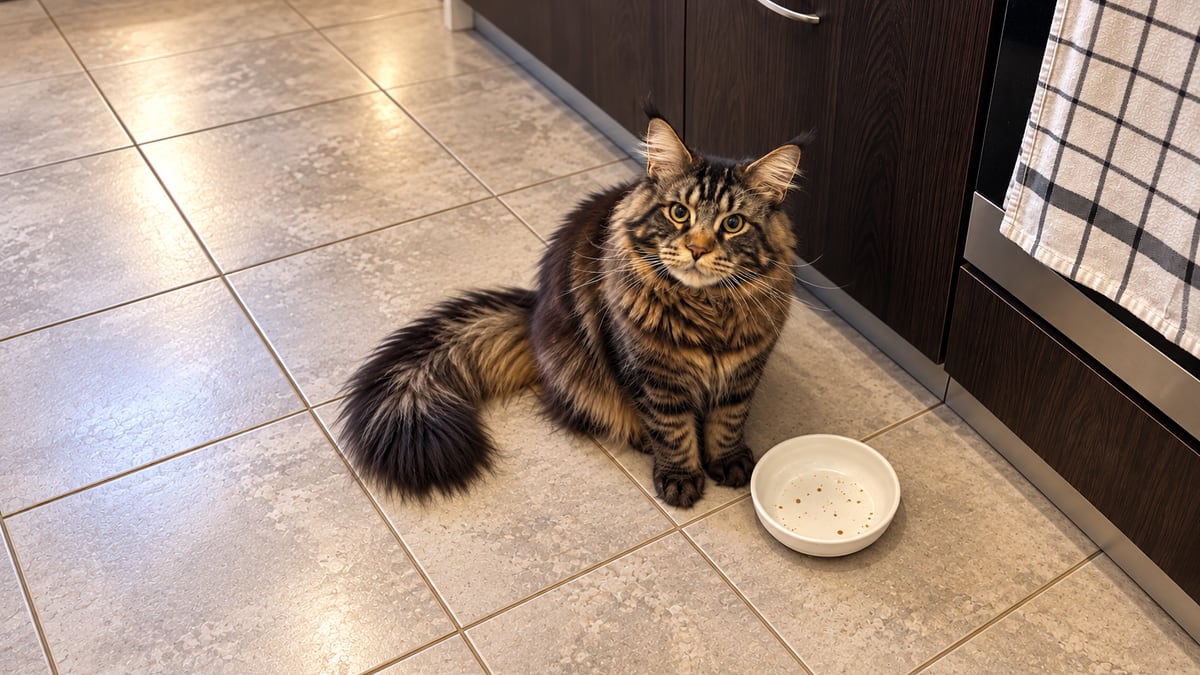
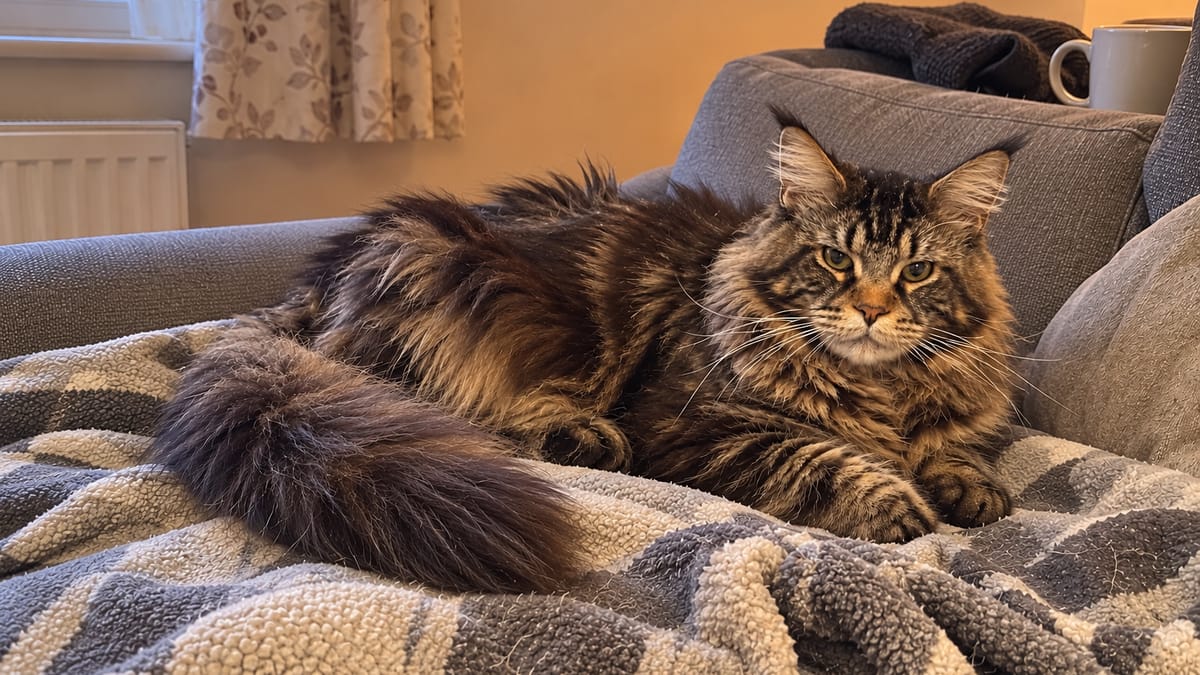
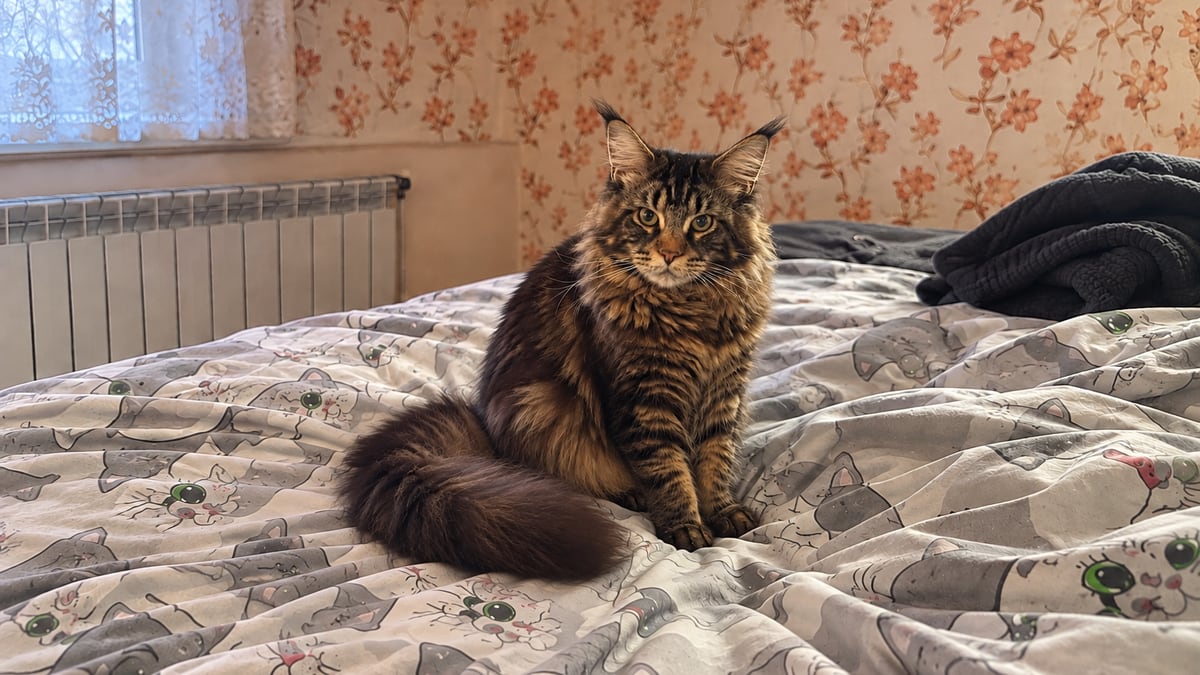
Fur makes this hard to judge by eye. Cats Protection says that with a cat covered in soft fur, it can be difficult to tell whether the body underneath is a healthy size, or whether they’ve been piling on the pounds.
So the answer is in your hands. PDSA says a cat’s weight might go up and down, but their body shape should always stay roughly the same, and there’s no one exact ideal weight for cats. Shape is what you check, and with a long coat you check it by feeling.
It’s easy to miss because you see your cat every day. PDSA points out that you might not notice them piling on the pounds at first, and International Cat Care says the early stages of weight gain are as hard to see as weight loss in a cat you live with.
How to tell if your cat is overweight, step by step
PDSA’s body condition check needs nothing but your hands and your eyes.
Run your hands along your cat’s sides. The skin should move freely over the ribs, and you should be able to feel them with a light touch. Cornell Feline Health Center describes the same rib check: both hands, palms down, across the ribcage on each side.
Then run your hands along the back. You should feel the spine and hip bones under the skin without being able to see them. Gently feel the base of the tail, where there shouldn’t be a build-up of fat. Feel under the tummy too. It should go in, not bulge out.
Last, look at your cat from the side and from above. You should be able to see a waist. If not, PDSA says, your cat may be overweight.
How to tell if a fluffy cat is overweight
With a long coat, trust the rib check over the look. Cats Protection describes a cat at their ideal weight as one whose ribs you can feel easily, with minimal fat cover, and whose backbone you can feel under a thin covering of fat but not see.
In an overweight cat, it says, the ribs are difficult, maybe even impossible, to feel beneath the fur, because fat covers them. The backbone may be covered with a layer of fat so it can’t be felt or seen. There’s no obvious waist, and the belly may bulge out from behind the ribs and even have a pad of fat that sags down.
Fur changes what you see far more than what you feel. Cats Protection notes that you can easily see the ribs and spine of an underweight cat, especially if they have short fur. On a long-haired cat you may see none of that, so let your fingertips go through the coat to the body.
If you’re still not sure, Cats Protection suggests asking your vet to assess your cat for you.
A swinging belly: fat or the primordial pouch?
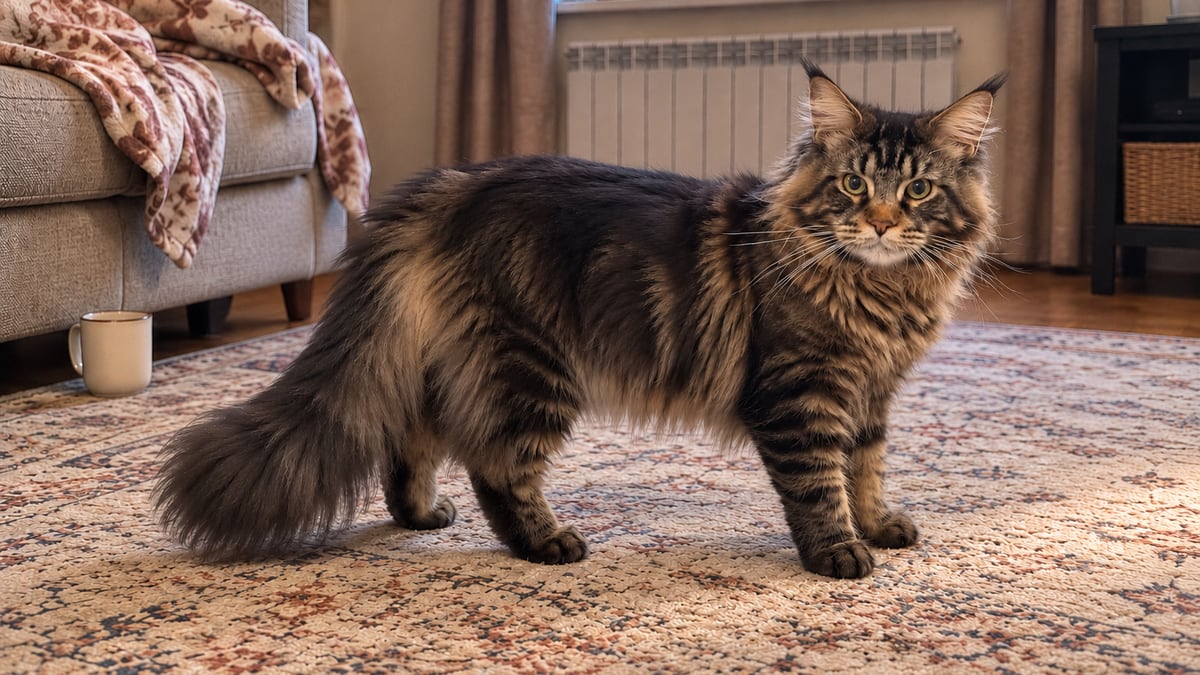
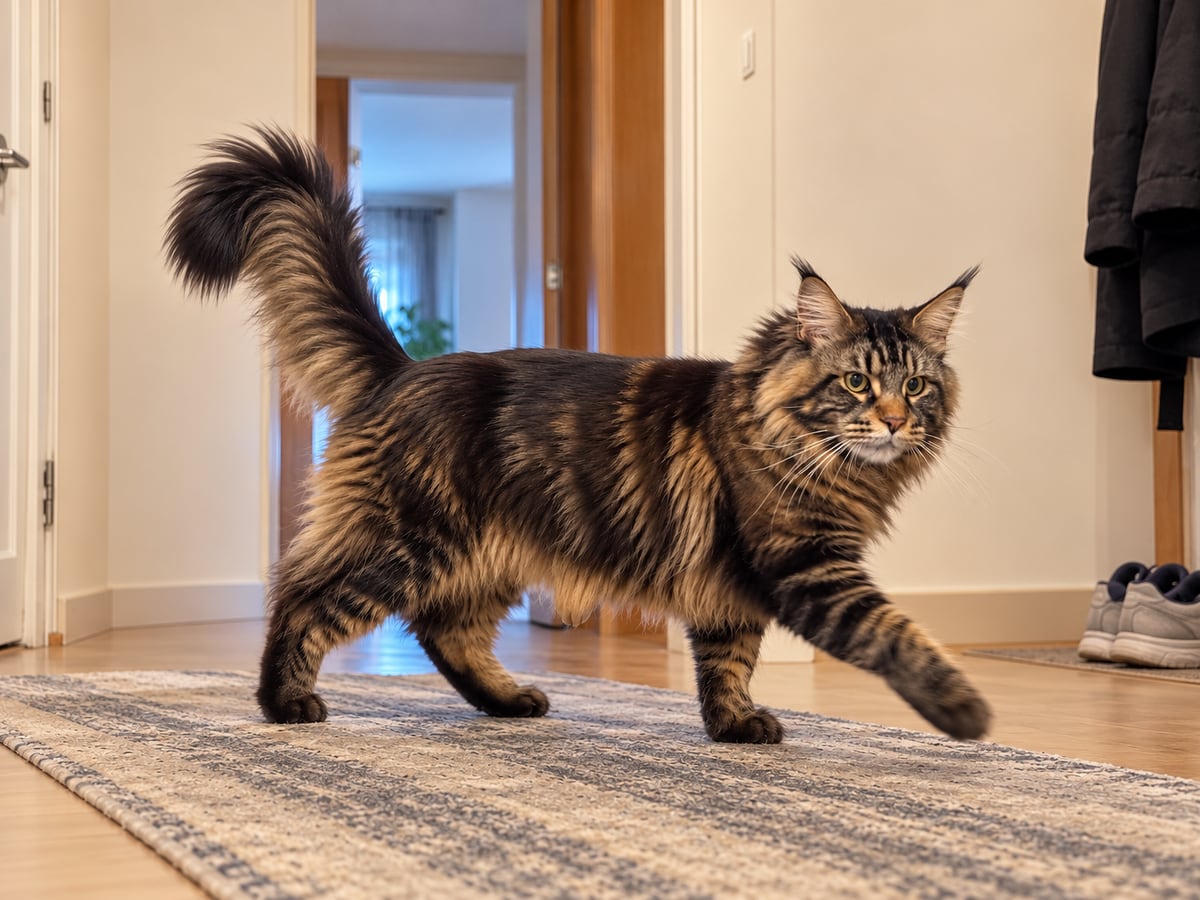
Many owners notice the belly first, swinging from side to side as their cat walks. Cats Protection says it may be the primordial pouch: a flap of loose skin, fatty tissue and fur that covers a cat’s belly. All cats have one, male and female. It develops at around six months old, never goes away, and is much more noticeable on some cats than on others.
Cats Protection gives two clues to tell them apart. The belly of an overweight cat won’t sway as much as a primordial pouch when the cat walks or runs, and it feels much firmer. And look at the whole body: if the ribs and spine are hard to feel under fat and the belly bulges out from behind the ribs, the cat may be overweight.
The pouch can get saggier with age, as the skin loses elasticity, and Cats Protection calls that completely normal. And it isn’t only neutered cats who have one. Cats Protection calls that a myth, which probably comes from neutered cats putting on weight and growing a large belly when they keep getting the same amount of food.
If you notice any change in your cat’s body, Cats Protection says it’s best to speak to your vet, in case there’s a medical cause.
Is my cat overweight or just big?
A big cat can be a slim cat. PDSA says a cat’s ideal weight varies with their size, age and breed. International Cat Care says the ideal weight depends on age and breed, which is why a body condition score is often used instead of weight alone.
PDSA’s breed pages show how wide the range is: an average Maine Coon weighs 7 kg, and an average Devon Rex 3.6 kg. So the number on the scales means little until you know the frame it sits on. The hands-on check works the same on a cat of any size: ribs you can feel with a light touch, a waist, and a tummy that goes in.
Breed also changes the odds. International Cat Care says pedigree cats are less likely to develop obesity than domestic cats.
How much should a cat weigh?
Cats Protection puts the average weight for a cat at approximately 4 kg (9 lb), and says it can vary depending on many factors. Your vet can tell you what weight is healthy for your cat.
Breeds differ more than most people expect. The table lists the average weights from PDSA’s breed pages, with the coat length PDSA gives each breed. A long coat doesn’t mean a heavy cat: PDSA’s average Persian, a long-haired breed, weighs less than its average British Shorthair.
These are breed averages, not a target for your own cat.
| Breed | Coat | Average weight |
|---|---|---|
| Devon Rex | Short | 3.6 kg |
| Persian | Long | 4.6 kg |
| British Shorthair | Short | 5 kg |
| Burmese | Short | |
| Siamese | Short | 5.2 kg |
| Bengal | Short | 5.5 kg |
| Ragdoll | Long | |
| Maine Coon | Long | 7 kg |
The body condition score vets use
Vets put the hands-on check on a scale. PDSA uses nine points and says a cat at six to nine is looking pretty podgy and might be worth putting on a diet. Cornell Feline Health Center, on a nine-point scale too, says a score of 4.5 to 5 means a cat is at their ideal weight, a score above 6.5 or 7 means overweight, and 8 or above severely overweight or obese.
International Cat Care uses a shorter scale, from 1, very thin, to 5, obese, with 3 as ideal. In its words, an obese cat has a thick layer of fat over the ribs that makes them hard to feel, fat over all the bony areas, a hanging bulge under the belly, and no waist.
There are numbers for weight as well. Cats Protection calls a cat overweight at 10% over their ideal weight and obese at more than 20%. International Cat Care puts overweight at 10 to 19% above the ideal weight, and Cornell says obesity is generally viewed as 20 percent or more above normal weight. For a cat whose ideal is 4 kg, 10% is just 400 g.
How to weigh your cat at home
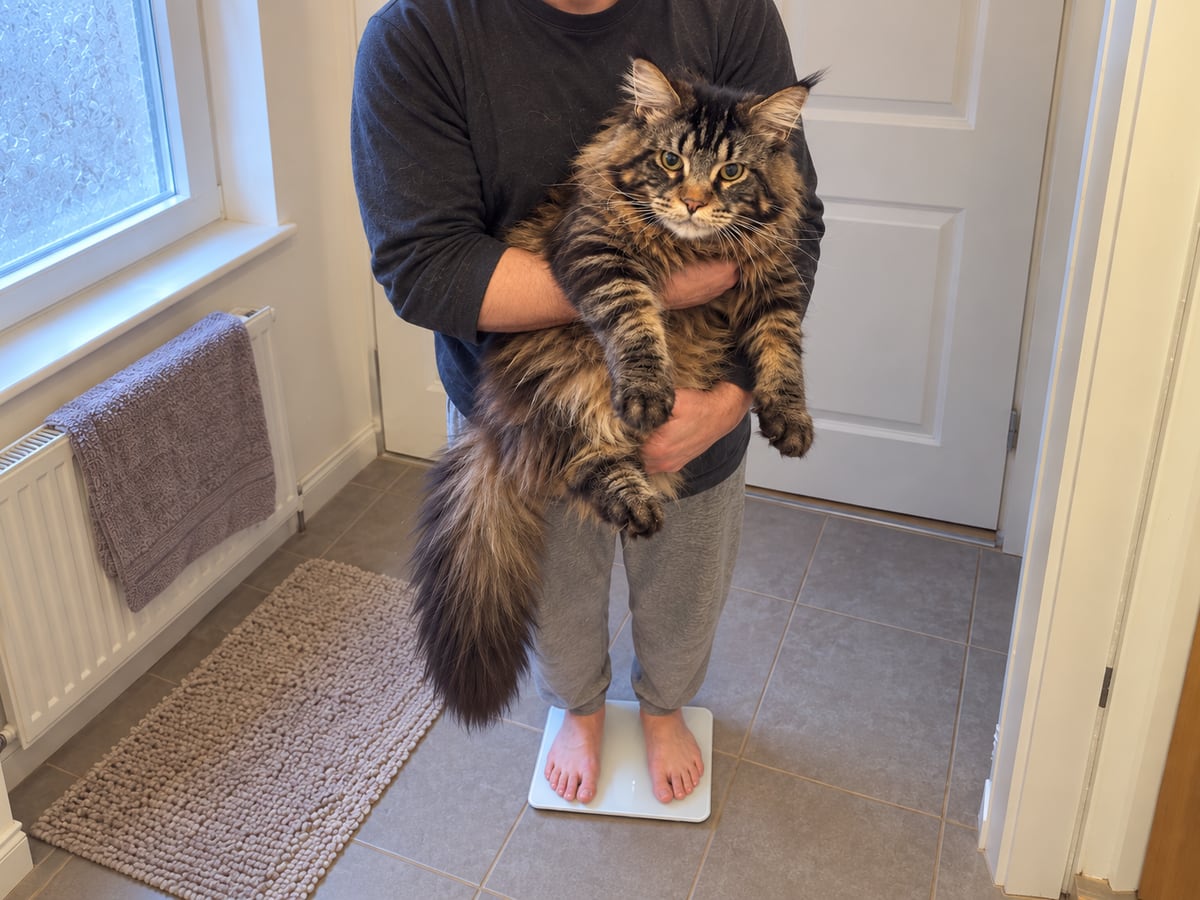
Cats Protection admits that weighing a cat at home can be tricky, as they may not stand still on the scales. Its tip: stand on the scales yourself while holding your cat, or put your cat in a carrier on the scales. Then take away your own weight, or the carrier’s.
International Cat Care mentions baby scales for weight checks at home, and Cornell Feline Health Center quotes a vet who always recommends that the owner of a chubby cat buy a baby scale.
Weigh the same way each time and write the number down with the date. Cats Protection suggests tracking your cat’s weight at home between vet visits, so you can spot big changes early, and PDSA says the weight should also be checked at the yearly health check. Lapka Care is a diary for notes like these, and it puts everything that matters for the vet into one PDF.
When to see the vet about your cat’s weight
Extra weight is worth acting on. PDSA says overweight cats are more likely to get diabetes and arthritis and to have a shorter lifespan, and lists cystitis among the risks of obesity too. International Cat Care adds stress on the joints, some skin diseases and breathing problems such as asthma. PDSA even lists being overweight among the reasons a cat can’t groom properly and gets dandruff.
If you think your cat is overweight, start with the vet, not a smaller portion. International Cat Care says not to restrict food without talking to your veterinary team, because sudden food restriction can make cats ill. Losing weight too quickly is dangerous as well: fat can build up in the liver, a disease that can be fatal. A Cornell vet says any weight-loss plan should be run under a vet’s direction, aiming for a gradual loss of perhaps one or two percent of body weight a week, and International Cat Care says a severely overweight cat may take up to a year to reach their ideal body condition.
PDSA says to feed the amount for your cat’s ideal weight, not their actual weight. So a 5 kg cat whose ideal weight is 3.5 kg gets the amount recommended for a 3.5 kg cat. It also says to cut the meals down slowly, over a couple of weeks.
A weight that changes on its own is a reason to go. PDSA says to take your cat to the vet if they suddenly start losing weight, or lose it very quickly, because medical problems can cause it. It says weight gain is rarely caused by a medical problem, but to have your cat checked if you think it is, and, with an unneutered female who could have met a male, to rule out pregnancy.
What a few months of weigh-ins can look like
5 January: 7.9 kg. Holding the cat 72.4 kg, on my own 64.5. Ribs only with a firm press, no waist from above.
9 January: the vet scored body condition 7 out of 9. Plan: weigh the food, more play, weigh again in four weeks.
6 February: 7.7 kg. Same scales, same time of day.
6 March: 7.5 kg. The ribs come up under the fur with a lighter touch now.
Weighed the same way each month, the numbers can be compared, and the vet sees a slow, steady line instead of a guess.
Questions people ask
How much should a Maine Coon weigh?
PDSA gives the Maine Coon an average weight of 7 kg, the most of the breeds in the table above. Maine Coons have a long coat, so the same hands-on check applies: ribs you can feel with a light touch, a waist from above, and a tummy that goes in.
Is 5 kg too heavy for a cat?
It depends on the cat. Cats Protection puts the average cat at about 4 kg, while PDSA gives the British Shorthair and the Burmese an average of 5 kg. PDSA’s own example is a 5 kg cat whose ideal weight is 3.5 kg. Your vet can tell you what weight is healthy for yours.
Do cats get fat after neutering?
They can. International Cat Care says a cat’s metabolic rate drops by about 20% after neutering, so neutered cats need less food to stay in the same condition. Cats Protection says a cat who keeps getting the same amount after neutering could put on weight and develop a large belly.
Can I just put my cat on a diet?
Not on your own. International Cat Care says not to restrict food without talking to your veterinary team, because sudden restriction can make cats ill and some health checks may be needed first. Your vet can put together a feeding and exercise plan and keep a careful eye on how it goes.
Do cats lose weight as they get older?
Some do. International Cat Care says cats over 10 can begin to lose weight, but can also stay obese, while cats between 2 and 10 need less energy and are more likely to be overweight. At any age, PDSA says a cat who suddenly starts losing weight, or loses it very quickly, should see the vet.
Is it normal for a cat to have a saggy belly?
Yes, if it’s the primordial pouch, the flap of loose skin, fatty tissue and fur that Cats Protection says every cat has. It sways when the cat walks. A fat belly sways less, feels much firmer and comes with ribs that are hard to feel.
Sources
- Cats Protection — Is my cat the correct weight?
- Cats Protection — What is a primordial pouch and why do cats have one?
- PDSA — Vet Q&A: How do I know if my cat is too fat?
- PDSA — Your cat’s Body Condition Score
- PDSA — Obesity in cats
- PDSA — Dandruff in cats
- PDSA — Maine Coon
- PDSA — Ragdoll
- PDSA — Bengal
- PDSA — Siamese
- PDSA — British Shorthair
- PDSA — Burmese
- PDSA — Persian
- PDSA — Devon Rex
- International Cat Care — Obesity in cats
- Cornell Feline Health Center — Obesity