
The short answer
A cat at rest normally takes 15 to 30 breaths a minute, says the director of Cornell Feline Health Center. To check, wait until your cat is sound asleep, still and not purring, then count how often the chest goes in and out in a minute. A count that keeps coming out above 30 is worth a call to your vet. Panting, an open mouth or a struggle to breathe means the vet now.
Cat breathing fast while sleeping: what’s normal
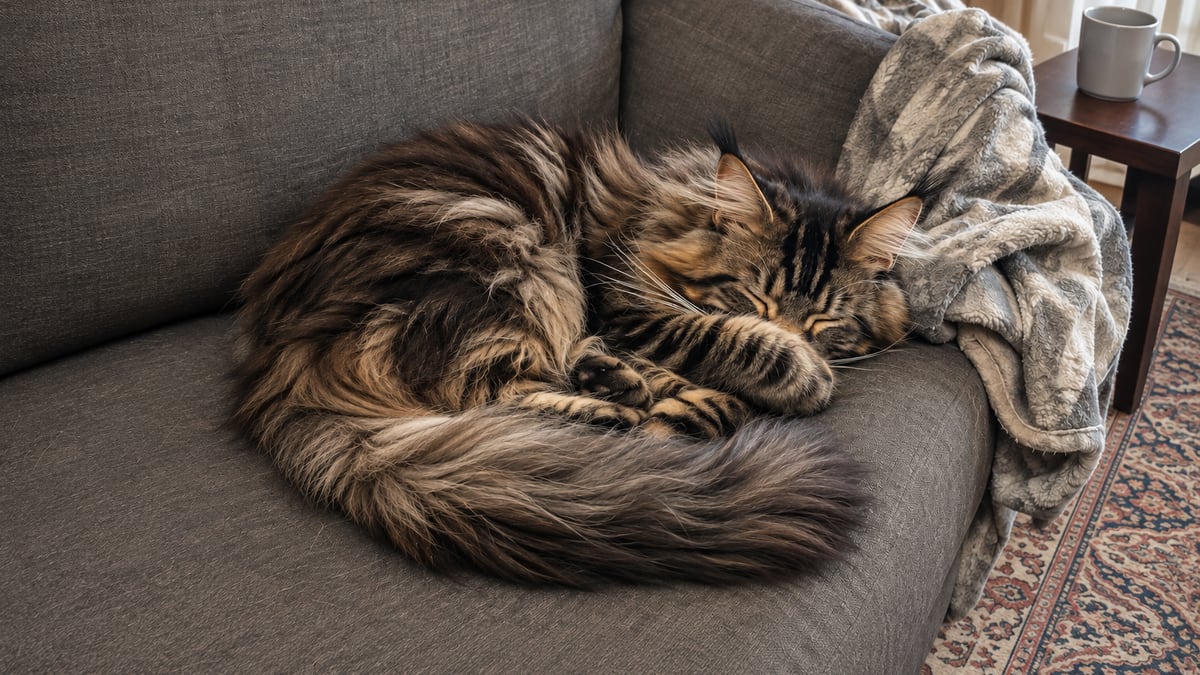
Most cats breathe slowly and quietly in their sleep. Bruce Kornreich, the cardiologist who directs Cornell Feline Health Center, puts the normal resting rate for cats at 15 to 30 breaths a minute.
In a study in the Journal of Feline Medicine and Surgery, owners counted their cats’ breaths at home while the cats were in deep sleep. The healthy cats had a median of 19 breaths a minute, and their average infrequently went over 30. Each cat’s own count didn’t vary markedly from day to day, so your cat’s usual number is worth knowing while all is well.
PDSA offers a simpler test. As a rule, you shouldn’t be able to hear or see your cat breathing unless you look and listen very closely. If the breathing seems noisy or fast, or the chest or belly moves a lot, PDSA says this is often a sign of a problem.
How to count your cat’s breaths while they sleep
Wait until your cat is sound asleep somewhere cool. That’s how FelineVMA’s breathing log for owners begins, and the study also asked owners to keep their cats away from extremes of heat and cold.
Watch the chest. In and out together counts as one breath. Count for a full minute, as the owners in the study did, or count for 15 seconds by a clock or watch and multiply by 4, as FelineVMA’s log does.
Take up to three readings each time, FelineVMA says, and write each one down with the date and time. If your vet wants you to count regularly, they’ll tell you how often.
Cat breathing fast while sleeping and dreaming
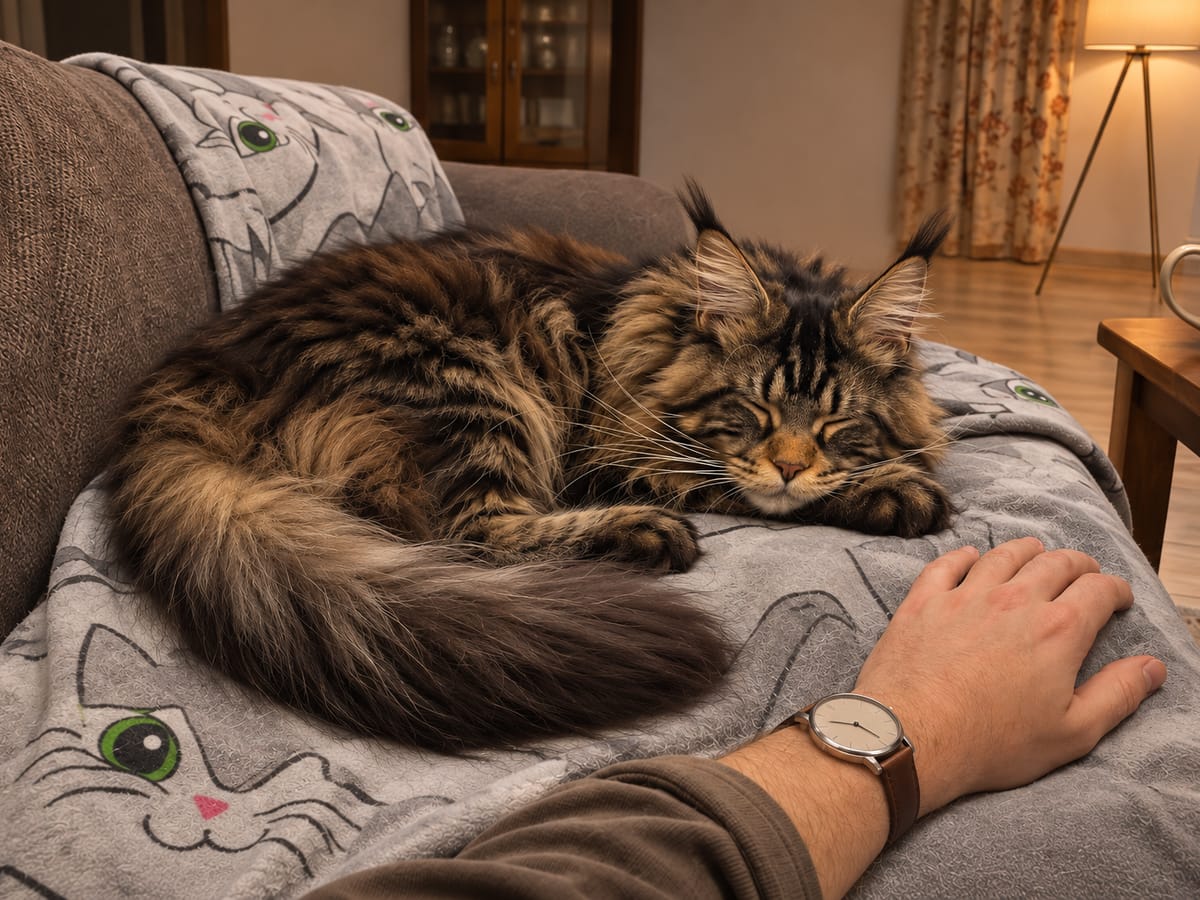
Moving paws and twitching whiskers are what Cats Protection describes for REM sleep. In it, cats may twitch their whiskers, flick their ears, move their paws or legs and show rapid eye movements beneath closed eyelids. A twitching whisker or flicking ear is usually nothing to worry about, it says.
That isn’t the moment to count. The study told owners not to count during “active motor sleep”, such as paddling or twitching. Wait until your cat goes still, then start.
There’s no need to wake them to check. Cats Protection says it’s generally best not to disturb a sleeping cat, and most adult cats sleep for around 16 hours a day, so another chance will come. It does list unusual breathing patterns while asleep among the things worth raising with your vet.
Cat breathing fast while sleeping and purring
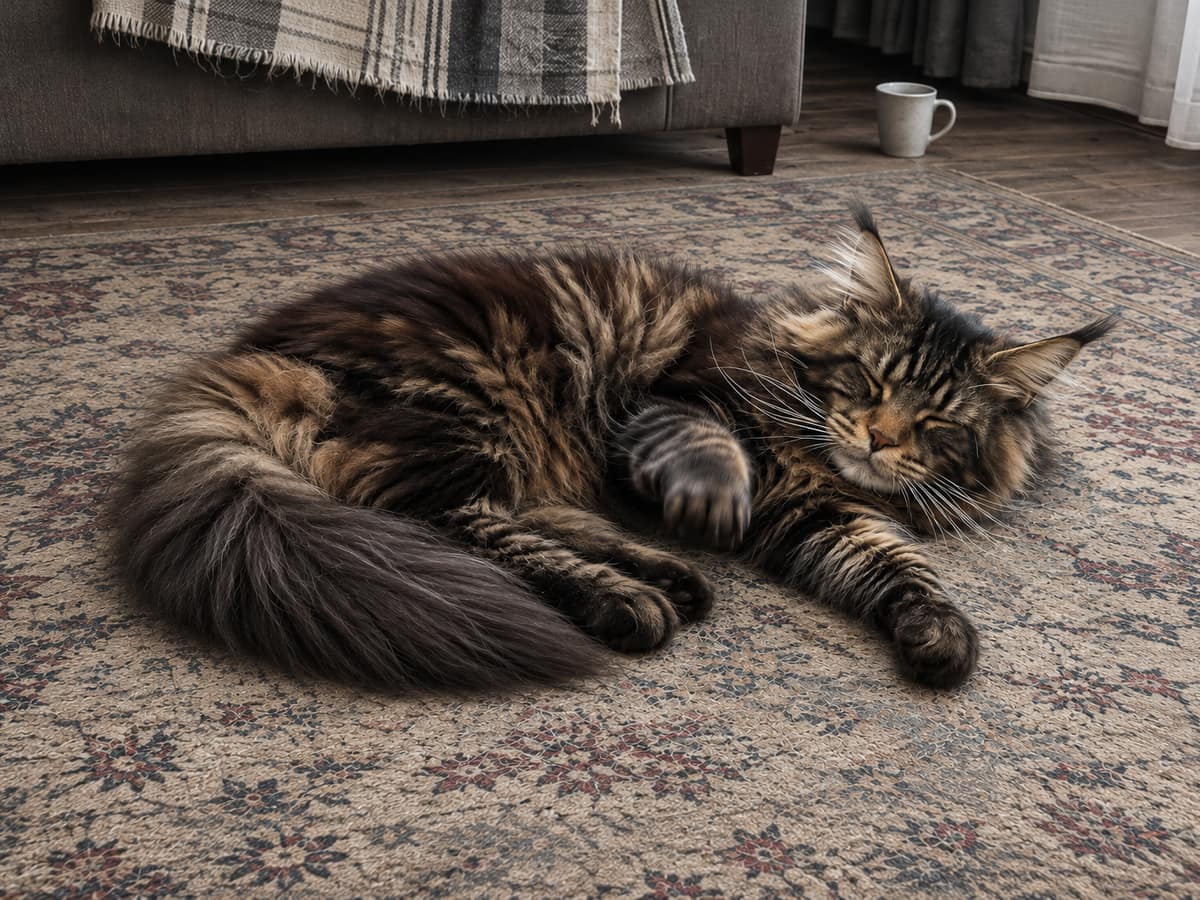
Count once the purring has stopped. In the study, owners were told not to count a resting cat’s breaths if the cat was obviously purring, and the sleeping counts were taken in deep sleep.
If your cat drifts off purring on your lap, let them settle and try again at the next still nap. Purring doesn’t cancel the urgent signs: if your cat is struggling to breathe, panting or breathing with an open mouth, PDSA says to contact your vet immediately.
Why is my cat breathing fast while resting?
Warmth is one ordinary reason. The study’s authors say it’s possible that some of their higher sleeping counts were taken while the cats were hot, for example asleep in front of a warm fire or in direct sunlight. So count again when your cat is asleep somewhere cool.
What matters is a high count that stays high. In the study, 14% of the healthy cats now and then had a sleeping count above 30. Cats with several counts above 30 likely warrant a closer look by a vet, the authors say.
The sources draw the line in slightly different places. Cornell’s Kornreich says a rate above 35 a minute in a relaxed or sleeping cat should prompt a talk with a vet. FelineVMA’s log, written for cats with heart disease or a suspicion of it, calls fewer than 30–40 normal and says to call the vet at 40 or more. If your cat is already being treated for their heart, ask your vet which number to watch for.
Fast breathing has many possible causes. PDSA’s list for breathing problems includes shock or stress, feline asthma, cat flu and other respiratory infections, heart problems, heatstroke and anaemia. That’s why a count that stays up goes to the vet instead of being guessed at home.
Cat breathing fast in hot weather
On a hot day, fast breathing can be the start of heatstroke. PDSA puts panting and fast breathing first on its list of signs, followed by bright or dark red or sometimes very pale gums, vomiting, weakness, confusion, wobbliness and collapse.
PDSA names the cats most at risk: cats with long coats, obese cats, flat-faced breeds such as Persians, very old cats and very young kittens, and cats with heart and lung disease.
If you think it’s heatstroke, PDSA’s first aid starts with moving your cat indoors to a cool room or into the shade and cooling them straight away. Slowly pour cold water over their whole body (water from the cold tap is fine), and make a breeze with a fan or by opening doors and windows. Then call your vet as soon as possible.
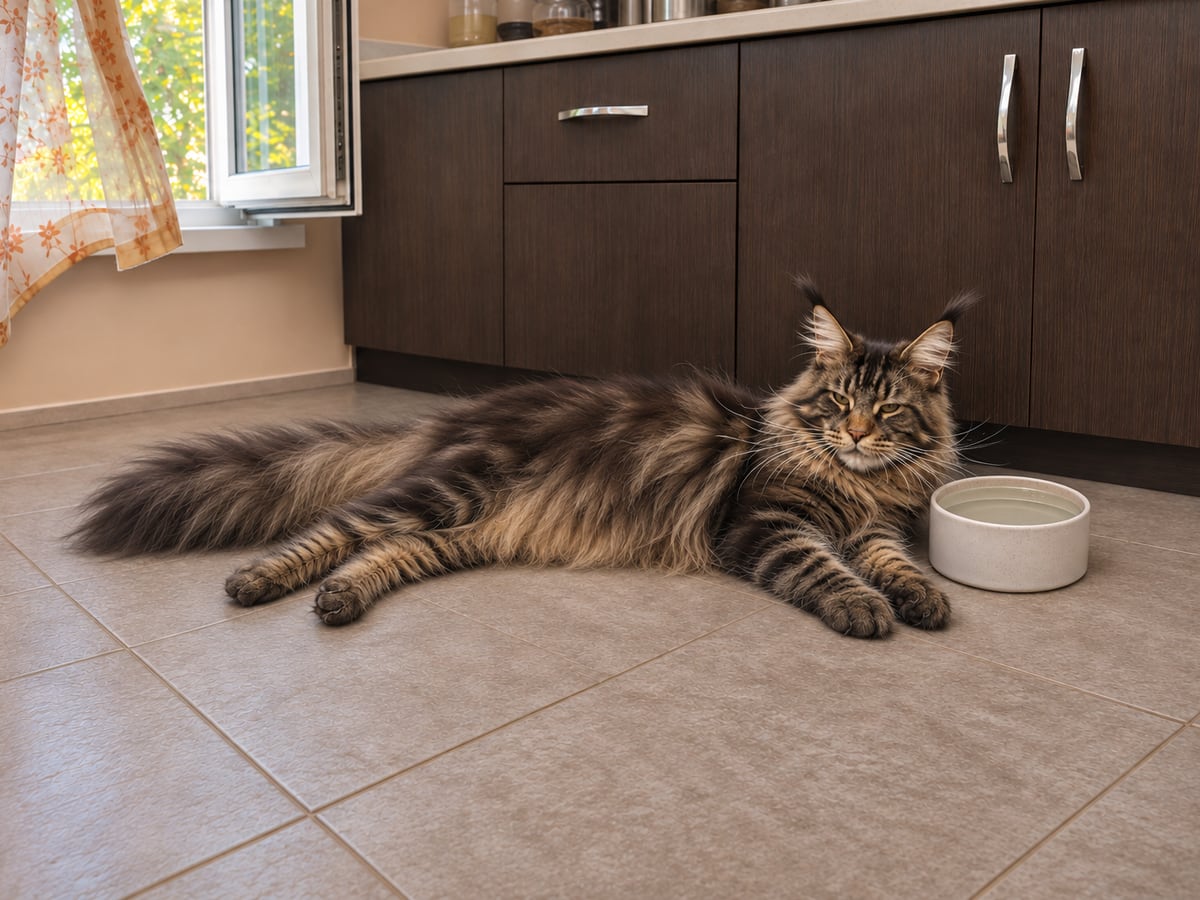
Before it gets that far, PDSA suggests plenty of water bowls inside and outside the house, a cool room indoors for your cat to snooze in, and cold ceramic tiles or a cooling mat to lie on.
Older cat breathing fast while sleeping
In an older cat, a sleeping count that creeps up is worth taking to the vet. PDSA says heart disease is most common in middle-aged to older cats, and that fast, shallow, noisy or heavy breathing is often one of the first signs. Most cats don’t show signs of heart disease until it’s already serious, PDSA adds.
International Cat Care says that in the early stages of cardiomyopathy (heart disease), cats may show no signs at all and seem completely normal, and that the most common sign of heart failure is difficulty breathing and/or more rapid breathing. FelineVMA’s log explains why vets ask some owners to count at home: a rise in the sleeping rate may suggest advanced heart disease, and noticing it helps the cat get treatment early instead of waiting for laboured breathing.
Breed plays a part. Maine Coons and Ragdolls are at greater risk of hypertrophic cardiomyopathy (HCM), say International Cat Care and PDSA.
An overactive thyroid is another older-cat problem. International Cat Care says hyperthyroidism is usually seen in middle-aged and older cats, rarely in cats under 7, and can bring an increased heart rate. Some of these cats, especially in advanced cases, also pant when they’re stressed, which it calls very unusual in healthy cats. Your vet is the one to find out what is behind a change.
Why is my cat breathing fast with mouth open?
Cats nearly always breathe through their nose, PDSA says. A cat who is panting or breathing through their mouth is either extremely stressed or really struggling to breathe. Contact your vet immediately, and never wait to see if things improve.
Asthma is one cause. International Cat Care lists fast breathing, open-mouthed breathing or panting among its signs, and says this can happen after exercise such as play. Persistent coughing in short bouts, noisy breathing and wheezing are on the same list. If you think your cat may be having an asthma attack, International Cat Care says, this is an emergency.
PDSA also lists panting or breathing with an open mouth among the signs of heart disease, and mouth breathing or panting among the signs of heatstroke.
Cat breathing fast with their belly
Normally you have to look closely to see a resting cat breathe, PDSA says. If the chest or belly moves a lot with each breath, it says this is often a sign of a problem. Cornell Feline Health Center says cats with congestive heart failure usually show more effort to breathe as well as a faster rate.
Count the breaths and look at the gums. Heavy, noisy, fast or shallow breathing and pale gums are on PDSA’s list of signs that a cat is struggling to breathe, and a cat struggling to breathe goes to the vet immediately.
When to see a vet straight away
Contact your vet immediately if your cat is struggling to breathe, panting or breathing with an open mouth, PDSA says. Pale gums and collapse are among the signs it lists of a cat struggling to breathe.
Cornell Feline Health Center calls rapid or laboured breathing and sudden paralysis medical emergencies that must be addressed immediately. International Cat Care describes that paralysis as a sudden loss of use of one or both back legs.
A suspected asthma attack goes straight to the vet too, and so does heatstroke once you’ve started cooling your cat. If your practice is closed, call the out-of-hours number. FelineVMA’s log says to do that if the sleeping count is 50 or more.
Keep your cat calm on the way. PDSA says stress is likely to make a breathing problem much worse.
What to write down for the vet
At the clinic your cat is awake, in a carrier and probably on edge, so the vet won’t see them asleep. Bring your counts: the date and time, the number, whether your cat was asleep or resting, and anything that might matter, such as a warm spot or a game just before.
Film it as well. International Cat Care says it’s helpful to bring a video of abnormal breathing or coughing on your phone to show the vet.
Add the rest of the picture: coughing, appetite, play, how your cat sleeps. Lapka Care is a diary for notes like these, and it puts everything that matters for the vet into one PDF.
What a few evenings of breathing counts can look like
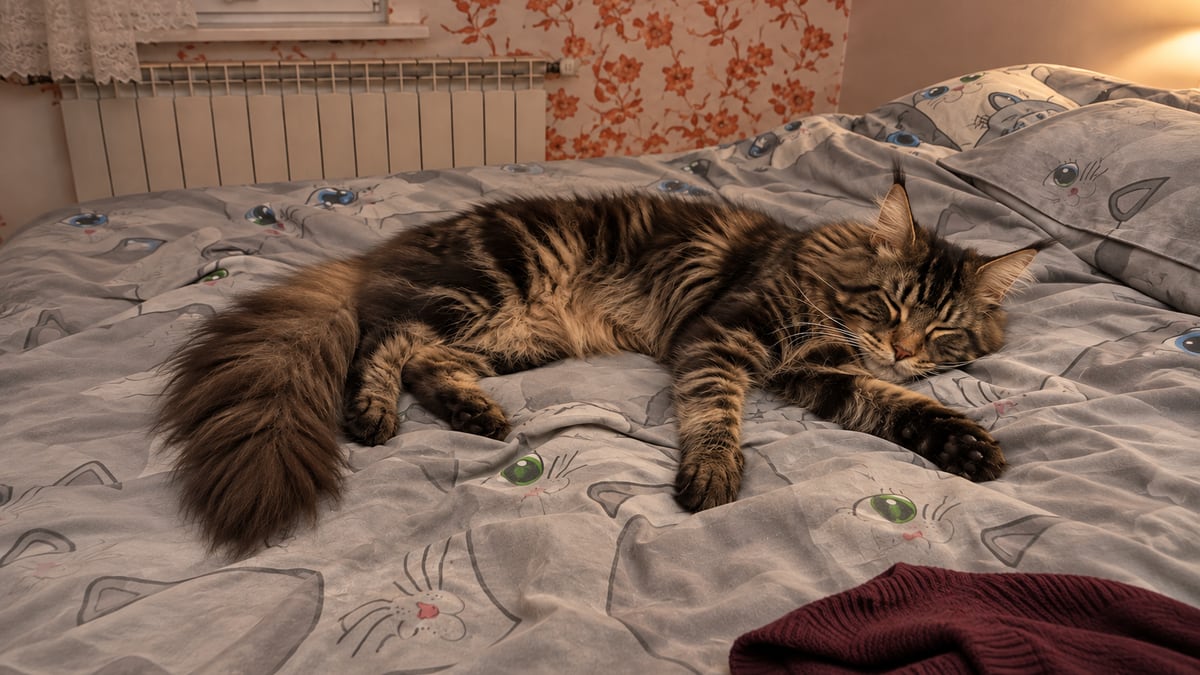
10 November, 23:40: Tom asleep on the bed, still, not purring. 6 breaths in 15 seconds, so 24 a minute.
11 November, 14:10: asleep on the sofa, paws twitching. Waited till he went still: 22 a minute.
12 November, 22:15: 36, then 38, then 37 over the evening. Mouth closed, breathing quiet. Called the vet, seen tomorrow morning.
Several counts above 30 are what the study says likely warrant a closer look, and the notes show the vet your cat’s usual number next to the change.
Questions people ask
Is it normal for a cat to breathe fast while sleeping?
Not usually. At rest a cat normally breathes 15 to 30 times a minute, Cornell says, and the healthy cats in the study had a median of 19 in deep sleep. Don’t count during a twitching dream, and a warm spot may push the count up, so count again when your cat is still and cool. If it keeps coming out above 30, call your vet.
How many breaths per minute is normal for a sleeping cat?
15 to 30 at rest, says the director of Cornell Feline Health Center. In the study where owners counted at home, the healthy cats’ median was 19. FelineVMA’s log for cats with heart disease calls fewer than 30–40 normal and says to call the vet at 40 or more.
Should I wake my cat if they’re breathing fast in their sleep?
Not to count. Cats Protection says it’s generally best not to disturb a sleeping cat, so wait for still sleep and count then. But if your cat is struggling to breathe, panting or breathing with an open mouth, don’t wait: PDSA says to contact your vet immediately.
Can hot weather make my cat breathe fast?
It can. The study’s authors think some of their higher counts may have come from cats sleeping somewhere hot. But panting and fast breathing are also the first signs of heatstroke on PDSA’s list. If your cat is panting in the heat, move them somewhere cool, start cooling them and call your vet.
My older cat is breathing fast while sleeping. What should I do?
Count a few times, as FelineVMA’s log does with up to three readings, and write the numbers down. If they stay above 30, call your vet. PDSA says heart disease is most common in middle-aged to older cats, and fast breathing is often one of the first signs.
Why is my cat breathing fast?
Warmth or stress can be behind it, and so can illness. PDSA’s list includes feline asthma, cat flu and other respiratory infections, heart problems, heatstroke and anaemia. Count when your cat is calmly asleep. A count that stays above 30 goes to the vet, and panting or an open mouth goes now.
Sources
- Cornell University — Tips for recognizing heart disease in pets (Cornell Feline Health Center)
- Cornell Feline Health Center — Cardiomyopathy
- FelineVMA — Your cat’s sleep respiratory rate (log for owners, PDF)
- Journal of Feline Medicine and Surgery — Sleeping and resting respiratory rates in healthy adult cats and cats with subclinical heart disease
- PDSA — Breathing problems in cats
- PDSA — Heatstroke in cats
- PDSA — Top tips for keeping your cat cool in summer
- PDSA — Heart disease and cardiomyopathy in cats
- International Cat Care — Cardiomyopathy (heart disease) in cats
- International Cat Care — Asthma and chronic bronchitis in cats
- International Cat Care — Hyperthyroidism in cats
- Cats Protection — Do cats dream?