
The short answer
Lots of sleep on its own tells you little: PDSA says cats sleep 15 hours a day on average, some up to 20. Look at how your cat sleeps and what they do awake. Cats Protection lists sleeping more than usual, hiding, hesitating to jump down from furniture, stiffness after resting, a hunched crouch with squinty eyes and eating less among the signs of pain. If you think your cat is in pain, or you aren’t sure, see your vet.
Is my cat in pain or just sleepy?
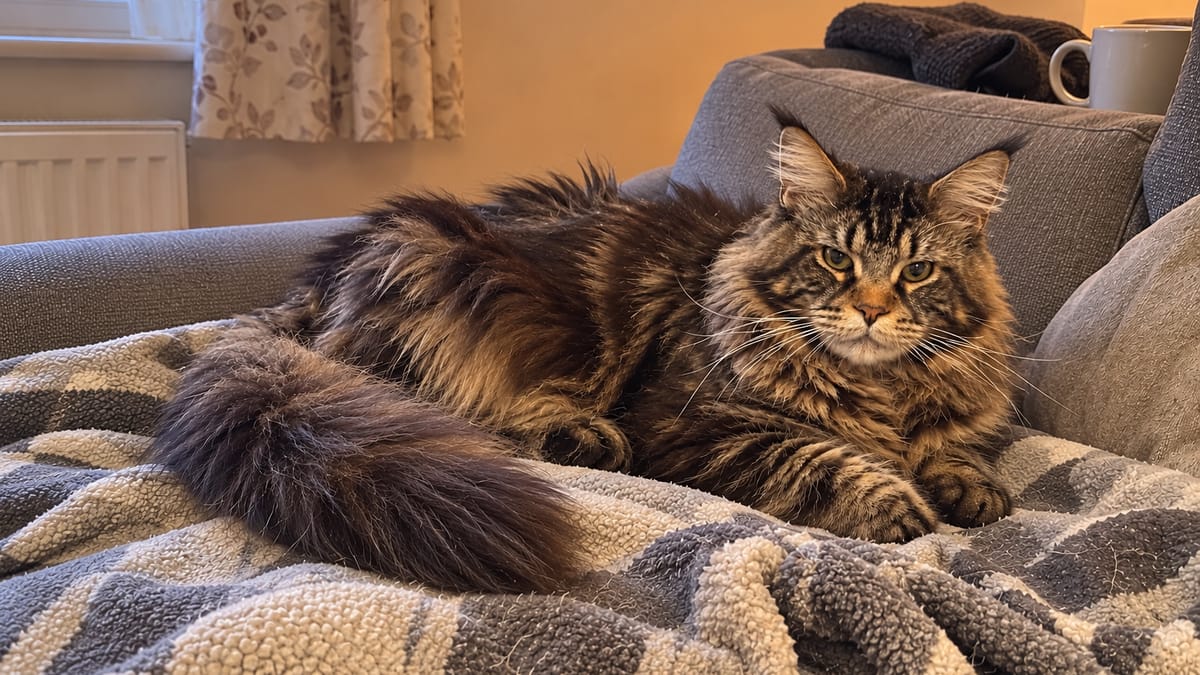
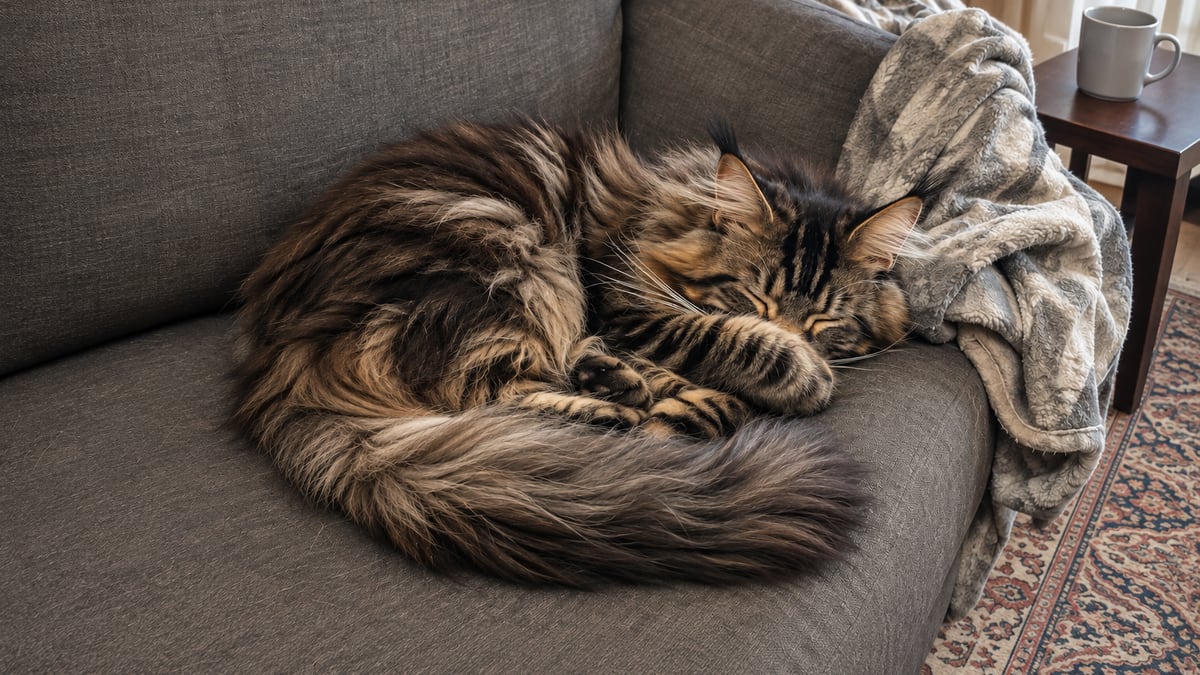
Lots of sleep is normal on its own. PDSA says cats sleep 15 hours a day on average, and some spend up to 20 hours asleep, usually in several short bursts rather than one long sleep. Kittens and older cats need more and may sleep closer to 20.
What matters is a change from your cat’s usual. Cats Protection puts “sleeping more than usual, or slowing down” on its list of pain signs, and PDSA says a cat who is ill or injured may spend more time asleep. A sudden change in the sleep pattern, or a lot more napping, can be a sign of a health problem, PDSA adds.
Then look at how they rest. International Cat Care lists resting in stiff positions instead of the usual relaxed curl, and sleeping in new, easier-to-reach places, among the signs of arthritis. Cornell Feline Health Center says a cat with sore joints may seem lethargic and look more and more for comforting places to nap, such as a warm corner or a spot of sun by a window.
And watch the hours they’re awake. PDSA says to speak to your vet if your cat is constantly lethargic and doesn’t want to do the things they enjoy, such as being petted, eating or playing.
Why do cats not show pain?
Cats Protection says cats are particularly good at hiding signs of pain. They are much more likely to show slight changes in lifestyle or behaviour than a limp.
Cornell Feline Health Center puts it down to a deep-rooted instinct for self-protection: a cat may hide that it is struggling so it doesn’t show a predator how vulnerable it is. International Cat Care says withdrawing and hiding is a typical response to pain. Cats do it to protect themselves, save energy and lower the risk of more pain.
Sudden, sharp pain is easier to read. Battersea’s example is a cat with a hurt paw who has obvious trouble walking on it, meows in a much more urgent and unpleasant way than normal, and is reluctant to let you touch the paw. A long-lasting problem such as dental disease or arthritis may show very little, sometimes only once the pain gets bad.
Signs your cat is in pain
Cats Protection’s list is a good one to keep in mind. The signs include becoming less tolerant of people; withdrawing or hiding more than usual; being more hesitant to jump down from furniture or go through the cat flap; stiffness after resting, or favouring one leg on the stairs; crouching hunched up with squinty eyes; eating or drinking less; more anxiety or fear, or disturbed sleep; pacing, circling or restlessness; a scruffy or matted coat, or overgrooming; and making noise, especially when moving or using the litter tray.
Battersea adds less interest in play, company and exploring outside, and more tension in the body, crouching, hunching or a lowered head. Every cat shows pain differently, it says, and a cat may show some of the signs but not all.
So one missing sign doesn’t rule pain out. In a 2016 study in PLOS ONE, nineteen veterinary experts in feline medicine agreed on 25 signs that are enough to indicate pain when they appear, but on no single sign that has to be there. The authors say the signs may help both vets and owners make a first judgement of whether a cat is in pain.
How do cats show pain or discomfort in the face?
The face can give it away. Battersea says a cat in pain may squint or close their eyes, hold the ears slightly flattened or pressed to the sides, and look tenser and more compressed around the mouth, nose and cheeks. In some cats the change is obvious; in others it is subtle.
There is a tool for this. The Feline Grimace Scale, from the Université de Montréal, scores five parts of the face from 0 to 2 each, and is made for vets and cat owners alike. International Cat Care says owners can use it at home: the total is out of 10, and a score of four or higher is the point at which a cat might need pain relief. The scale is for acute pain, the sudden kind. Share the result with your vet.
How to tell if your cat is in pain from arthritis
Joint pain is the quiet kind, and it is common. International Cat Care calls arthritis very common in older cats, but says it can go unnoticed, because cats aren’t walked like dogs and may simply do less.
Cornell Feline Health Center describes a study that looked at X-rays of 100 cats aged 10 or older: 90 percent of the cats over 12 showed signs of arthritis. Another study suggested that 20 percent of all cats aged one year and older are already arthritic to some extent.
The signs International Cat Care lists are mostly about doing less: reluctance, hesitance or refusal to jump up or down; jumping less often; being slow on the stairs; stiff legs, especially after sleeping or resting; difficulty using the litter tray or going through the cat flap; less play; less grooming and a matted coat, or overgrooming over a sore joint; and being grumpier when handled or stroked. Sometimes there is an obvious limp, but cats often won’t show the obvious signs you might expect.
Maine Coons deserve an extra look. Cornell says they are more prone to hip dysplasia than other breeds, and International Cat Care also names them among the breeds where it is seen more often. Arthritis, Cornell adds, is seen more often in obese cats than in cats of normal weight.
How do old cats show pain?
In an older cat, pain is easy to mistake for age. The authors of the PLOS ONE study note that owners may see these changes as an inevitable part of ageing and not tell the vet, at least not until they become quite severe. Cornell Feline Health Center asks owners not to put health or behaviour changes down to old age, because they can be signs of common diseases or dental problems.
Cornell’s example is a 12-year-old cat who is slowing down a bit. That could be perfectly normal, it says, but have your vet check, because it’s quite possible the cat is doing less because of pain in one or more joints. A cat with sore joints may also be unable to groom properly.
International Cat Care adds two things you can see: overgrown claws, because a cat in pain scratches less, and mats in the coat, because they can’t get comfortable enough to groom. Cornell lists changes an older cat may show, such as meowing more, hiding instead of using a favourite resting place, missing the litter box, and changes in sleeping or eating, and says any change in behaviour or health, sudden or gradual, warrants a vet visit without delay.
Food, the litter tray and a hand on the back
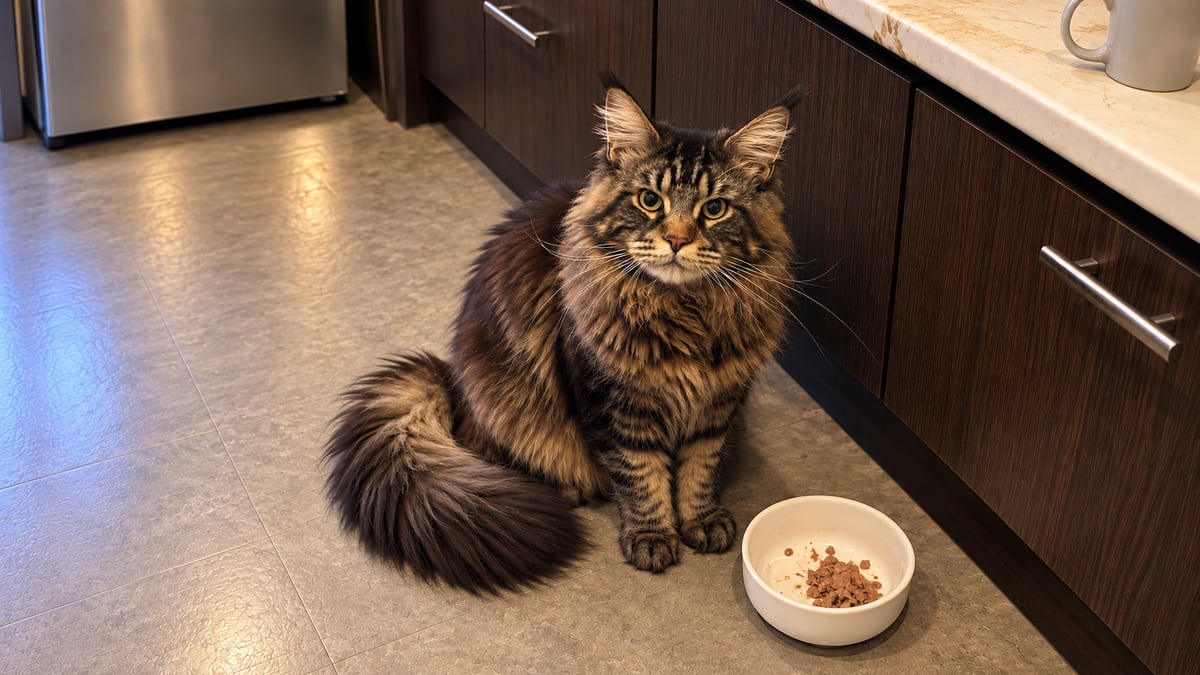
Pain often shows at the food bowl. International Cat Care says a cat in pain may eat less often or less than usual, or stop eating altogether. A cat with dental pain will usually still eat, and the better clues are eating on one side of the mouth, favouring soft food, dropping food, drooling or pawing at the mouth.
Peeing or pooing outside the tray is a common sign of pain, International Cat Care says. A cat with sore joints may find it hard to climb in and out, and a cat who links the tray with pain may avoid it.
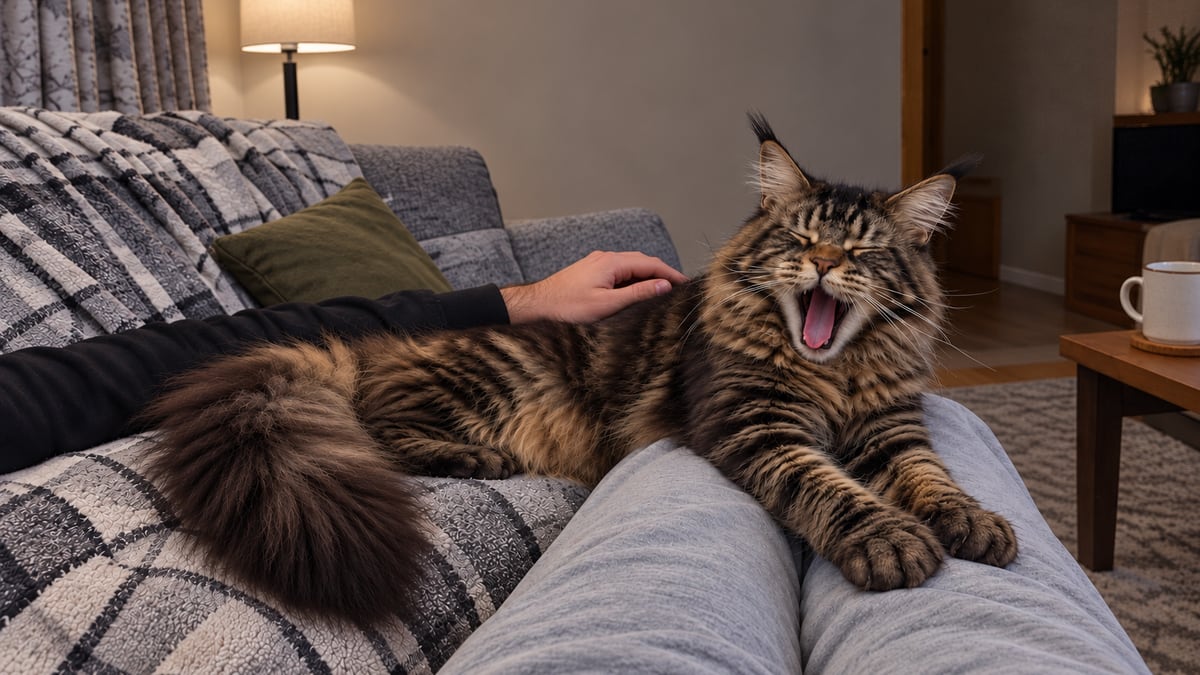
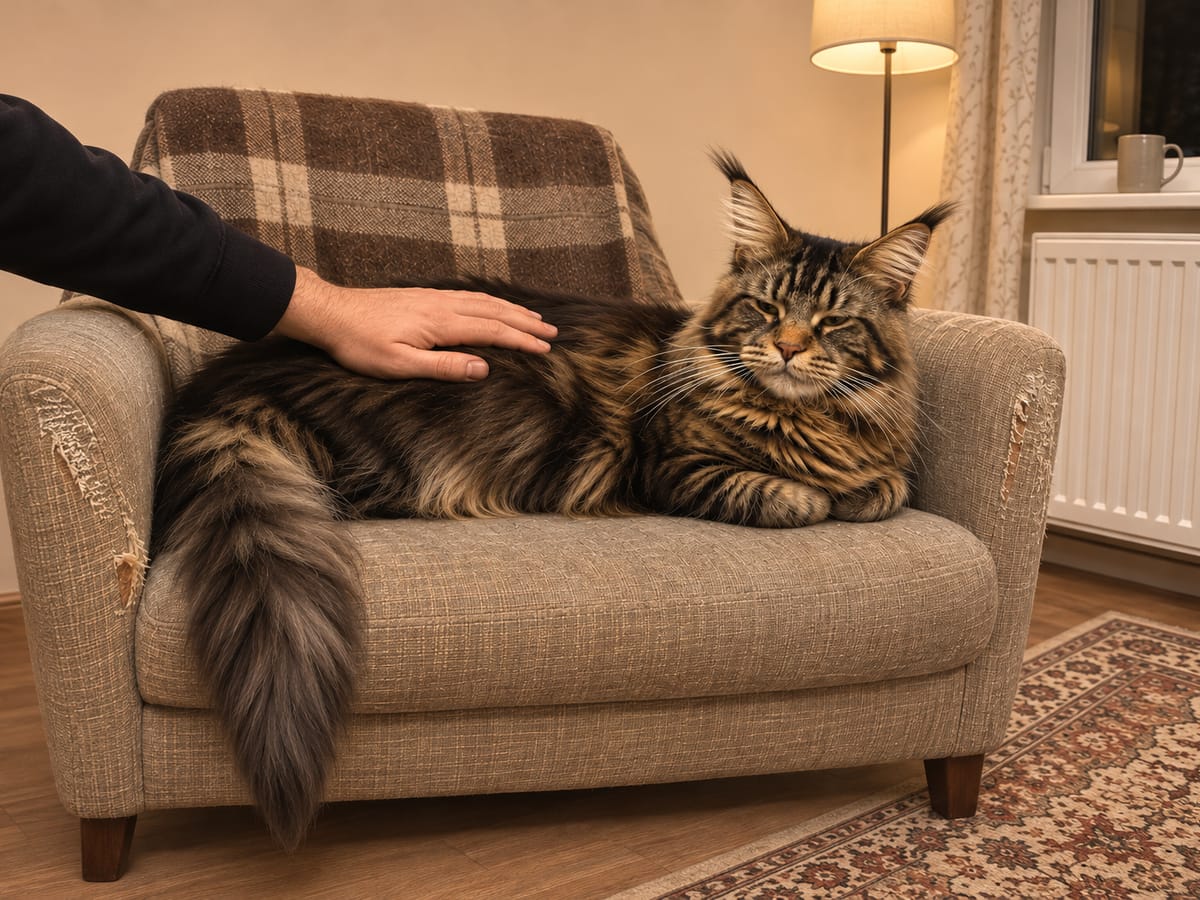
Watch how they take a hand, too. A cat who used to enjoy being stroked may start keeping away, International Cat Care says, and a cat in pain may growl or hiss when approached, or swipe or bite when touched. Battersea says a cat in pain may avoid being handled by moving away from people, or even turn aggressive when approached or touched.
When to see the vet now
Some signs can’t wait. PDSA says to contact your vet straight away if your cat is struggling to breathe, breathing through the mouth or has collapsed. Cats nearly always breathe through the nose, it explains, so panting or mouth breathing means they are either extremely stressed or really struggling to breathe.
Straining in the litter tray is the other one. Cornell Feline Health Center says a cat with a blocked urethra may strain, keep trying to pee and pass little or no urine, and as time passes often cries out in pain. It calls this a true medical emergency that needs a vet immediately: the time from a complete blockage to death may be less than 24 to 48 hours. Male and neutered male cats are at greater risk than females.
For everything else, don’t wait until you’re sure. International Cat Care says to always get veterinary help if you think your cat is in pain or are unsure, and to arrange a health check as soon as possible. Battersea says the same.
And keep the medicine cabinet shut. International Cat Care says never to give a cat human medicines, because many are toxic to cats, paracetamol among them. The only medicine your cat should have is the one your vet prescribed.
What to write down for the vet
What you see at home may not show at the clinic. International Cat Care suggests filming the changes you see at home, such as your cat going up the stairs or jumping down from a chair, to show your vet, because cats may not show many signs in the clinic. For long-lasting pain it also has a mobility checklist owners can fill in before the appointment.
Write each change down with the date it started. Note where your cat sleeps now and how they lie, whether they still jump onto the bed or stop on a chair on the way, how they eat, any accidents outside the tray, and how they react to a stroke along the back. Cats Protection says it’s well worth noting any behaviour that seems out of the ordinary.
A line like “3 November: walked past the bed and slept on the rug again, third night running” tells the vet more than “seems tired lately”. Lapka Care is a diary for notes like these, and it puts everything that matters for the vet into one PDF.
What a week of notes on a cat who just seemed sleepy can look like
27 October: Felix slept on the rug by the radiator instead of on the bed. Came for dinner as usual.
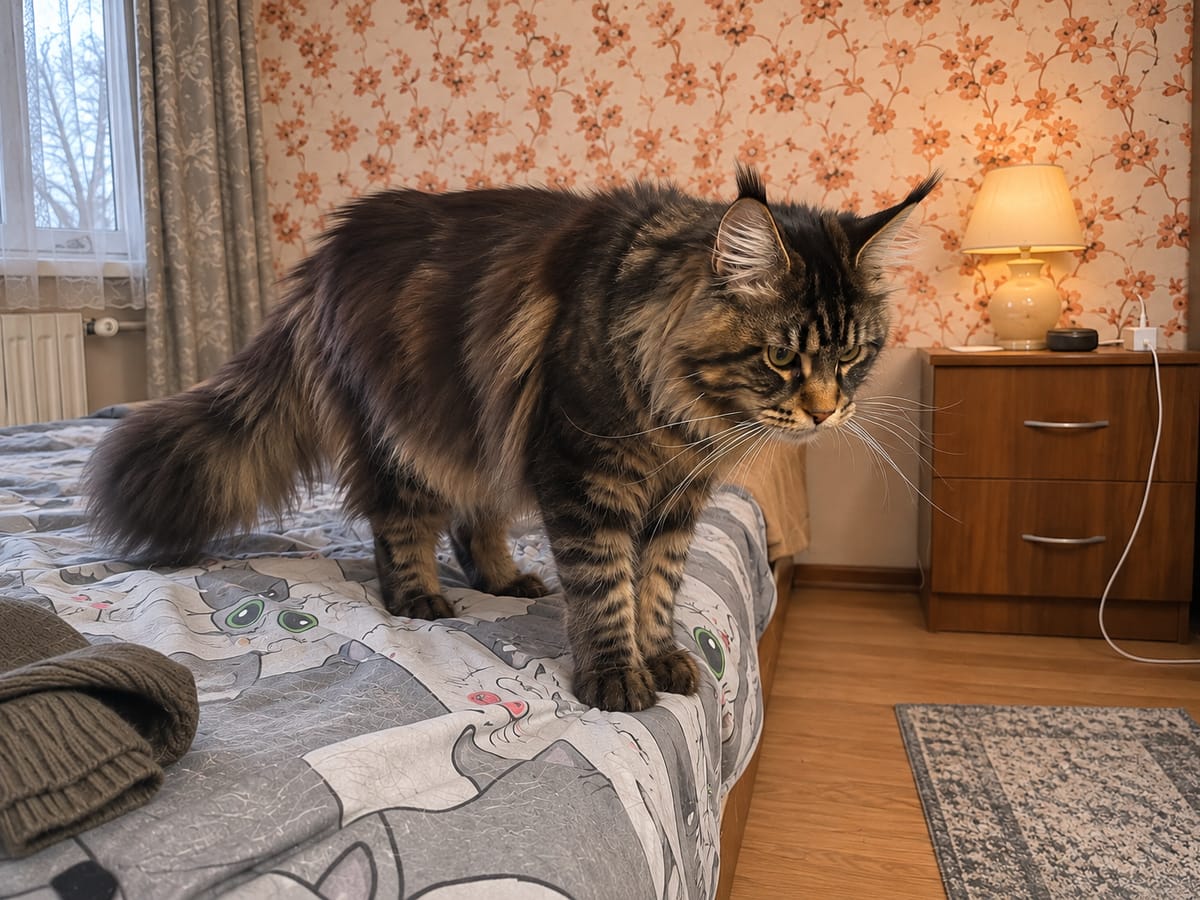
29 October: sat looking at the sofa for a while, then climbed up by way of the footstool. He used to jump straight up.
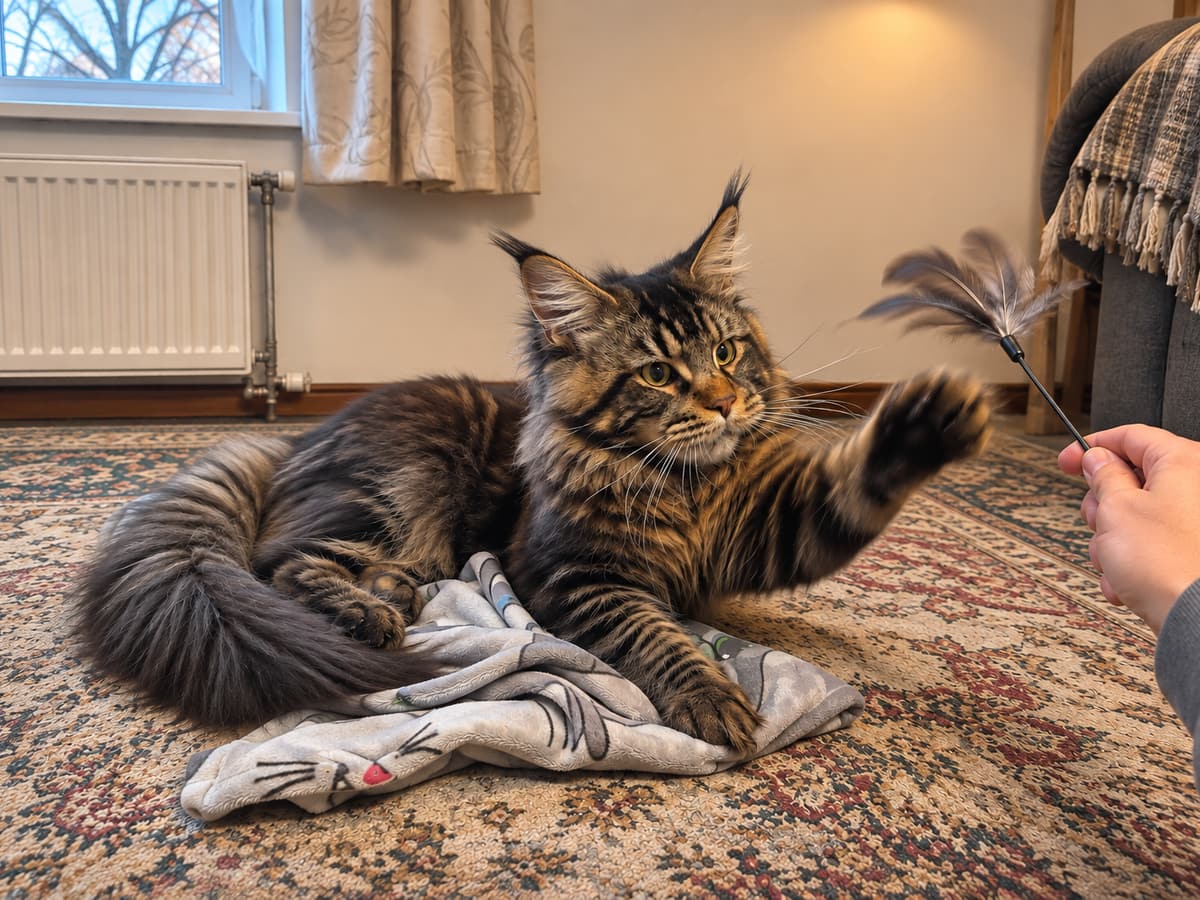
31 October: didn’t want his evening game with the feather toy. Flinched and walked off when I stroked his lower back.
2 November: filmed him going down the stairs one step at a time. Booked the vet and took the video and these notes.
No single day looked like much. Together the notes put sleeping somewhere new next to hesitating before a jump and minding a hand on the back, three changes that all sit on International Cat Care’s list of arthritis signs, and the dates show the vet when each one began.
Questions people ask
How can I tell if my cat is purring in pain?
Not from the purr alone. Cats Protection says some cats purr when they are in pain, so a purring cat isn’t always a comfortable one. Look at the rest: a hunched crouch, squinty eyes, hiding more than usual, eating less. If any of those come with the purr, see your vet.
How can I tell if my cat is in pain or sick?
From home, often you can’t, and you don’t have to. Cats Protection says many different problems cause discomfort and pain, and the signs overlap: International Cat Care says a cat in pain may stop eating altogether, especially with a fever or nausea. Write down what changed and when, and let your vet find the cause.
Do cats cry when they are in pain?
Some do. Battersea lists frequent urgent or unpleasant-sounding meowing, groaning, hissing and growling among the signs of pain, and Cats Protection lists making noise, especially when moving or using the litter tray. But a cat with long-lasting pain may show very little, Battersea says, so silence doesn’t mean all is well.
Can I give my cat a painkiller?
Only one your vet prescribes. International Cat Care says never to give a cat human medicines, because many are toxic to cats, paracetamol being one example. If you think your cat is in pain, call your vet.
Why is my cat sleeping more and hiding?
Both are on Cats Protection’s list of pain signs: sleeping more than usual, and withdrawing or hiding more than usual. International Cat Care says a cat in pain may hide in unusual places, partly or fully out of sight, and seem less active than usual or even low. If it’s new for your cat, see your vet.
Is my cat in pain if they won’t jump anymore?
They may be. Reluctance, hesitance or refusal to jump up or down is one of the main signs of arthritis on International Cat Care’s list, and Battersea says a cat in pain may stop jumping onto beds or other high places because they expect it to hurt. Film it if you can and show your vet.
Sources
- Cats Protection — Signs of pain
- Battersea — How do I tell if my cat is in pain?
- International Cat Care — How to spot signs of pain in cats
- International Cat Care — Arthritis in cats
- Cornell Feline Health Center — Is your cat slowing down?
- Cornell Feline Health Center — Loving care for older cats
- Cornell Feline Health Center — Feline lower urinary tract disease
- Merola and Mills, PLOS ONE (2016) — Behavioural signs of pain in cats: an expert consensus
- Université de Montréal — Feline Grimace Scale
- PDSA — Why do cats sleep so much?
- PDSA — Breathing problems in cats