
The short answer
Book the vet, even if your cat seems fine. International Cat Care says any cat drinking more than usual should be seen, particularly above 100 ml per kg of body weight a day. The most common causes are kidney disease, diabetes, hyperthyroidism and high blood calcium, and some of them start quietly. Measure the water over 24 hours, take the number with you, and never take the water away.
Is it normal for an old cat to drink a lot of water?
Under normal circumstances, how much a cat drinks depends on their diet. International Cat Care says a cat on wet food gets a large part of their water from it, while a cat on mainly dry food naturally drinks more. PDSA adds that it’s quite common to see a cat drink only now and again, especially on wet food.
So watch for change. If you suddenly notice your cat drinking more than they usually do, PDSA says it may be a sign that something is wrong. For a senior cat, International Cat Care lists drinking more often, or a larger amount per day, among the reasons to make a vet appointment.
Age alone doesn’t explain it. Cats Protection counts thirst changes among the signs of ageing, but says some of those signs may be part of ageing and others could be signs of a health concern. Any significant change in thirst, it says, should be checked by your vet. Cornell Feline Health Center asks the same: don’t put changes down to old age, even gradual ones.
Old cat drinking a lot of water but acting normal
A cat who seems their usual self can still be unwell. Cats Protection says cats are very good at hiding pain or discomfort, and so adaptable that the start of an illness can be very hard to detect.
Kidney disease is one to think of here. In its early stages, Cornell Feline Health Center says, it’s very common for cats to show no obvious signs, because the body compensates for the drop in kidney function. International Cat Care calls the signs often subtle and mild, and says they can worsen over time, though in some cats, rarely, they come on suddenly. Hyperthyroidism, an overactive thyroid, can start small too: Cornell says the signs may be subtle at first and become more severe as it progresses.
A good appetite doesn’t settle it either. Cornell lists a bigger appetite among the most common signs of hyperthyroidism, and says owners of cats with diabetes most often notice weight loss despite a good appetite. International Cat Care’s list for hyperthyroidism also has more activity, restlessness or irritability, so a livelier old cat isn’t always good news.
The sooner a vet looks, the better. Cornell says finding chronic kidney disease early gives the best chance of a longer and healthier life. With diabetes, PDSA says, the sooner it’s found and treated, the easier it is to manage and the better the chance of recovery.
Why is my cat drinking so much water?
International Cat Care names the most common causes: kidney disease, diabetes mellitus, hyperthyroidism and high blood calcium levels. Other causes, such as liver diseases, can do it too.
PDSA’s list of common causes adds a urine infection, a high temperature, and medicines that cause thirst, such as steroids. Cats Protection also names womb infections in unneutered female cats.
Sometimes a cat drinks more to make up for lost water. International Cat Care gives two examples: after a period of vomiting or diarrhoea, and in warmer weather. Food matters as well, because cats on mainly dry food naturally drink more, so tell the vet what your cat eats.
You can’t tell these apart at home. So many conditions can cause it that, International Cat Care says, your vet will usually take a blood and urine sample to find the cause. Treatment starts from there.
Cat drinking a lot of water and peeing a lot
The two usually come together. PDSA says the more a cat drinks the more they need to pee, and the more they pee the more they need to drink. International Cat Care describes it in chronic kidney disease: cats struggle to concentrate their urine, drink more to make up for it, and then need to pee more. With diabetes, Cornell Feline Health Center says, sugar in the urine pulls water with it, so the cat loses more water and gets thirstier.
PDSA’s telltale signs are the ones you’d see at home: being thirsty all the time, a water bowl emptying quicker than usual, more visits to the litter tray or larger amounts of pee, and peeing in the house. Drinking from places they normally don’t, such as taps, the toilet, sinks or the bath, is on the same list, and so is drinking so much that they vomit.
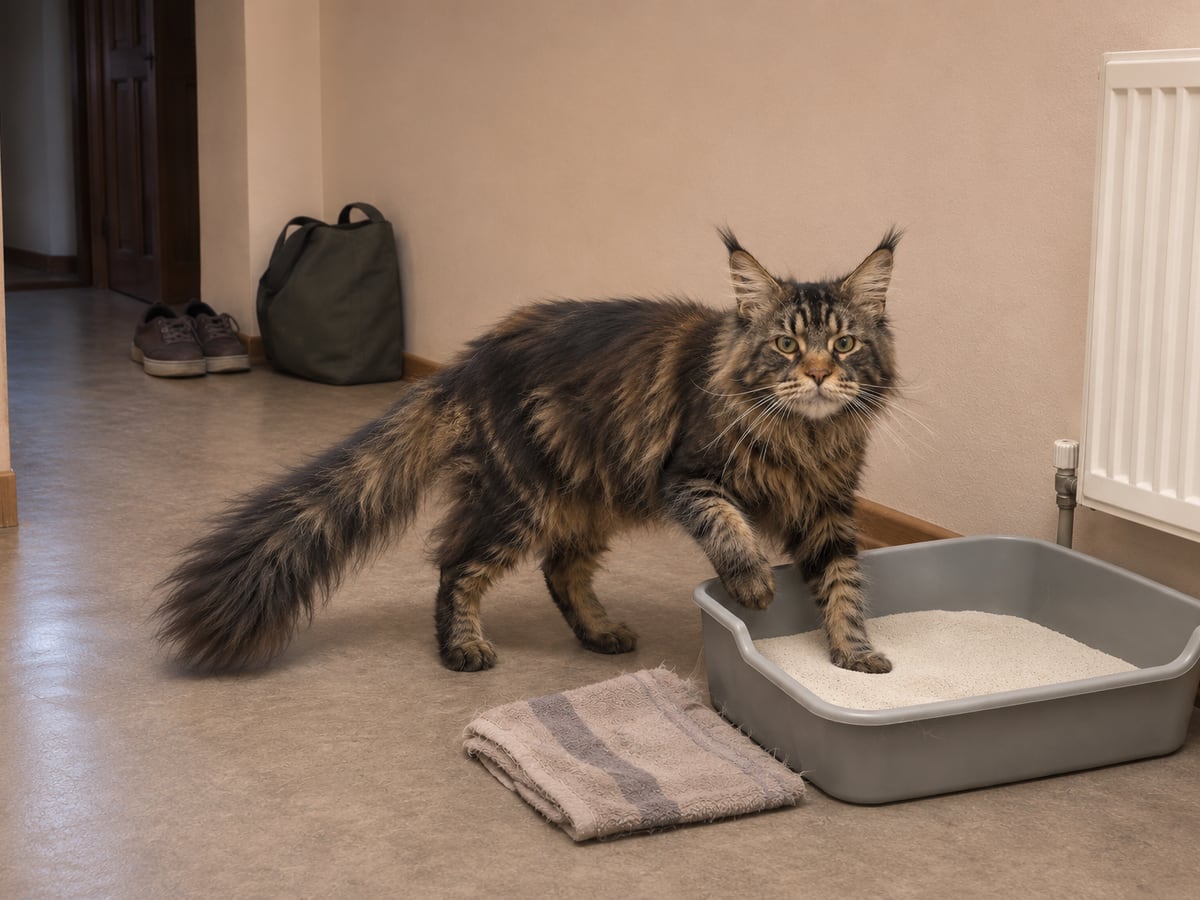
Make the tray easy. International Cat Care says to keep a clean litter tray available, to avoid accidents in the house. For older cats, Cats Protection suggests a tray with a low side, so they can climb in and out comfortably.
Old cat drinking a lot of water and losing weight
Cats Protection puts both on its list of changes in older cats you should never ignore. Losing weight could be a sign of hyperthyroidism, kidney disease, diabetes or dental disease, and drinking a lot of water could be a sign of the first three or, in an unneutered female, a womb infection.
Cornell Feline Health Center gives weight loss, a bigger appetite, and more thirst and urination as the most common signs of hyperthyroidism. With diabetes, the two signs owners notice most at home are weight loss despite a good appetite, and more thirst and urination. PDSA’s signs of chronic kidney disease include drinking more, peeing more, eating less and weight loss.
Kidney disease is common at this age, though estimates vary. Cornell says it affects up to 40% of cats over 10 and 80% of cats over 15, while International Cat Care estimates that around 20 to 50% of cats over 15 have some degree of it.
These lists overlap, and an older cat can have more than one thing going on. International Cat Care says some older cats with hyperthyroidism have other diseases that can complicate and even mask the signs. Your vet is the one to find out what’s behind it. Regular weight checks help, Cats Protection says, so take a recent weight along if you can.
How to measure how much water your cat drinks
You need a measuring jug and one full day. Cats Protection’s way is to fill a measuring jug, note the amount and pour it into your cat’s bowls. When the day is over, you pour what’s left back into the jug, note that too, and subtract it. International Cat Care does the same over 24 hours: fill the bowls to the brim, measure what’s left after 24 hours, and take it away from what a full bowl holds. Use 24 hours, because that’s the figure PDSA asks you to bring to the vet.
International Cat Care’s line is 100 ml per kg of body weight a day: a cat drinking more than that is drinking more than usual. For comparison, Cats Protection’s guide to daily water gives 200 ml for a medium cat of 4 kg and 300 ml for a large cat of 6 kg. A result under the line doesn’t clear your cat, because International Cat Care says any cat drinking more than usual should be seen.
Some homes make this harder. If your cat shares bowls with other pets or spends lots of time outside, International Cat Care says it can be tricky, and you may need to keep pets apart for 24 hours, as long as that doesn’t distress them. If you can’t measure at all, tell your vet you’re seeing your cat at the bowl more often. Note any drinking from taps or the toilet as well, since the jug won’t count it.
| Cat’s weight | More than usual, in 24 hours |
|---|---|
| 3 kg | Over 300 ml |
| 4 kg | Over 400 ml |
| 5 kg | Over 500 ml |
| 6 kg | Over 600 ml |
| 7 kg | Over 700 ml |
What to do if your cat is drinking a lot
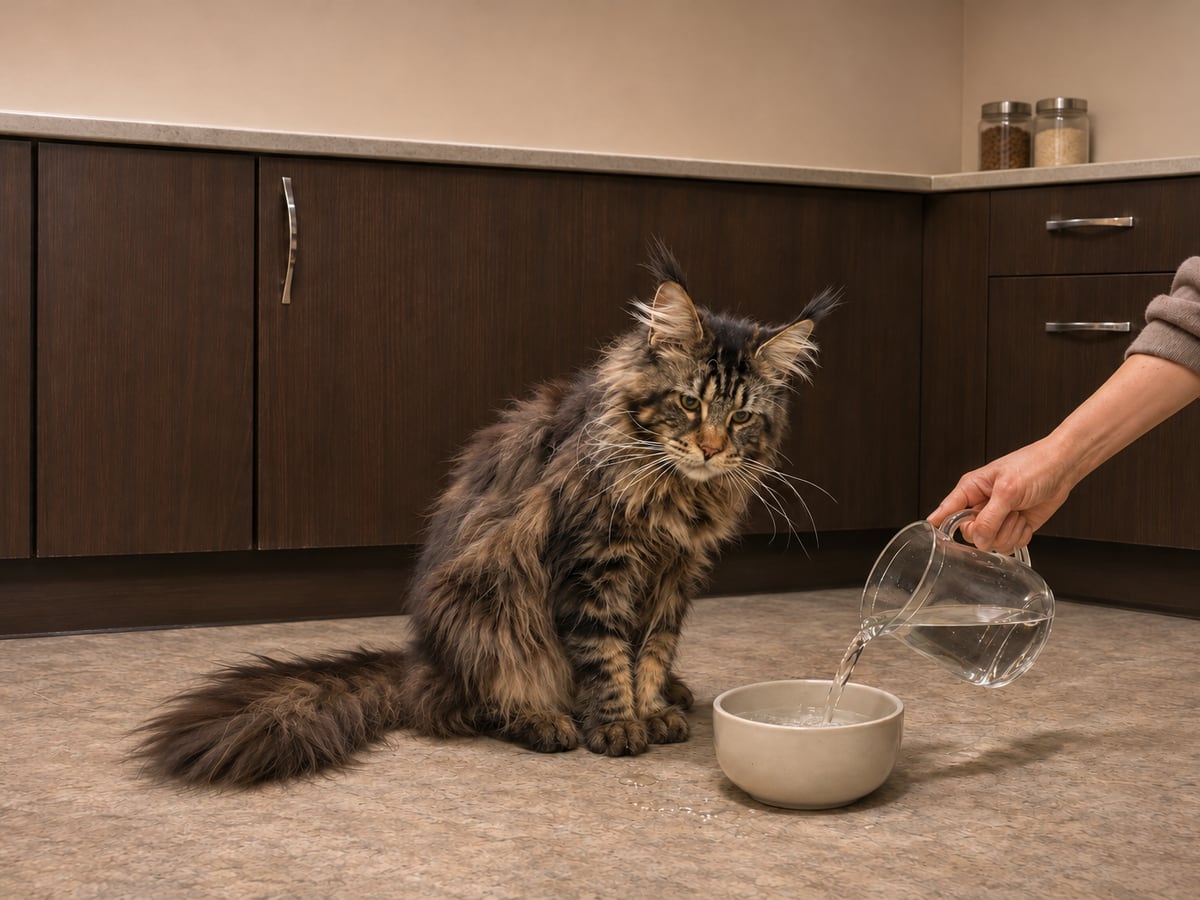
Leave the water where it is. PDSA is firm: never withhold water from your cat. Cats Protection says water matters even more for older cats, so keep fresh water available, with bowls in easy-to-reach spots around the house. A cat who drinks more can still dry out. International Cat Care says cats with chronic kidney disease are more likely to become dehydrated, and Cornell Feline Health Center mentions the same risk with diabetes.
Then measure for a day and book the vet. PDSA asks you to bring, if you can, a urine sample and a note of how much your cat drinks in 24 hours.
The sample is easier than it sounds. International Cat Care’s steps: fill the tray with non-absorbable litter, from your vet clinic or a pet shop. Once your cat has used it, tip the tray so the urine collects in one corner and draw it up with a pipette. Put it in a urine pot, seal the lid tightly, and write your cat’s name, the date and the time on the label.
When to see the vet
For more drinking on its own, make an appointment. International Cat Care says any cat drinking more than usual should be seen by a vet, and PDSA says to always take your cat in if you think they’re drinking or peeing too much.
Some signs can’t wait. If your cat is trying to pee and nothing comes out, or seems in pain and distress, call your vet for an urgent appointment. PDSA says this is an emergency and could be a blocked bladder, which is most common in males and often fatal if not treated quickly. Never wait to see if it improves.
A swollen, tender tummy is another: contact your vet straight away, PDSA says, and Cats Protection says a suddenly bloated abdomen should be checked urgently. PDSA also warns about a life-threatening complication of diabetes that can lead to death if it isn’t treated quickly. A cat developing it may show reduced appetite, weakness and low energy, collapse and vomiting.
Cats Protection says to call your vet if a cat is very lethargic, is vomiting repeatedly, or doesn’t drink for over 24 hours. Cornell Feline Health Center lists lethargy, weakness and poor appetite among the signs of dehydration, and says to contact a vet promptly if you’re concerned.
Regular check-ups help with the quiet cases. Cats Protection says that from around seven or eight your vet may recommend a check-up twice a year, to help spot health problems early, and PDSA calls regular checks sensible once a cat enters their senior years, at 8 and over.
What to write down for the vet
Your vet sees your cat for a few minutes, and you see the bowl every day. Cats Protection suggests tracking how much an older cat eats and drinks in a day, and International Cat Care asks you to tell your vet team the amount if you’ve measured it.
Write the millilitres with the date, then add your cat’s weight, what they eat, and how often they visit the tray. Note any vomiting, and any medicines, because PDSA names steroids among the things that cause thirst.
A line like “4 November: 470 ml in 24 hours, 4.4 kg” tells the vet more than “drinking a bit more lately”. Lapka Care is a diary for notes like these, and it puts everything that matters for the vet into one PDF.
What a few days of water notes can look like
3 November: water bowl empty by lunchtime again. It used to last all day. Oscar seems fine, eats well, chased the string after dinner.
4 November: 600 ml in the bowls at 8 am, 130 ml left at 8 am the next day. That’s 470 ml in 24 hours. 4.4 kg on the bathroom scales.
5 November: 490 ml in 24 hours. More visits to the litter tray, and the clumps are bigger.
6 November: booked the vet. Taking these notes and a urine sample.
For a 4.4 kg cat, International Cat Care’s line works out at 440 ml a day, and both days went over it. Oscar still looked fine, and the notes give the vet amounts and dates to work with.
Questions people ask
How much water should an old cat drink a day?
Cats Protection’s guide goes by size, not age: 200 ml a day for a medium cat of 4 kg and 300 ml for a large cat of 6 kg. A cat on wet food may drink less, since Cornell Feline Health Center says it can contain up to 80% water. What counts most is a change from your own cat’s usual amount, and International Cat Care’s line of 100 ml per kg a day.
Can dry food make a cat drink more?
Yes. International Cat Care says cats fed mainly dry food naturally drink more than cats on wet food. It also says changes in the amount your cat drinks could indicate a health problem, so if the food is the same and the drinking isn’t, tell your vet.
Can hot weather make my cat drink more?
It can. International Cat Care says cats may drink more to make up for water loss, for example in warmer weather or after vomiting or diarrhoea. Its advice stays the same, though: any cat drinking more than usual should be seen by a vet.
Why has my old cat started drinking from the tap?
Some cats simply like it: Cats Protection says some prefer to drink straight from the kitchen tap. PDSA’s telltale signs include drinking from places they normally don’t, such as taps, the toilet, sinks or the bath. So a new habit is the thing to mention to your vet.
Should I give my cat less water if they’re peeing a lot?
No. PDSA says never to withhold water from your cat. International Cat Care says cats with chronic kidney disease are more likely to become dehydrated, and Cats Protection says senior cats are more vulnerable to dehydration. Keep fresh water out and a clean litter tray available.
Does a cat drinking a lot always mean kidney disease?
No. It’s one of the most common causes, but International Cat Care also names diabetes, hyperthyroidism and high blood calcium, and PDSA adds a urine infection, a high temperature and medicines such as steroids. Only your vet can tell you which it is.
What will the vet do?
International Cat Care says your vet will usually take a blood and urine sample to find the cause, and suitable treatment can begin once it’s known. If they suspect a thyroid problem, Cornell Feline Health Center says they’ll examine your cat and feel the neck for an enlarged thyroid gland. Bring your water numbers and your notes.
Sources
- International Cat Care — Increased thirst and drinking
- PDSA — Is my cat drinking and weeing too much?
- Cats Protection — Elderly cats: care guide for older cats
- Cats Protection — How much water should a cat drink?
- Cats Protection — How long can cats go without food?
- Cornell Feline Health Center — Chronic kidney disease
- Cornell Feline Health Center — Feline diabetes
- Cornell Feline Health Center — Hyperthyroidism
- Cornell Feline Health Center — Hydration
- Cornell Feline Health Center — Loving care for older cats
- International Cat Care — Chronic kidney disease (CKD) in cats
- International Cat Care — Special considerations for senior cats
- International Cat Care — Hyperthyroidism in cats
- PDSA — Chronic kidney disease (CKD) in cats
- PDSA — Diabetes in cats
- PDSA — Urine problems in cats