
The short answer
The odd sneeze is nothing to worry about, PDSA and Cats Protection both say: most likely something has irritated the inside of your cat’s nose. If your cat is sneezing regularly for more than a couple of days, or the snot is thick and green, brown, yellow or bloody, speak to your vet. Go urgently if your cat can’t stop sneezing, sneezes blood or seems painful.
Cat sneezing but acting normal: is that OK?
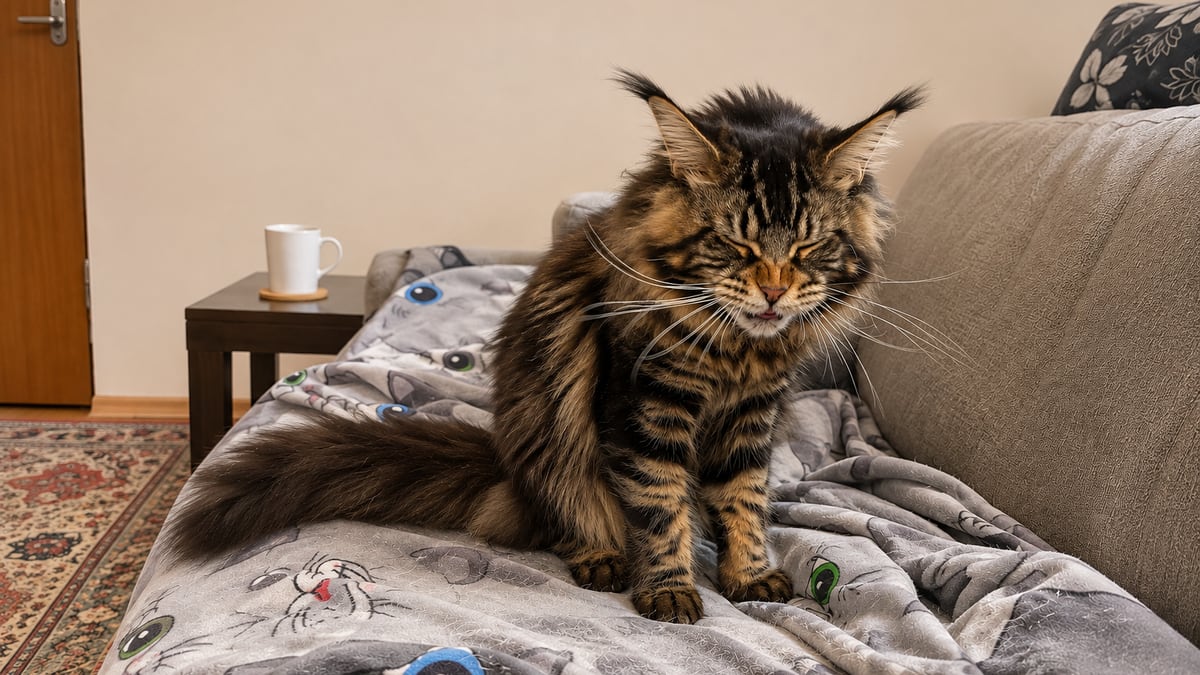
Usually, yes. Cats sneeze for the same reason we do, PDSA says: something has irritated the inside of their nose. The odd sneeze is nothing to worry about.
Cats Protection says the same, and adds that the sneezing will likely resolve on its own. So if your cat sneezes now and then and is eating, playing and napping as usual, a tickle in the nose is the likeliest reason, and it should pass.
What changes the picture is how often it happens and what comes with it. PDSA says that if your cat is sneezing regularly or having severe bouts of sneezing, there’s a problem and they need to see the vet. Cats Protection’s line is sneezing regularly for more than a couple of days, or sneezing with snot that is thick and green, brown, yellow or bloody.
Why is my cat sneezing all of a sudden?
PDSA and Cats Protection give much the same list of common causes. Cat flu and other infections of the airways come first. Cats Protection names bacterial, viral, fungal and parasite infections.
Irritants in the air are next. Cats Protection lists dust, smoke and any strong-smelling substance, such as perfume.
Teeth can be behind it too. PDSA says tooth and gum disease can affect the inside of the nose and cause sneezing, and Cats Protection says it can spread infection in the nose.
Then there’s something stuck in the nose, often a blade of grass, and growths inside the nose, which PDSA says can cause discharge and sneezing. Allergies are possible, but Cats Protection says sneezing from allergies is less common in cats than in people.
The causes range from minor to serious, PDSA says, so contact your vet if your cat has started sneezing and you’re not sure why.
Cat sneezing a lot but no other signs
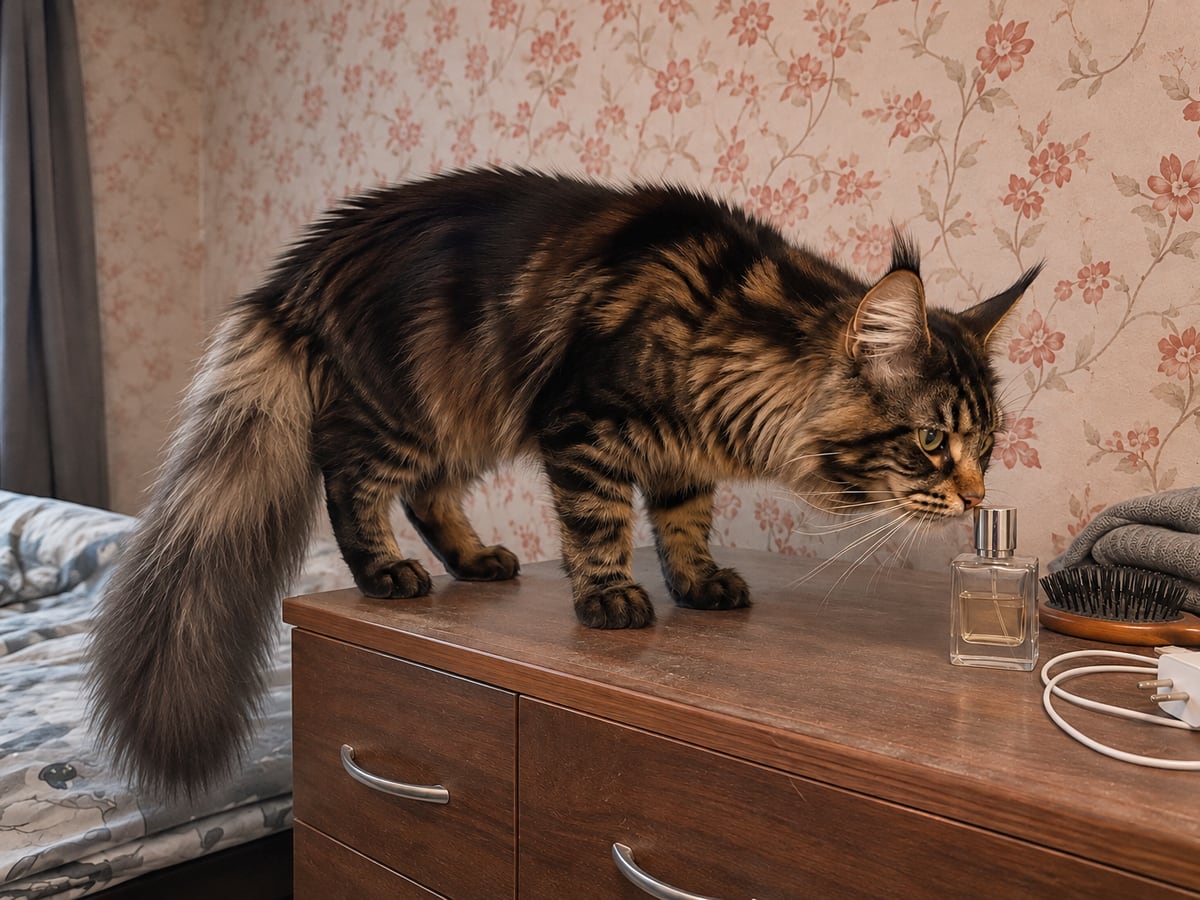
If the nose is dry, the eyes are clear and your cat is eating as usual, look around the home for what’s changed. Cats Protection’s irritants are dust, smoke and strong smells in the air, perfume among them. A new air freshener, a dusty clear-out or smoke in the room is worth writing down.
No snot doesn’t mean you can leave it. PDSA says to contact your vet if your cat starts sneezing often, and Cats Protection says to speak to your vet if your cat is sneezing regularly for more than a couple of days.
Listen to the breathing while you’re at it. PDSA says that, as a rule, you shouldn’t be able to hear or see your cat breathing unless you look and listen very closely.
Cat sneezing a lot in a row
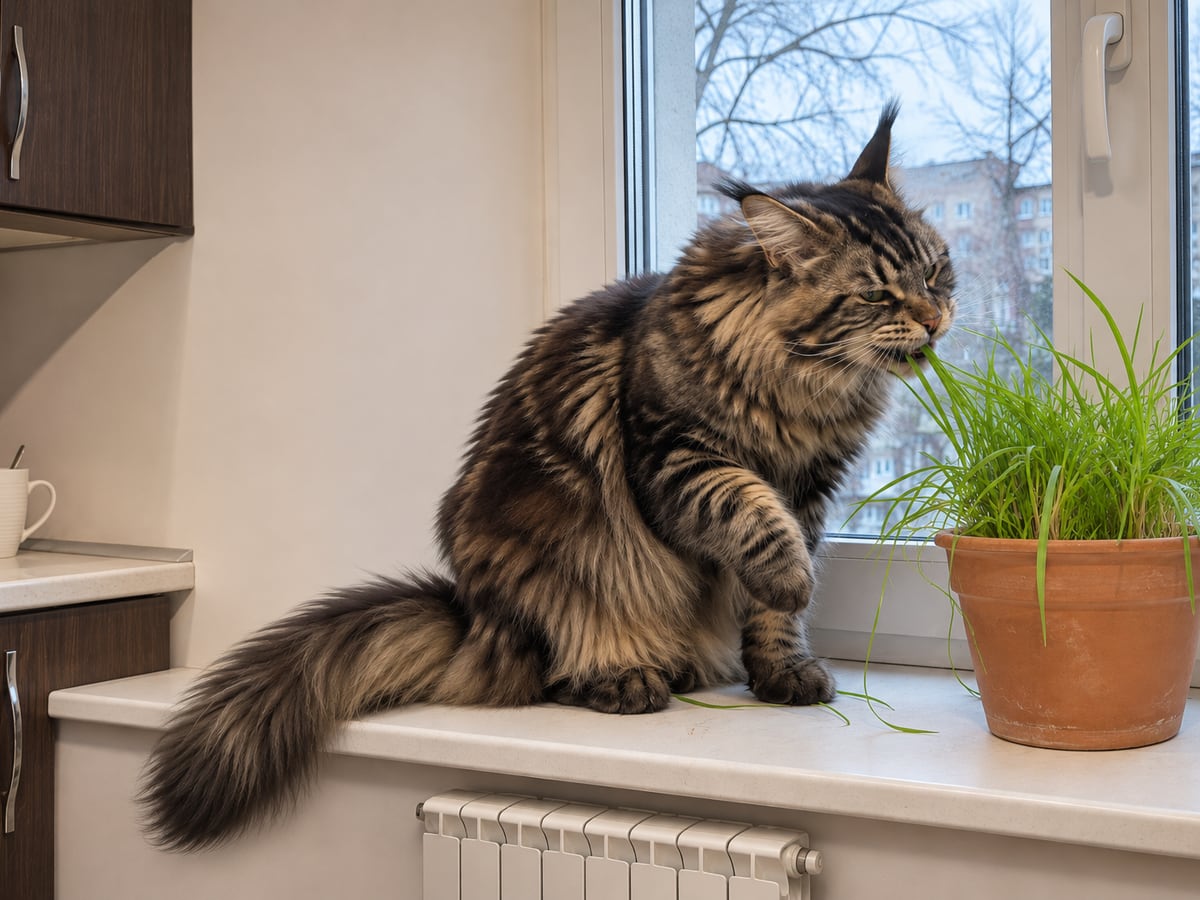
A sudden fit of sneezing, one after another, can mean something is stuck. PDSA says cats sometimes get blades of grass lodged in the back of the nose or throat, which can cause severe bouts of sneezing. Cats Protection says sudden bouts of sneezing or retching could be caused by an object stuck in the nose or throat, and calls blades of grass a common cause.
Don’t try to get it out yourself, and don’t try to make your cat sneeze it out. Cats Protection says either could cause more damage, and the vet will be able to remove it safely.
If the fit won’t stop, it’s urgent. PDSA says to contact your vet for an urgent appointment if your cat can’t stop sneezing.
Cat sneezing with snot and watery eyes: cat flu
Sneezing with a snotty nose and weepy eyes is the usual picture of cat flu, an infection of the upper airways. PDSA says it causes signs similar to human flu: a high temperature, sneezing, weepy eyes and a snotty nose. International Cat Care says more than 90% of cases are thought to be caused by one or both of two viruses, feline herpesvirus and feline calicivirus.
International Cat Care’s typical signs are sneezing, discharge from the nose and eyes, red eyes and frequent blinking, lethargy, loss of appetite and a high temperature. How bad it gets varies: in some cats the signs are very mild, in others severe. Cornell Feline Health Center says the discharge from the eyes or nose can be clear or coloured. PDSA and Cats Protection both add coughing and mouth ulcers, and Cats Protection adds dribbling and sleeping more than usual.
PDSA says to contact your vet for an appointment if you notice signs of flu. When you arrive, it asks you to wait outside, so the flu doesn’t spread to other cats in the waiting room.
It spreads easily between cats, in saliva, snot and sneezes and on food bowls and bedding, PDSA says. The sources differ on how long it lasts on things: PDSA says the viruses can survive outside a cat for up to a month, and International Cat Care says they may survive on objects for up to 2 days for herpesvirus and 10 for calicivirus. People can’t catch it, PDSA and Cats Protection both say.
With treatment, PDSA says, the signs of flu often get better within one to two weeks. With a severe infection, International Cat Care says, recovery may take several weeks.
Cat sneezing but still eating: what helps at home
A cat who still eats is worth keeping that way. Loss of appetite is one of the signs of cat flu, and International Cat Care explains why: a cat with flu has a poor sense of smell, and eating may be uncomfortable.
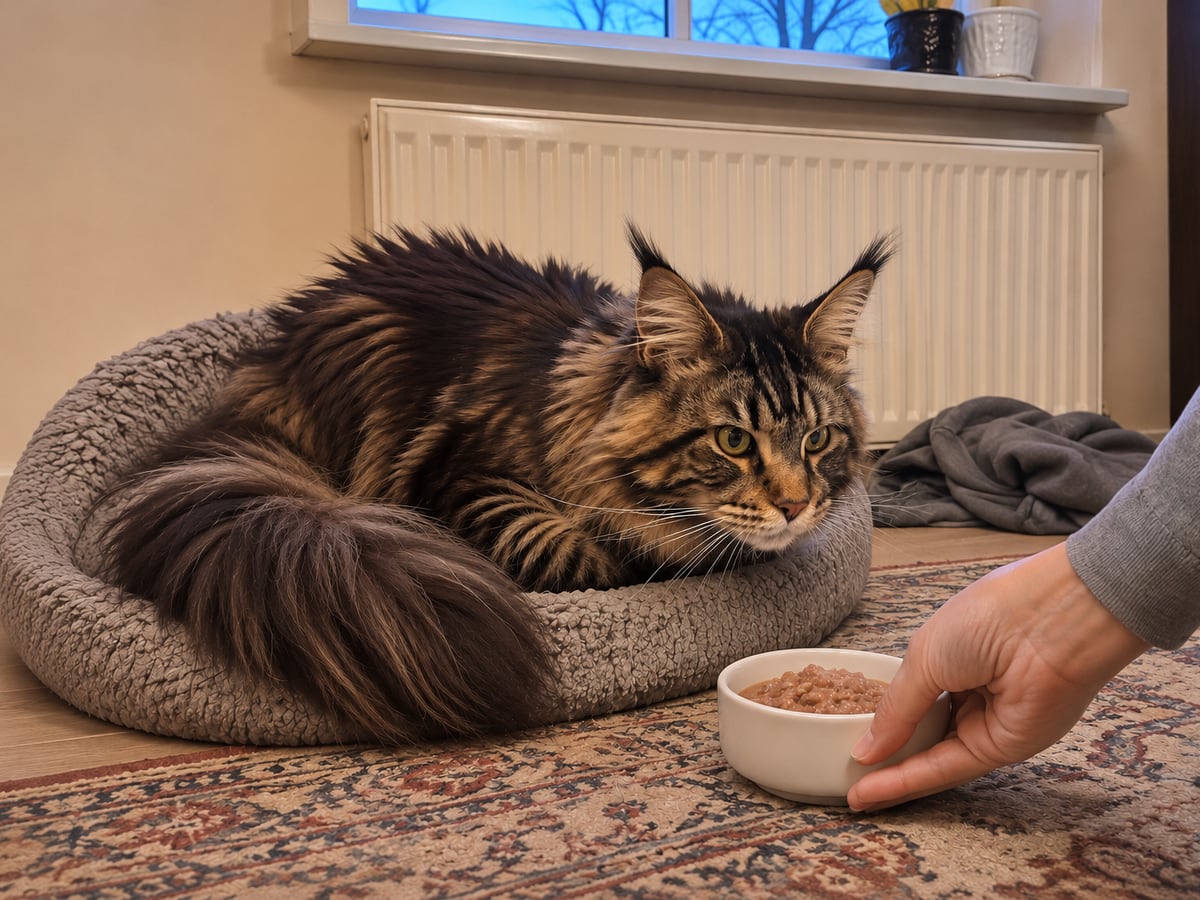
For a mild case, Cats Protection says your vet may not prescribe any medication, and lists what you can do at home. Keep your cat warm, with peace and quiet and a cosy bed. Gently wipe away discharge from the eyes and nose with damp cotton wool. Warm the food a little, or offer something strong-smelling such as sardines, and encourage them to drink.
A steamy room helps loosen the mucus. For a cat the vet has seen, PDSA suggests sitting with them in the bathroom while you have a shower or a bath. Never force your cat into it, PDSA says, and take them out if they seem stressed at any point.
Keep the days calm. PDSA says stress can make the illness worse.
A cat who stops eating and drinking goes to the vet. PDSA says a cat with severe signs, or one who stops eating and drinking, is likely to need intensive treatment at the veterinary hospital.
Kitten sneezing
Don’t wait and see with a kitten. PDSA says cat flu tends to affect kittens much more severely than adult cats, and left untreated it can even be fatal. It says to contact your vet for advice if your kitten has any signs of cat flu, even mild ones.
A kitten can seem fine and fall ill later. PDSA says it can take up to three weeks for the signs to develop after infection. Cats Protection says kittens are more vulnerable because their immune systems are immature, and can develop severe signs such as pneumonia and eye ulcers.
When you phone, tell the receptionist your kitten may have cat flu. PDSA says they’ll likely ask you to wait in the car, to protect any unvaccinated cats and kittens in the waiting room.
Vaccination starts early. PDSA says most healthy kittens can have their first vaccination at eight weeks old, and Cats Protection says around eight to nine weeks. Keep your kitten inside and away from unvaccinated cats until they’re fully vaccinated, PDSA says.
My cat keeps sneezing: when it comes back
Cat flu can stay. Cornell Feline Health Center says up to 97% of cats are exposed to feline herpes virus in their lifetime, and the virus causes a lifelong infection in up to 80% of them. Of these, up to 45% will shed the virus now and then, usually when stressed. Shedding isn’t always being ill: International Cat Care says some cats show mild signs again when they shed the virus, but most do not.
That’s why the sneezing comes back in some cats. PDSA says a cat who has had flu may become a carrier with flare-ups throughout life, most at risk when stressed or poorly. Cornell says these flare-ups are often relatively mild and clear up on their own, though in rare cases they can lead to more serious illness, and even death in cats with other health problems.
For cats whose herpes eye flare-ups keep coming back, Cornell says they can often be managed with the vet’s treatment and by limiting stress from crowded living, surgery, new cats arriving or moving house.
Some cats are left with a nose that keeps running. International Cat Care says some have permanent damage inside the nose and persistent or recurrent discharge, known as chronic rhinitis. PDSA says some carriers have signs all the time, perhaps a runny nose, loud breathing, sneezing or weepy eyes, and need constant medication.
Vaccination still helps a cat who has had flu. PDSA says it can reduce the signs in future. International Cat Care says vaccination usually prevents severe disease but can’t always prevent infection, so mild disease may still occur in some cats.
If the sneezing keeps returning, take your cat to the vet. Dental disease and growths in the nose are on PDSA’s list of causes too.
When to see a vet straight away
PDSA says to contact your vet for an urgent appointment if your cat can’t stop sneezing, sneezes blood or seems painful.
Blood in the snot always goes to the vet. Cats Protection says to speak to your vet urgently if you notice any blood in your cat’s snot. Its list of possible reasons includes a growth inside the nose, something stuck up the nose, and broken skin inside the nose from excessive sneezing.
Watch the breathing. Cats nearly always breathe through their nose, PDSA says, so a cat who is panting or breathing through their mouth is either extremely stressed or really struggling to breathe. Contact your vet immediately if your cat is struggling to breathe, panting or breathing with an open mouth.
Some cats need the vet sooner. Cats Protection says cat flu can be life threatening for the very young, the very old and cats with a damaged immune system. A cat who won’t eat needs the vet too: International Cat Care says they may need to be fed through a tube in hospital, because poor nutrition slows recovery.
What to write down for the vet
The vet sees your cat for a few minutes, and you’ve heard every sneeze. With cat flu, International Cat Care says, the vet usually works out what’s wrong from the signs your cat is showing, after ruling out other causes.
Write down the day it started, how often your cat sneezes and whether it comes in fits. Note any snot and its colour, the eyes, any coughing, the breathing, and how your cat is eating, drinking and playing. Add anything new at home, such as a perfume, dust or smoke, or another cat.
Lapka Care is a diary for notes like these, and it puts everything that matters for the vet into one PDF.
What a week of sneezing notes can look like
3 November: Milo sneezed five times in a row after we dusted the bookshelf. Eating and playing as usual, nose dry.
5 November: two sneezes this morning, none since. No snot, eyes clear.
8 November: sneezing every few hours now, a little clear drip from the left nostril. Ate his breakfast. Booked the vet for Monday.
Sneezing regularly for more than a couple of days is when Cats Protection says to speak to your vet, and the notes show when it started, how often, and what came with it.
Questions people ask
Is it normal for a cat to sneeze a lot?
The odd sneeze is normal, PDSA says. A lot of sneezing isn’t: PDSA says regular sneezing or severe bouts mean a problem that needs the vet, and Cats Protection says to speak to your vet if your cat is sneezing regularly for more than a couple of days.
Can I catch something when my cat sneezes?
The common causes of sneezing in cats, including cat flu, aren’t contagious to people, Cats Protection says. Some cat illnesses that cause sneezing can be caught by people, but they’re very rare. If a cat sneezes on you, especially a cat you don’t know, wash the spot with soap and water, and speak to your doctor if you start to feel unwell.
My cat is sneezing and coughing: what should I do?
Book the vet. Coughing and sneezing are both on PDSA’s list of cat flu signs, and PDSA says to contact your vet for an appointment when you notice them. If your cat is struggling to breathe, panting or breathing with an open mouth, contact the vet immediately.
Can my cat catch my cold?
No. Cats Protection says cats can’t catch human colds, though they can get cat flu, which is a similar illness. PDSA says cats can’t catch human flu either.
Do cats reverse sneeze?
Not usually. Cats Protection describes reverse sneezing as a dog rapidly sucking air in through the nose with a loud snort, and says it’s not something cats typically do. A cat with something irritating their nose is more likely to sneeze normally.
Should I keep a sneezing cat away from my other cats?
If it may be cat flu, yes. International Cat Care says a cat showing signs should be kept apart from the others, for example in one room, with separate food bowls and litter trays. Cats Protection says to wash the bedding and bowls the poorly cat uses thoroughly, and to keep all your cats vaccinated.