
The short answer
A few flakes can be normal. PDSA says a large amount might mean your cat can’t groom properly, because of arthritis, pain or stiffness, or being overweight, or that they have a skin problem such as fleas, allergies, an infection, ringworm, mites or lice. The back and the base of the tail are hard places for a stiff cat to reach, and where PDSA says flea dirt often shows. It says to contact your vet if you notice dandruff.
Is a little cat dandruff normal?
A few flakes can be. PDSA explains that skin cells are always dying, shedding and being replaced, and that a cat usually keeps their fur clean and dandruff-free by grooming. So a small amount of dandruff can be normal. A Cats Protection vet says the same, as long as it isn’t excessive, and adds that some cats show more dandruff at certain times of year, often alongside shedding.
A healthy coat is the yardstick. Cats Protection says it is normally smooth and shiny, and the skin isn’t flaky or bumpy.
The two charities draw the line in slightly different places. PDSA says to contact your vet if you notice your cat has dandruff, and that most causes aren’t serious and improve with treatment. The Cats Protection vet recommends an examination when there’s an excessive amount. If you’re not sure which side of that line you’re on, ask.
Why does my cat have dandruff on her back?
Look at where your cat can still reach. International Cat Care says a cat’s body bends and flexes so that they can reach all areas with ease. PDSA says a large amount of dandruff might mean your cat isn’t able to groom properly, and names three reasons: arthritis, pain or stiffness, and being overweight. The Cats Protection vet adds dental disease, and says these can lead to poor coat condition, matting and dandruff.
The back is where that shows. PDSA lists matted fur from difficulty grooming among the signs of arthritis, especially in hard-to-reach places such as the back, the back legs and the base of the tail.
The other possibility is the skin itself. PDSA’s list of skin problems behind dandruff and dry skin: fleas, skin allergies, skin infections, ringworm, mites and lice, and hormonal conditions such as hyperthyroidism. It also lists autoimmune skin disease, which it says is very rare. Your vet finds out which one it is.
Cat dandruff on the back near the tail: check for fleas
Start with fleas, because that’s where they leave traces. PDSA says flea dirt is often on the lower back, and to check regularly around the back end and above the base of the tail. Cats Protection says fleas can be found in hard-to-reach areas such as the armpits, the neck or the base of the tail.
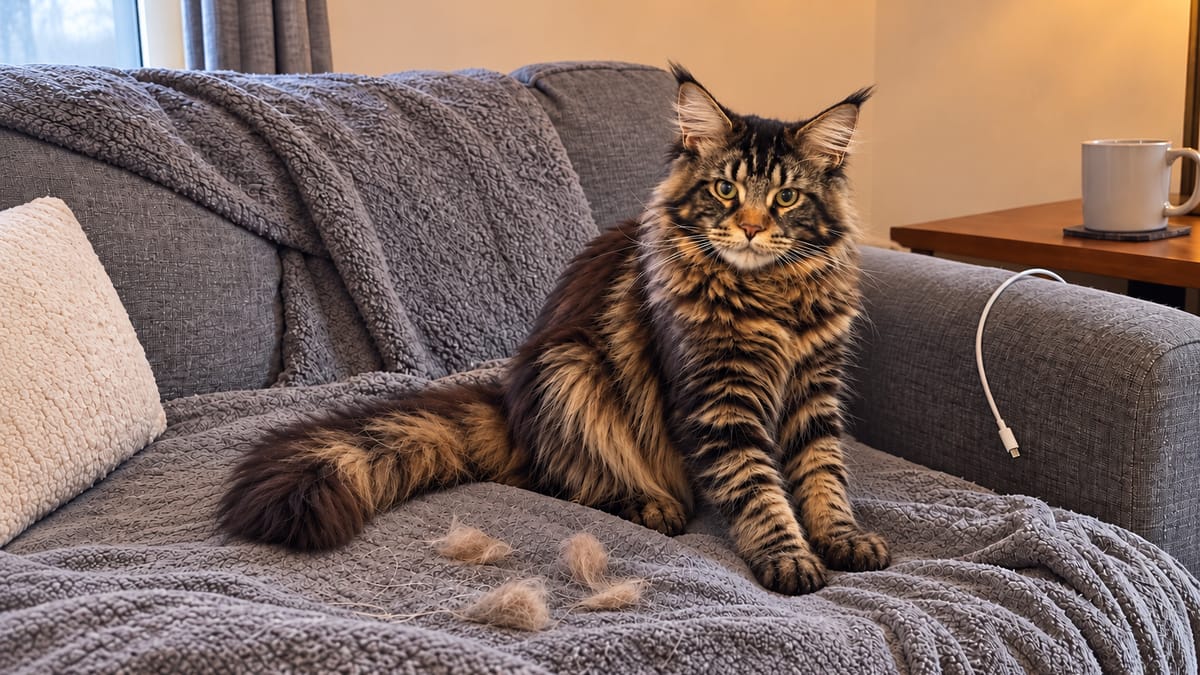
Use a fine-toothed flea comb. International Cat Care describes flea dirt as tiny black comma-shaped specks that run red if you add a drop of water. Cats Protection says a fine-tooth flea comb may turn up a lot of it. You’ll rarely see the fleas themselves: PDSA says live fleas are uncommon to spot because they aren’t easy to see.
Other signs PDSA lists: scratching, bald patches or rough, spiky fur, nibbling at the back end, and enjoying a scratch more than usual because they’re so itchy. Cats Protection says cats with a flea allergy may get small scabs, especially around the neck and the base of the tail. And not every cat with fleas shows signs.
If you find flea dirt, International Cat Care says to speak to your vet team about effective flea control. PDSA says to call your vet practice for advice.
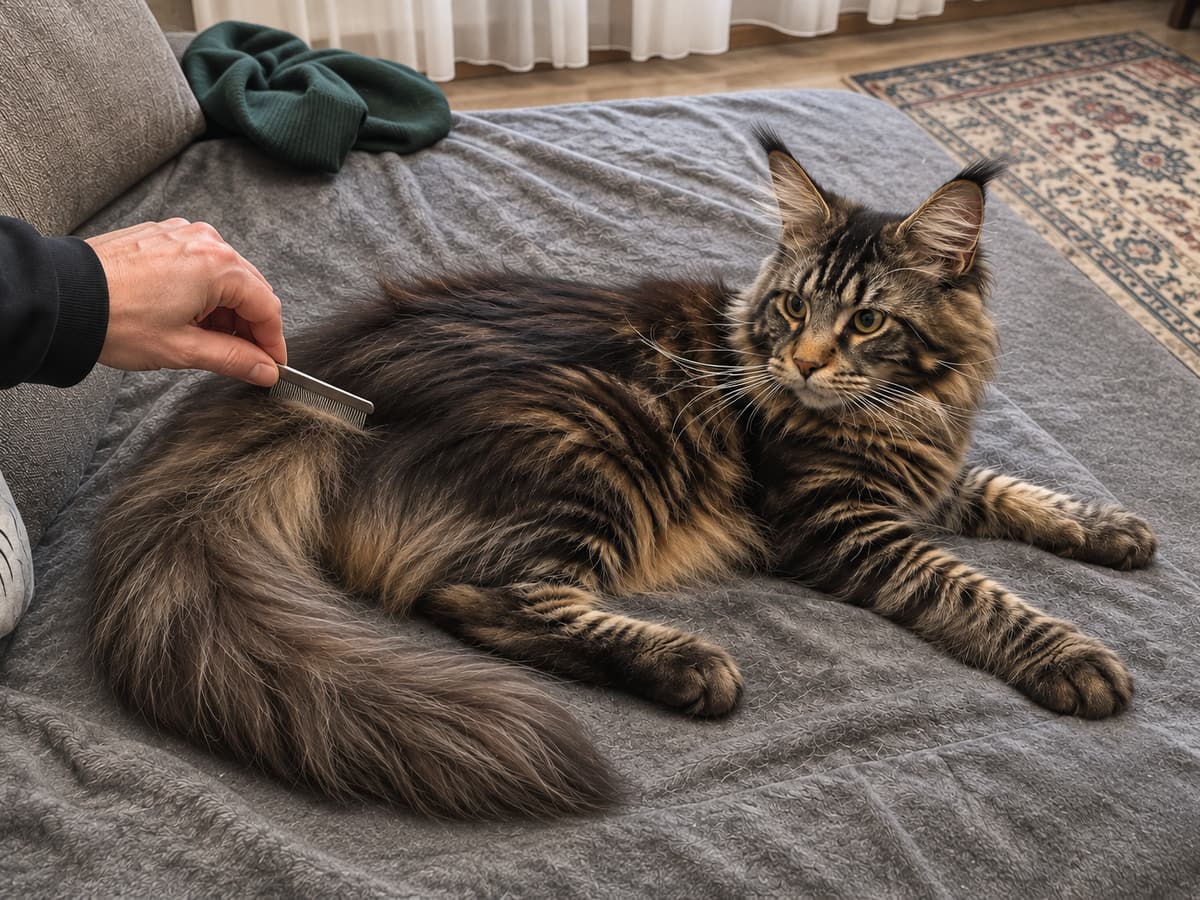
Cat dandruff vs flea eggs
Dandruff is dry, flaky skin, as PDSA puts it. What gives fleas away on the cat is the dark stuff: Cats Protection calls flea dirt dark flea droppings.
The eggs aren’t what to look for on the cat. Cats Protection says each adult female flea drops 25 to 50 eggs into the environment a day, and they hatch after two to five days. PDSA says 95% of a flea problem lives in the home: if your cat has fleas, your home does too.
So treat the house as well as the cat. Cats Protection says fleas can lie dormant for up to six months in carpets and soft furnishings, which is why you should always treat your home too. PDSA says to treat your cat and any other cats, dogs and rabbits in the house on the same day.
Never use a dog flea treatment or a household flea spray on a cat. PDSA says they often contain permethrin, which is extremely poisonous to cats, and to contact your vet immediately if your cat has come into contact with one.
Why does my cat have dandruff all of a sudden?
Fleas don’t stop for winter in a warm flat. Cats Protection says centrally heated homes with fitted carpets give fleas ideal warm and humid conditions to develop all year round, and that indoor cats need regular flea treatment too, even if they never go outdoors.
A change in grooming is worth a call. Cats Protection says that if your cat suddenly grooms less or more than usual, make an appointment with your vet to be on the safe side.
An allergy can start at any time. Cats Protection says the most common allergy in cats is to flea bites, and that not finding obvious fleas doesn’t rule one out. Cats can also react to everyday things such as pollen or house dust mites, and to ingredients in food, even foods they’ve eaten before without a problem.
Shedding season can bring a few more flakes too: the Cats Protection vet says dandruff often goes up with shedding at certain times of year.
Older cats, stiff joints and a scruffy back
Arthritis is very common in older cats. PDSA cites one scientific study in which 90% of cats over 12 years old had signs of it on x-ray. Cats are very good at hiding pain, so it often goes unnoticed.
A scruffy back is one of the signs on the list. International Cat Care names less time spent grooming and a matted, scruffy coat. Others are reluctance or hesitation to jump up or down, struggling with stairs, and sleeping in different, easy-to-reach places. PDSA adds sleeping and resting more, and being more irritable or avoiding being stroked.
If you see these, book a vet appointment. International Cat Care suggests filming your cat going up the stairs or jumping down from a chair, because cats may not show many signs at the clinic. PDSA suggests having an older cat checked every 6 to 12 months for age-related problems such as arthritis.
Never give your cat human medicine: PDSA says some, such as paracetamol, are highly toxic to cats. At home, International Cat Care suggests steps or a ramp up to the sofa or the windowsill, and spending time grooming your cat, as they may struggle to do it themselves.
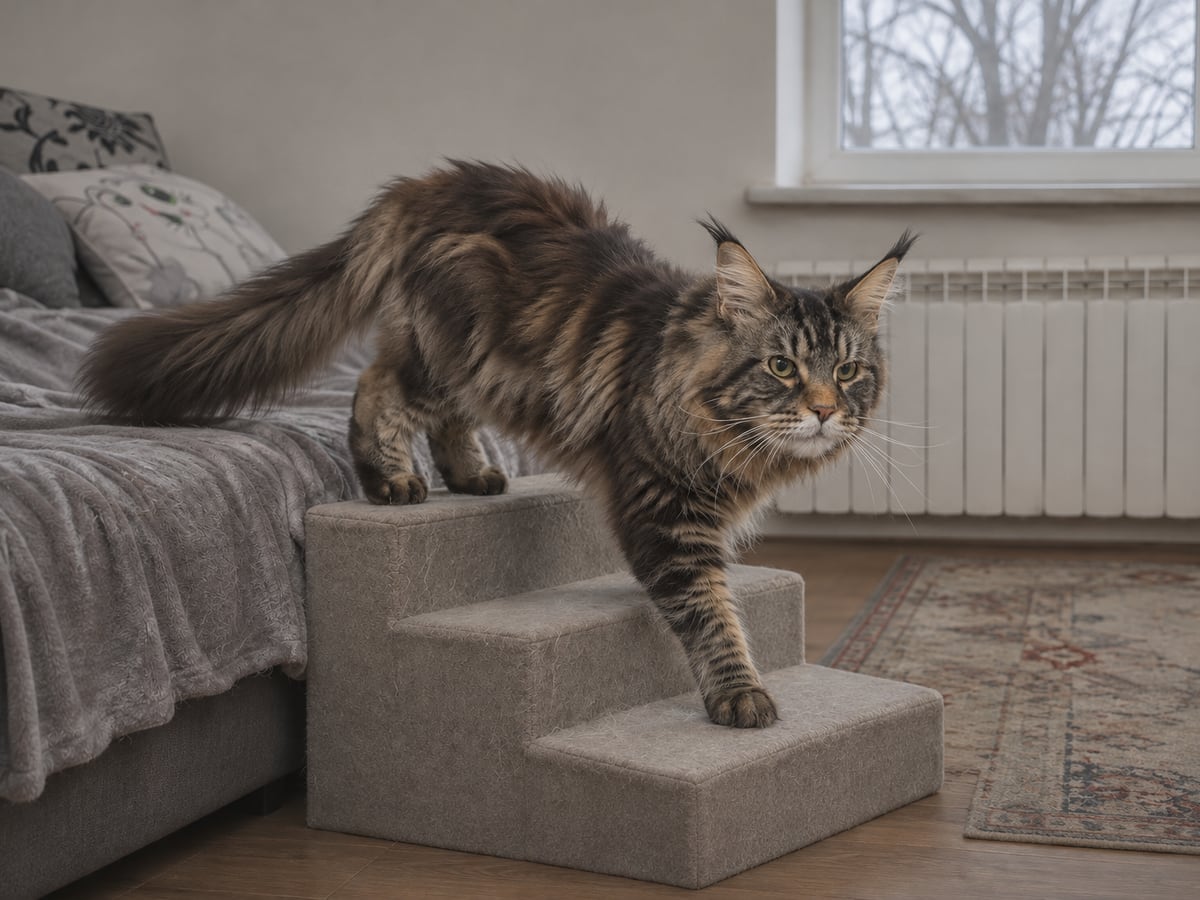
Overweight cats and the spots they can’t reach
Extra weight puts the back further away. PDSA names being overweight as one reason a cat can’t groom properly, and the Cats Protection vet names obesity. International Cat Care lists non-allergic skin diseases among the possible complications of obesity.
International Cat Care says a cat who is 10 to 19% heavier than their ideal weight is overweight. An obese cat has a thick layer of fat over the ribs, so they’re hard to feel, fat over all the bony areas, and a hanging “skirt” under the belly, with no waist.
Don’t cut their food on your own. International Cat Care says not to restrict food without talking to your vet team, because sudden food restriction can cause illness in cats, and losing weight too quickly is dangerous. A gradual, steady loss is the aim, and a very overweight cat may need up to a year. PDSA says to contact your vet for advice if you think your cat is overweight.
Mites, ringworm and other skin problems
When the cause is the skin itself, Cats Protection says it is in most cases parasites, allergies or infections, often made worse by scratching. Mites are microscopic and only just visible to the naked eye. They are highly contagious, and pass from cat to cat by direct contact or through bedding and grooming tools.
Ringworm is a fungus, not a worm. Cats Protection says it can cause itching (but not always), hair loss, redness, crusting and scaling of the skin. International Cat Care lists roughly circular patches of hair loss, particularly on the head, ears or legs, broken hairs around them, and scaly, inflamed patches of skin. It says ringworm can look very similar to other skin diseases, flea allergy included, so telling them apart is the vet’s job.
Some cats are more at risk. International Cat Care says ringworm is more common in cats under a year old and in longhaired cats, whose fur traps the spores more easily. Cats Protection adds very old cats and ill cats, and names Persians among the long-haired cats more at risk.
If you notice any changes to your cat’s skin, hair or claws, International Cat Care says to make an appointment with your vet team.
Dandruff and matted fur, or dandruff and losing hair
Flakes with mats point back to grooming. The Cats Protection vet says that when a cat can’t groom properly, the result can be poor coat condition, matting and dandruff together. Cats Protection says a coat that looks thin or matted, or flaky or thickened skin, can be a sign of an underlying health condition, and to book an appointment with your vet.
Don’t cut a mat out with scissors. International Cat Care says it’s extremely difficult to see where the skin ends and the hair starts when a coat gets really matted, and you could cut your cat.
Flakes with hair loss need the vet too. Bald patches are on PDSA’s list of flea signs, hair loss is one of ringworm’s, and PDSA asks you to tell your vet about any fur loss you’ve noticed alongside the dandruff.
How to brush the places your cat can’t reach
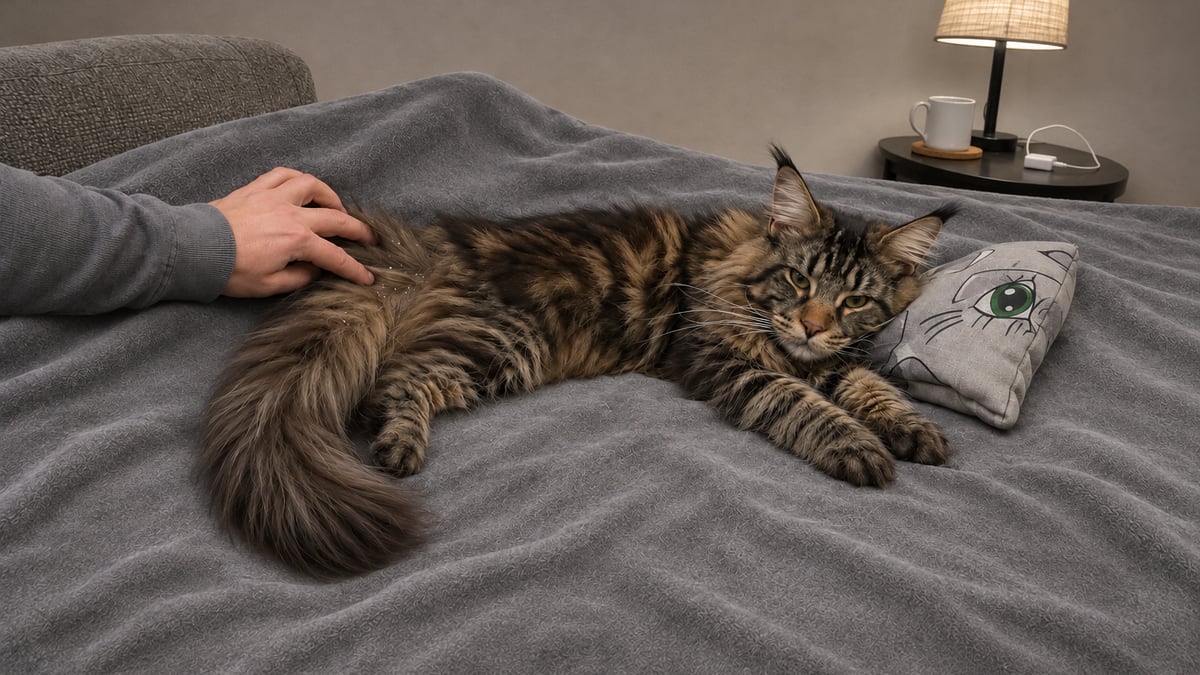
You can do the grooming they’ve stopped doing. Cats Protection says a cat may need your help if they can’t groom themselves as well, for example because they are older or have mobility issues. International Cat Care says grooming stimulates the skin to produce oils, giving the coat a healthy shine, and gives you the chance of a quick check over your cat.
Start when your cat is relaxed and happy. International Cat Care says to use the flea comb first, then brush gently from the head towards the tail, in the direction the hair grows. It suggests grooming a shorthaired cat at least once a week and a longhaired one at least daily, for only as long as they’re comfortable.
Go slowly over a stiff back. Cats Protection says to use as little restraint as possible and to do a little at a time, building it up. International Cat Care says a cat should never be groomed by force without the option to get away.
Stop before they’ve had enough. International Cat Care lists the signs: skin rippling or twitching, a tail swishing, thumping or twitching at the end, suddenly freezing, ears flicking or turning back. If you see them, stop and try another day, and finish on a good note, with treats and praise.
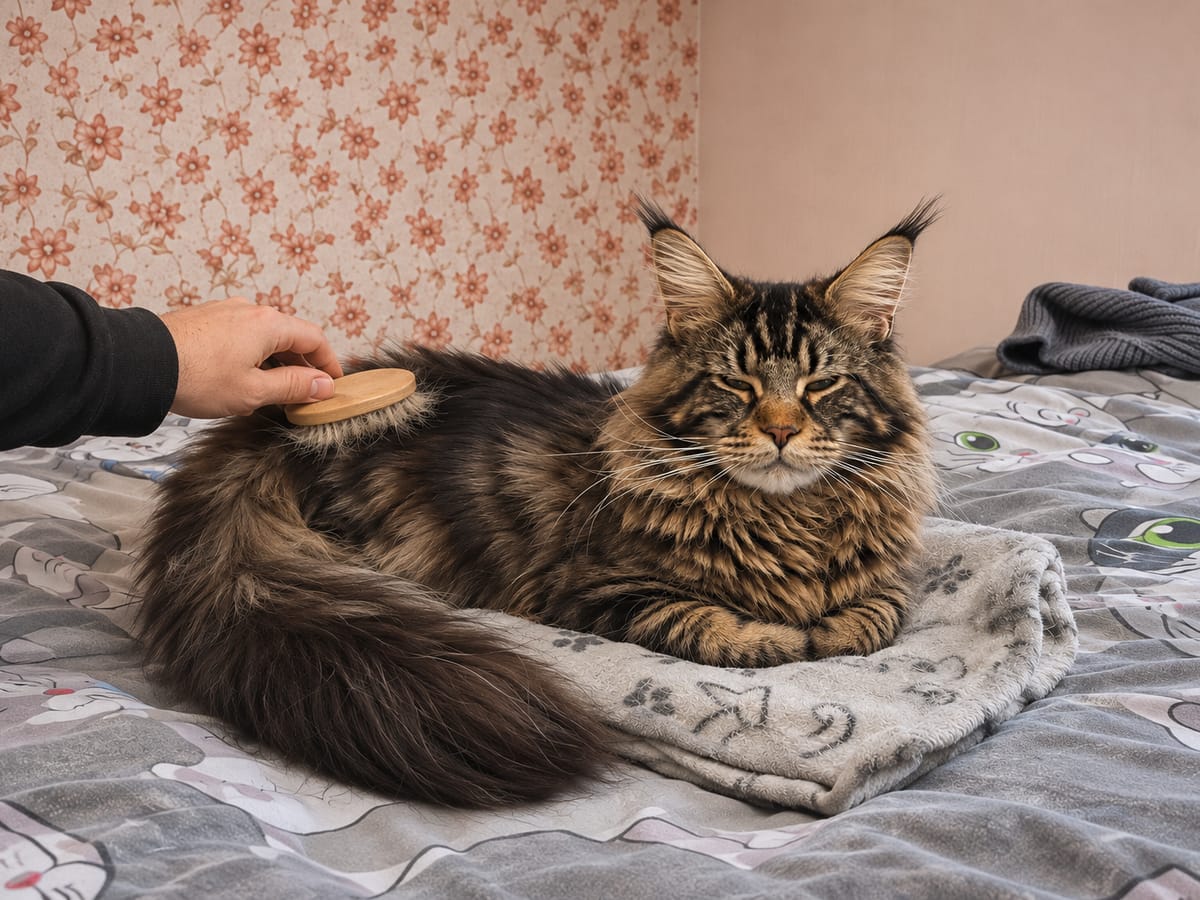
Cat dandruff treatment at home: what’s safe
Let the vet find the cause first. PDSA says the best treatment depends on what is causing the dandruff, and that it’s always best to have your cat checked before trying home remedies. Cats Protection says remedies your vet didn’t recommend could make the condition worse, and that skin creams made for people may be toxic for cats.
Once your vet is happy your cat is otherwise healthy, PDSA says they may suggest food, since the right diet can make a big difference to skin and coat; a skin supplement, often with fish oil, for dry, flaky skin; or a small amount of a pet-safe moisturiser on a small dry patch, such as the nose or an elbow. Ask your vet if you’re not sure which product to use.
The Cats Protection vet says a good-quality, complete, balanced diet should give your cat all the nutrients they need for healthy skin and coat. Supplements with omega 3 and 6 can help condition the coat and reduce dandruff, but ask your vet before giving one.
A bath isn’t on either list. Cats Protection says it’s very unlikely your cat will ever need one, and that a soft cloth soaked in warm water is often enough to remove most dirt. International Cat Care says there’s no reason to bath a healthy cat, and most don’t tolerate it well.
When to see the vet, and what to write down
PDSA says to contact your vet if you notice your cat has dandruff. Go sooner if your cat has been licking or scratching one area more than usual and there’s a wound: Cats Protection says to arrange an appointment as soon as possible. And if a dog flea treatment or a household flea spray has touched your cat, PDSA says to contact your vet immediately.
Tell the vet what else you’ve seen. PDSA lists limping or stiffness, grooming less, rashes or red skin, fur loss and a greasy coat. Cats Protection says the vet may also ask about changes to your cat’s lifestyle and diet. Write down where the flakes are, when you first saw them, what the flea comb showed, and anything new in how your cat moves or eats. Lapka Care is a diary for notes like these, and it puts everything that matters for the vet into one PDF.
What a week of notes on dandruff can look like
3 November: white flakes along Bruno’s lower back and just above his tail. Flea comb: no black specks. The fur there feels a bit tufty.
5 November: stopped twice before jumping onto the sofa, then went up by the armchair. Washes his chest and sides, doesn’t get to his back.
9 November: brushed his back for a few minutes on Saturday and again today. He leans into it. Still flaky. Filmed him going up the stairs.
The notes put the flakes next to the change in how he moves, with a video ready, which is what the vet will want to see.
Questions people ask
Why is dandruff so easy to see on a black cat?
White flakes stand out against dark fur, so you may simply notice them sooner. None of these charities lists coat colour as a cause. The checks are the same as for any cat: a flea comb, their weight, how easily they move, and the vet.
Can dry air from the heating cause cat dandruff?
Cats Protection, PDSA and International Cat Care don’t list dry air among the causes of dandruff. Cats Protection mentions heating for another reason: centrally heated homes with fitted carpets give fleas warm, humid conditions all year round. So if the flakes appear once the heating goes on, use the flea comb anyway and, as PDSA advises, talk to your vet.
Is cat dandruff what people are allergic to?
Not quite. The Cats Protection vet says cat dander, the normal shedding of dead skin cells, often gets the blame for allergies in people. The real cause, according to the same vet, is a protein made in a cat’s saliva and oil glands, which grooming spreads onto the hair and skin.
Can I catch anything from my cat’s dandruff?
Ringworm, yes. International Cat Care says it can pass between animals and people, so wear disposable gloves while your cat is being treated, keep children from playing with them, and see a doctor soon if your skin changes after contact. Mites pass from cat to cat, Cats Protection says. Fleas can’t live on people, but PDSA says they can bite us.
Does dandruff mean my cat is ill?
Not always. PDSA says most causes of dry skin and dandruff aren’t serious and improve with treatment. It still says to contact your vet when you notice it, so the cause can be found and treated.
Sources
- PDSA — Dry skin and dandruff on cats
- PDSA — Arthritis in cats
- PDSA — Fleas on cats
- PDSA — Obesity in cats
- Cats Protection — How can I reduce cat dander in my home?
- Cats Protection — Skin problems in cats
- Cats Protection — Grooming your cat
- Cats Protection — Fleas
- International Cat Care — Grooming your cat
- International Cat Care — Ringworm in cats
- International Cat Care — Obesity in cats
- International Cat Care — Arthritis in cats