
The short answer
Most often the cat is licking the fur off. PDSA says hair loss is more commonly caused by a problem that makes a cat over groom than by fur falling out. The usual reasons are itchy skin (fleas first, then allergies), pain and stress. Ringworm, skin infections and sometimes hormone disease such as hyperthyroidism can make fur fall out. PDSA says to contact your vet if you notice any changes in your cat’s coat.
Why is my cat losing hair?
Usually because they’re grooming it off. PDSA says fur loss can show as bald spots, patchy fur or a generally thin coat, and that it is more commonly caused by a problem that makes your cat over groom than by a condition that makes the fur fall out. Cats Protection agrees: in most cases the cat removes the fur themselves, by grooming or scratching.
You may never see it happen. International Cat Care says cats may be “secret groomers”, so we might not know a cat is grooming more often or harder than before. Cats Protection says they can be precise about it too, and sometimes leave a bald patch with very clear edges.
Whatever the cause, PDSA says a cat with any form of fur loss probably has a condition that makes them uncomfortable and needs treatment from your vet. Bare skin is also at risk of other problems, such as skin infections.
Cat losing hair on back legs
The back legs are one of the places International Cat Care names first. It says the most common areas for over-grooming are the belly, the legs (particularly the insides of the hind legs) and across the flank, and that the patches are often symmetrical, the same on both sides.
You can feel the difference. International Cat Care says that where hair has been groomed off, the hairs left behind feel spiky and sharp. Where it has fallen out, what remains feels soft and normal. Your vet may look at a few hairs under the microscope to tell which it is.
Fleas aim there too. PDSA says the small bumpy rash of a flea allergy tends to develop around the head, neck, tummy and back legs, and can feel like grit under the fur. And in an older cat, PDSA lists fur loss from overgrooming painful joints among the signs of arthritis.
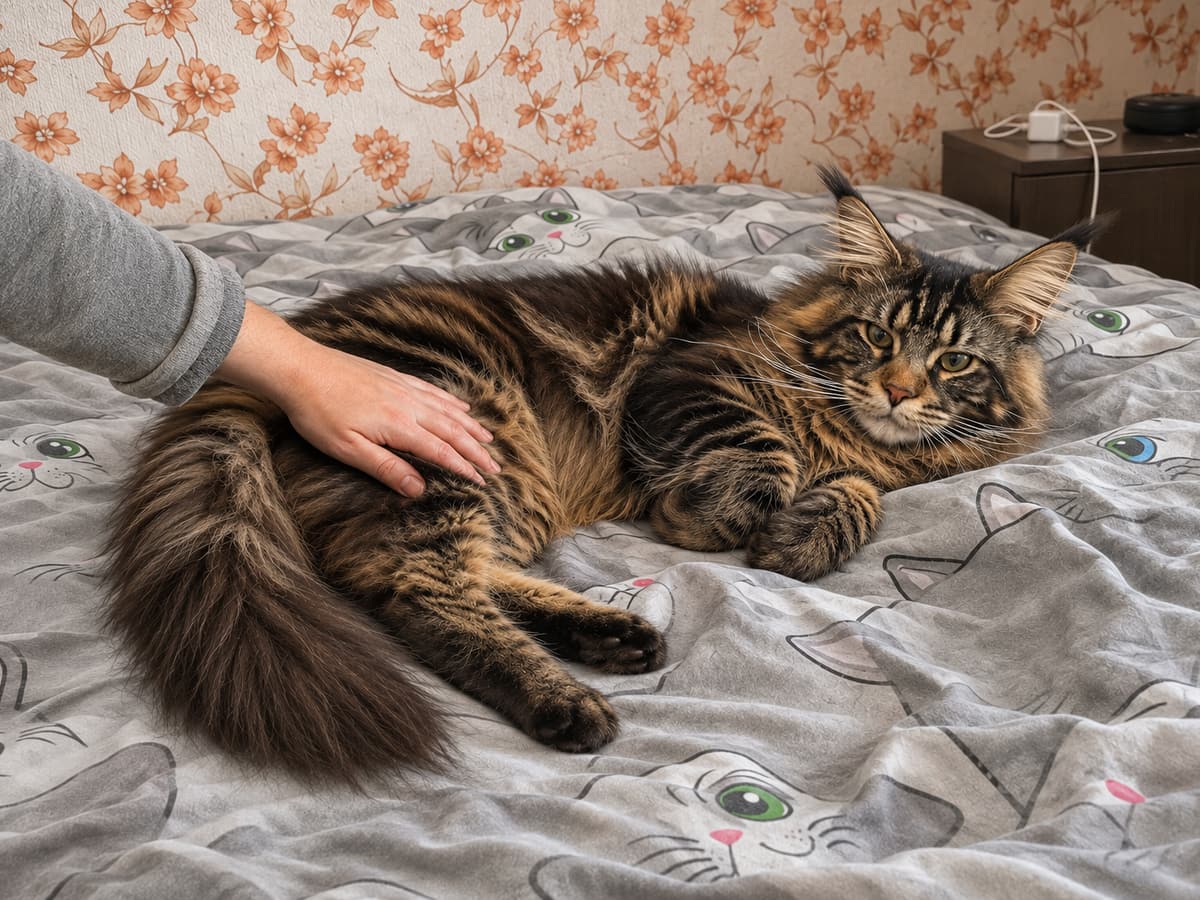
Cat losing hair on belly
A bare belly can mean something hurts inside. International Cat Care says bladder and urinary pain can make a cat over-groom where it hurts, and a common sign is a bald or sparse patch on the lower belly, the inside of the thighs and around the genitals. PDSA lists excessive grooming, usually of the tummy and between the back legs, among the signs of feline idiopathic cystitis, a bladder problem it says is usually triggered by stress.
So look at the litter tray as well. PDSA’s other signs of it include straining or crying while peeing, very frequent trips to the tray, red or pink urine and peeing outside the tray. If your cat strains and keeps trying to pee but nothing comes out, PDSA says this is an emergency: contact your vet immediately.
Allergies can thin the belly too. PDSA says an allergy to things in the environment, such as pollen or dust mites, causes hair loss and thinning especially on the head, neck, underbelly and inner thighs. It also says this allergy is quite uncommon in cats, so your vet will rule out more common causes first.
Fleas: check them first, even in an indoor cat
International Cat Care says fleas remain the most common cause of skin disease in cats in most countries, and that one of the most common causes of over-grooming is an allergy to flea saliva. A cat with this allergy reacts each time a flea bites, PDSA says, with intense itching and a rash.
You may not find a single flea. PDSA says you may not see them, especially if your cat is overgrooming and removing them, and Cats Protection says that not having obvious fleas does not rule out a flea allergy. Look for flea dirt instead: dark specks that PDSA says are often on the lower back. Cats Protection says a fine-tooth flea comb might find a lot of it.
Indoor cats count. Cats Protection says to give regular flea treatment even to a cat who never goes out, because fleas come in on clothes or may already be living in the carpets. PDSA says 95% of a flea infestation is in the home and only 5% on your pets, so the house needs treating along with every pet in it.
Use a product from your vet. PDSA warns never to put a dog flea treatment or a household flea spray on a cat, because they often contain permethrin, which is extremely poisonous to cats. If one has touched your cat, contact your vet immediately. For a cat with a flea allergy, International Cat Care says regular flea treatment is needed for life.
Cat losing hair in patches
Round patches on the head, ears or legs bring ringworm to mind. It’s a fungus, not a worm. International Cat Care lists roughly circular areas of hair loss, broken hairs around them, and scaly, inflamed patches of skin. PDSA calls the patches itchy, while Cats Protection says it isn’t always ring-shaped and doesn’t always itch. It can look very like other skin diseases, flea allergy included, so the vet tells them apart.
Some cats are more at risk. International Cat Care says ringworm is more common in cats under a year old and in longhaired cats, whose fur traps the spores more easily. Cats Protection adds very old cats and ill cats. It passes to people as well, so International Cat Care says to wear disposable gloves while a cat is being treated and not to let children play with them.
When the fur really is falling out, PDSA names other causes: bacterial skin infections, a condition called eosinophilic granuloma complex, which makes painful, raised, red patches of bare skin, and scars. Where the skin and hair follicles are badly damaged and scarred, PDSA says the fur loss can be permanent.
Stress and over-grooming
PDSA says many cats will over groom and develop bald patches when they are stressed. International Cat Care puts it more carefully: most cases of over-grooming start with a skin or pain problem, there’s reason to believe most also have a stress part, and for a small number of cats the whole cause is stress. Cats groom to make themselves feel better when they’re anxious, and it can become compulsive, done so often that it gets in the way of everyday life.
Think back to what changed. PDSA’s list of stress triggers for cystitis is a good place to start: moving house, conflict with another cat, even one in the same house, tension between people at home, a new baby, pet or person, building work, rearranged furniture, a change of food and changes in the weather. International Cat Care says a large part of a cat’s stress comes from other cats, especially when they share litter trays, bowls and beds with a cat they don’t get on with.
What helps, from International Cat Care: a predictable daily routine, enough of everything so nobody has to compete (one per cat plus one extra, in different places) and things to keep the mind busy. PDSA suggests time playing together every day, but only if your cat enjoys it.
See the vet before putting it down to stress. International Cat Care says the vet first looks for a medical cause and, if stress is behind it, may refer your cat to a qualified clinical animal behaviourist.
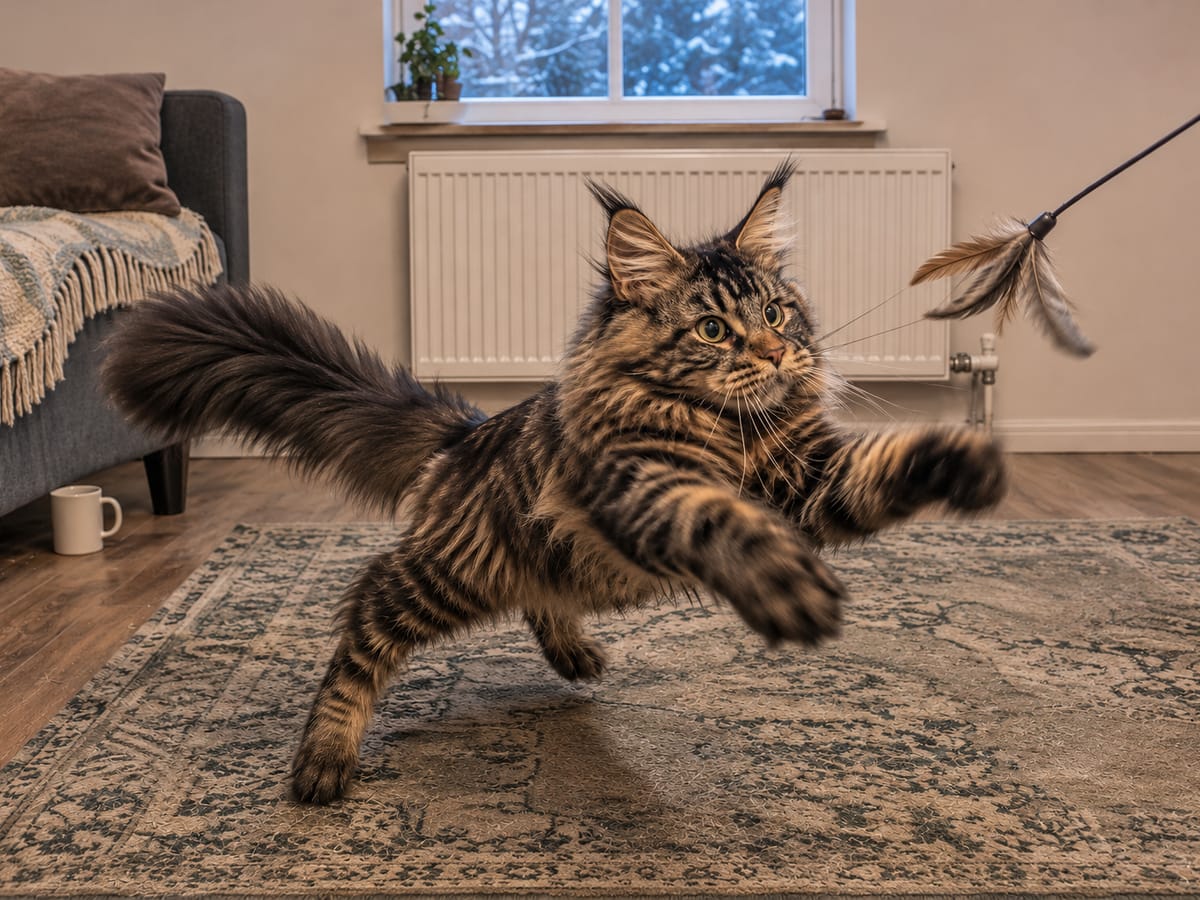
Old cat losing hair
In an older cat, two causes are worth asking the vet about. The first is an overactive thyroid. International Cat Care says hyperthyroidism is common in middle-aged and older cats and rare under 7 years old, and that a poor, unkempt coat is one of its classic signs. PDSA lists a dry, untidy coat and says you might also notice hair loss.
The second is sore joints. PDSA says arthritis is extremely common, with one study finding signs of it on x-ray in 90% of cats over 12 years old. Among its signs PDSA lists fur loss from overgrooming painful joints, and matted fur in the places a stiff cat can’t reach: the back, the back legs and the base of the tail. International Cat Care says a cat over-grooming because of arthritis needs the joint pain managed.
Cats hide pain well, PDSA says, so the signs often get missed. It suggests thinking back to what your cat was like a few months or years ago, and having an older cat checked every 6 to 12 months for problems that come with age. At home, raised food and water bowls help a cat for whom bending down hurts.
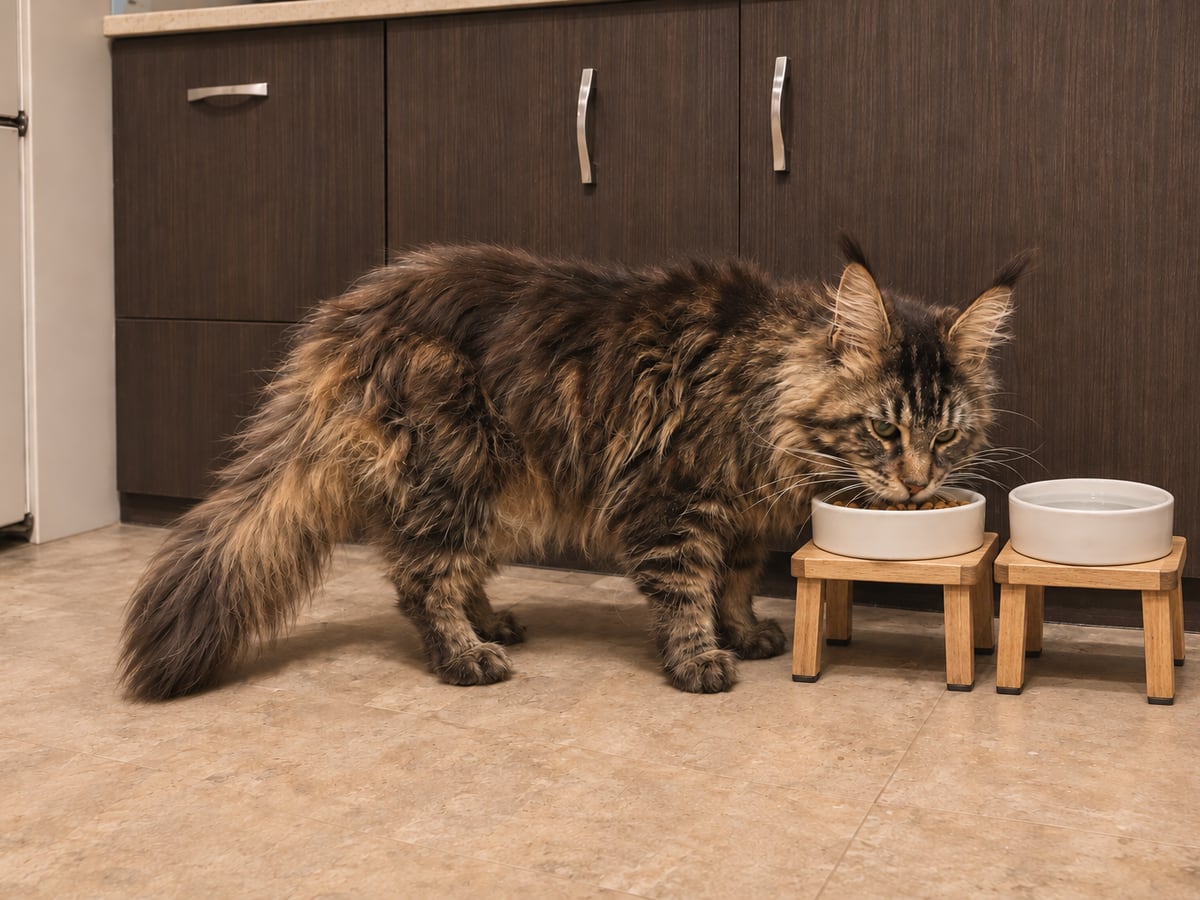
Cat losing hair and weight
Hair loss together with weight loss is worth telling your vet about. International Cat Care says cats with hyperthyroidism burn energy too fast and often lose weight despite eating more than normal. Other classic signs it lists include more thirst, more activity, restlessness or irritability, and a fast heart rate.
PDSA says the signs come on slowly, so you may not notice at first, and that hyperthyroidism is serious and can be fatal if it isn’t treated. The same page says there are many treatment options, and a well-managed cat can live for many years. Contact your vet if you see these signs.
Weight loss with muscle wastage and prominent bones is on PDSA’s list of arthritis signs too. One more reason to let the vet find out which it is.
Hair loss on the tail, ears or around the eyes
On the tail, start with fleas: PDSA says to check above the base of the tail, and Cats Protection says a flea allergy can leave small scabs around the neck and the base of the tail. International Cat Care also describes a poorly understood condition, feline hyperaesthesia syndrome, with skin twitching and sudden bouts of intense grooming, often of the back and tail.
On the ears, ringworm is one possibility, since International Cat Care names the head and ears among its usual places. It adds that flying insects such as midges and mosquitoes tend to bite hairless areas like the ears and the bridge of the nose, and the reaction can be very itchy. In white cats, or cats with pale ears, Cats Protection says too much sun usually first shows as hair loss around the ears.
Around the eyes and nose, the Cornell Feline Health Center shows an allergic cat who lost hair there from scratching and rubbing. PDSA says the environmental allergy is often worst on the head and neck, and to contact your vet about any change in your cat’s coat.
What to check at home
A few minutes with your cat tells the vet a lot. Run your hand over the patch: International Cat Care says groomed-off hair feels spiky, fallen-out hair soft. Comb through with a fine-tooth flea comb, especially along the lower back. Note where the patches are, and whether they match on both sides.
Then look for the other signs PDSA asks you to mention: a rash, scabs or patches of dark skin, dry and scaly skin, itchiness, overgrooming, lost whiskers, sleeping more than usual, drinking more than usual, and eating more or less than usual.
Leave the creams in the cupboard. Cats Protection says home remedies your vet didn’t recommend could make things worse, and skin ointments and creams designed for humans may be toxic for cats. Don’t start a new food on your own either: if your vet suspects a food allergy, International Cat Care says the trial diet lasts 6 to 8 weeks, is chosen by the vet, and nothing else may be eaten in that time.
Why the vet may need time: Cornell says the cause of skin disease in cats can be difficult to find, and sometimes the answer comes from how a cat responds to a trial of treatment or a change of diet. Inflamed skin itches and scratching damages it further, a cycle that makes controlling the itch a main aim of treatment for many cats, Cornell says.
When to see the vet, and what to write down
PDSA says to contact your vet if you notice any changes in your cat’s coat, and International Cat Care says to contact your vet team as soon as possible if you notice over-grooming. Go sooner if there’s a wound: Cats Protection says a cat licking or scratching one area more than usual, with a wound there, needs an appointment as soon as possible.
Two things can’t wait. If your cat strains and keeps trying to pee with nothing coming out, PDSA says it’s an emergency. If a dog flea treatment or a household flea spray has touched them, contact your vet immediately.
Bring notes. Cats Protection says the vet may ask about changes to your cat’s lifestyle and diet and the other signs you’ve seen. Write down where the patches are and when you first saw them, what the flea comb found, how the hair feels, and anything new at home, in the litter tray or at the food bowl. Lapka Care is a diary for notes like these, and it puts everything that matters for the vet into one PDF.
What a week of notes on hair loss can look like
3 November: thin patch inside both of Milo’s back legs, the same on each side. The hair left there feels prickly, not soft.
5 November: flea comb along his lower back and tail: nothing. Caught him licking his inner thigh twice tonight, both times after the neighbour’s cat sat outside the window.
9 November: patch the same size. Eating and drinking as usual, litter tray normal. Took a photo of both legs in daylight.
The notes show where the hair is going, how it feels, what the comb found and what happens just before he grooms, which is what the vet will ask about.
Questions people ask
Why is my cat losing hair but not scratching?
They may be licking it off where you can’t see: International Cat Care says some cats are “secret groomers”. And not every cause itches. International Cat Care says ringworm is not usually itchy, though PDSA calls it itchy. PDSA also lists hormone disease such as hyperthyroidism among the conditions that can make fur fall out. Either way, it’s a question for the vet.
My indoor cat has no fleas I can see. Can it still be fleas?
Yes. Cats Protection says not having obvious fleas does not rule out a flea allergy, and that fleas come in on clothes and can live in carpets. PDSA says a cat who overgrooms may remove the fleas, so you may not see any. Ask your vet about a flea treatment for every pet in the house.
Can a change of food make my cat lose hair?
A food allergy is one of the causes of itchy skin that PDSA links to fur loss. Cats Protection says cats can react to ingredients in food, even foods they have eaten before without a problem. Testing it takes a strict trial diet of 6 to 8 weeks, which International Cat Care says your vet chooses, so talk to them before swapping foods.
Will my cat’s hair grow back?
It depends on the cause. PDSA says the loss can be permanent where the skin and hair follicles are badly damaged and scarred. Cornell says that, depending on the cause and how severe it is, the outlook for skin disease in cats is often good, and that following your vet’s advice often solves the problem. And International Cat Care says an itchy cat on their vet’s treatment plan can live a comfortable life.
Can I catch anything from my cat?
Ringworm, yes. International Cat Care says it passes between animals and people, and to seek medical advice as soon as possible if your skin changes after contact with an infected cat. Fleas can’t live on people, PDSA says, but they can bite us.
Sources
- PDSA — Alopecia (fur loss) in cats
- PDSA — Flea allergic dermatitis in cats
- PDSA — Fleas on cats
- PDSA — Skin allergies (atopy) in cats
- PDSA — Feline idiopathic cystitis (FIC)
- PDSA — Arthritis in cats
- PDSA — Hyperthyroidism in cats
- International Cat Care — Over-grooming in cats
- International Cat Care — Itchy cat: when it is not fleas
- International Cat Care — Ringworm in cats
- International Cat Care — Stress in cats
- International Cat Care — Hyperthyroidism in cats
- Cats Protection — Skin problems in cats
- Cats Protection — Fleas
- Cornell Feline Health Center — Feline skin diseases