
The short answer
If the food comes back up soon after a meal, looking much as it went down, your cat may simply be eating too fast. Cats Protection calls this regurgitation: there’s no retching, and it may be “normal” in otherwise healthy cats who eat too quickly. Smaller meals and a slow feeder may help. Call your vet if it keeps happening, or if your cat seems unwell, can’t keep food or water down, or is very young or old.
Why is my cat throwing up after eating?
Several of the causes have to do with the meal itself. Cats Protection lists overfeeding or eating too fast, a sudden change of diet, and intolerance or allergies to certain ingredients among the reasons a cat is sick. Another common one is hair, swallowed while your cat grooms.
A cat being sick now and then is common. Cornell Feline Health Center says even the healthiest cat is apt to vomit now and then, and PDSA says it’s not always necessary to see your vet the first time your cat vomits, but to call them for advice if it happens again, or your cat seems unwell or shows other signs.
But vomiting can also be a sign of illness. Cats Protection lists infections, swallowed objects, and diseases of the liver, kidneys and pancreas among the other causes, and says to always speak with your vet if you’re concerned.
Vomiting or regurgitation: how to tell
Watch what happens just before. Cats Protection describes regurgitation as food coming straight back out through the mouth without reaching the stomach or being digested. It happens soon after eating, there’s no retching, and your cat doesn’t look queasy first. The food may be tube-shaped and covered in mucus, but otherwise it looks much as it did in the bowl.
Vomiting starts with feeling sick. Cats Protection says a cat about to vomit may get restless and agitated, then swallow a lot, lick their lips and salivate, before strong movements of the belly. PDSA adds drooling, eating grass and a smaller appetite to the signs a cat feels sick.
Throwing up takes a lot of effort, so let them finish. Cats Protection suggests waiting until your cat has finished and rested before you try to move them.
Regurgitation isn’t always harmless either. Cats Protection says it can also happen because of a health problem, so ask your vet if your cat regurgitates repeatedly.
Cat throwing up after eating too fast
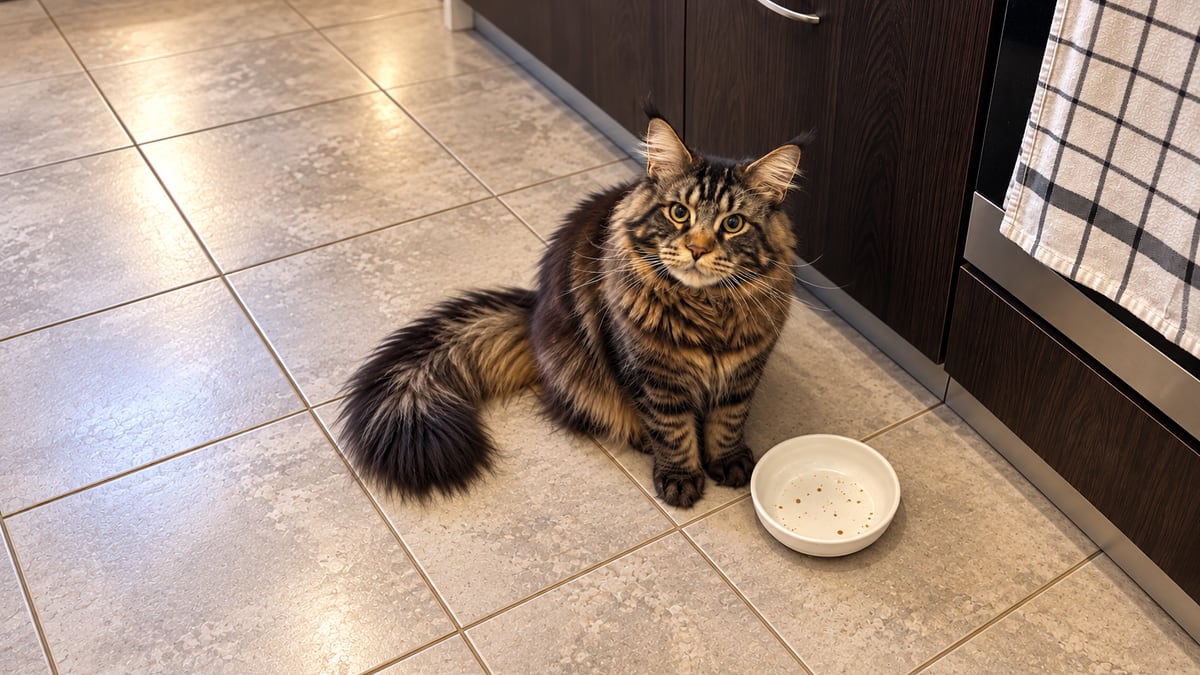
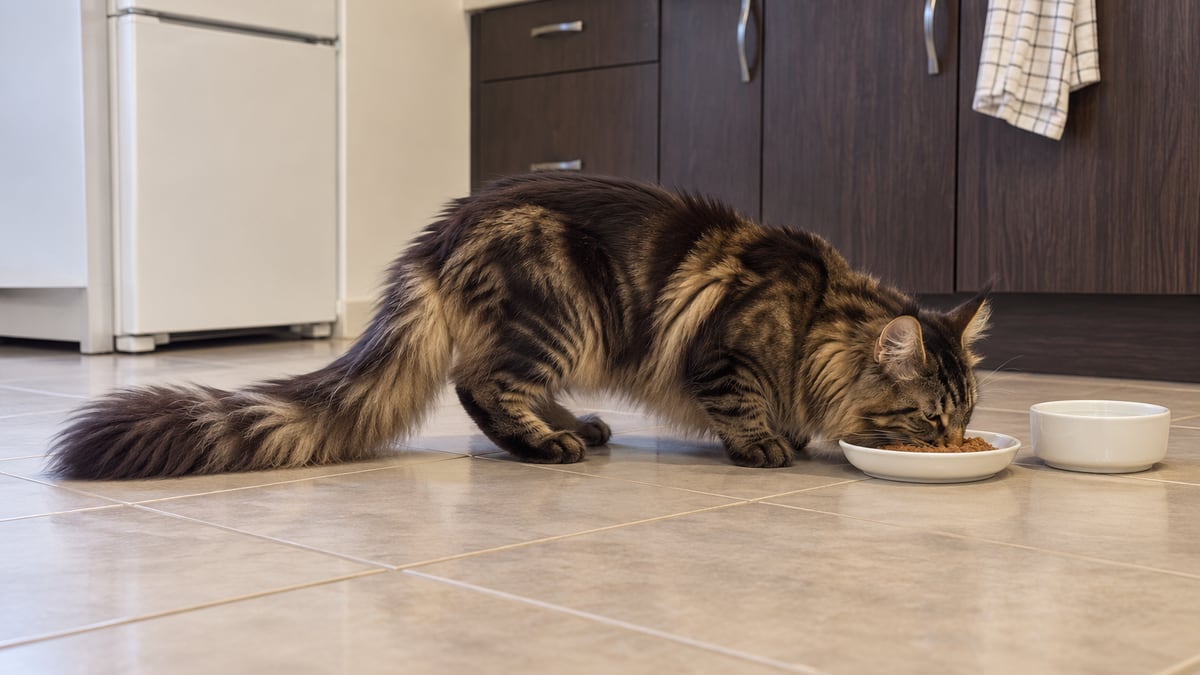
You probably know the scene: the bowl is empty in a minute, and a little later the food is back on the floor. Cats Protection says regurgitation may be “normal” in otherwise healthy cats who eat their food too quickly.
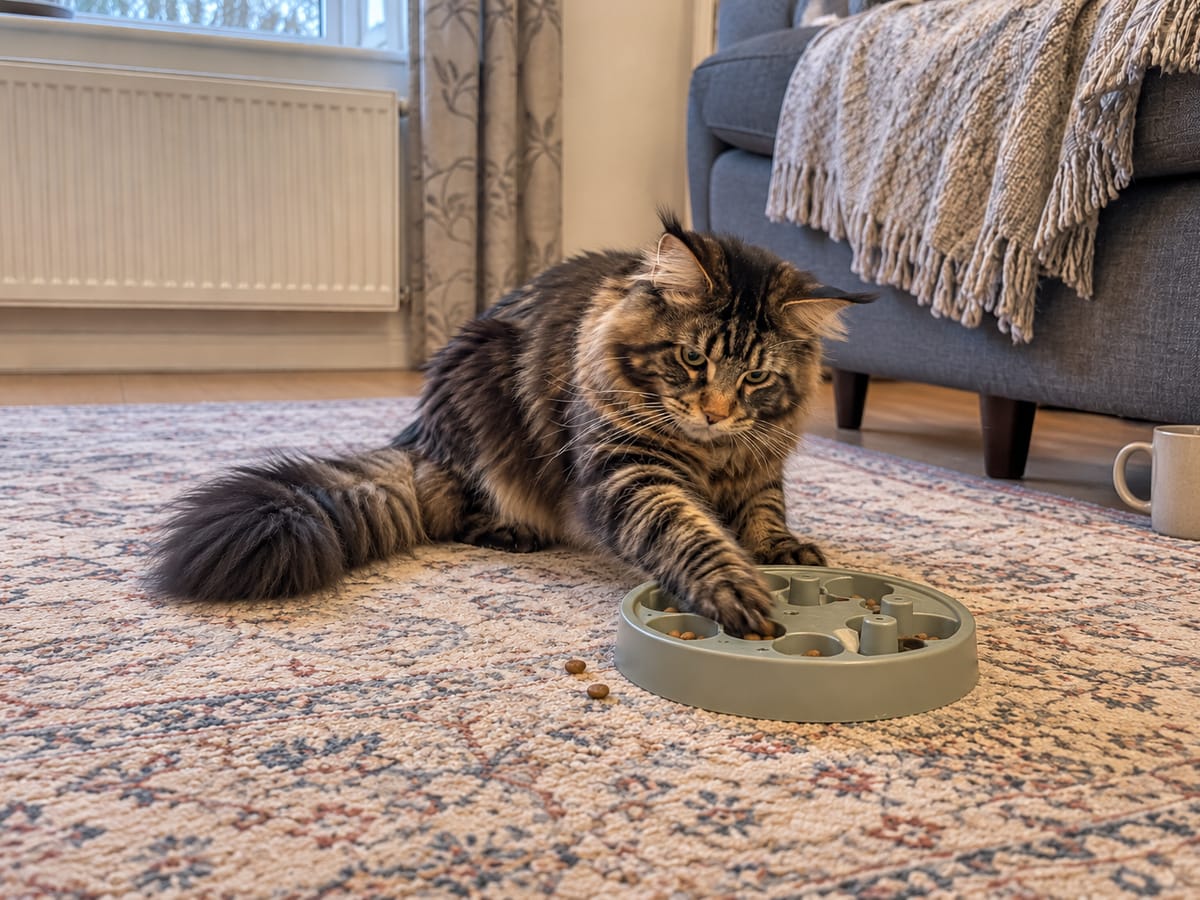
So slow the meal down. Cats Protection suggests small regular meals or a slow feeder bowl. A cat who gets too excited about food, eats too quickly and then throws up may keep the food down better with a slow feeder, it says. On its page about digestion it adds that food puzzles can be particularly helpful for cats who eat too quickly and vomit.
A puzzle feeder is a toy your cat has to work at to get the food out. International Cat Care says puzzle feeders help meals last longer and increase the physical effort needed to get food.
If it keeps happening even once meals are slower, don’t put it down to speed. Cornell Feline Health Center says that if a cat frequently gags and throws up whatever they have just eaten, there is reason for concern, and a visit to the vet is certainly in order.
Smaller meals, more often
Cats are built for small meals. Cats Protection says they have evolved to eat little and often: in the wild, a cat would eat around 10 to 12 small meals throughout the day, and pet cats will often prefer the same.
Our routine is usually different. International Cat Care says we often feed cats to fit our lifestyles, for example two larger meals during the day. Where possible, it suggests dividing the daily ration into at least five portions, spread over the whole 24 hours with timed and puzzle feeders. Cats Protection’s minimum for an adult cat is fresh wet food at least twice a day and dry food at least once.
Keep the day’s total the same and just split it up. Cats Protection says to follow the advice on the food packaging for how much to feed each day, and lists overfeeding among the causes of vomiting. International Cat Care warns that cats with unrestricted access to food may overeat.
The bowl matters a little too. International Cat Care says cats prefer shallow bowls or saucers, so they can see around them while they eat and their whiskers don’t brush the sides.
Cat throwing up after eating dry food
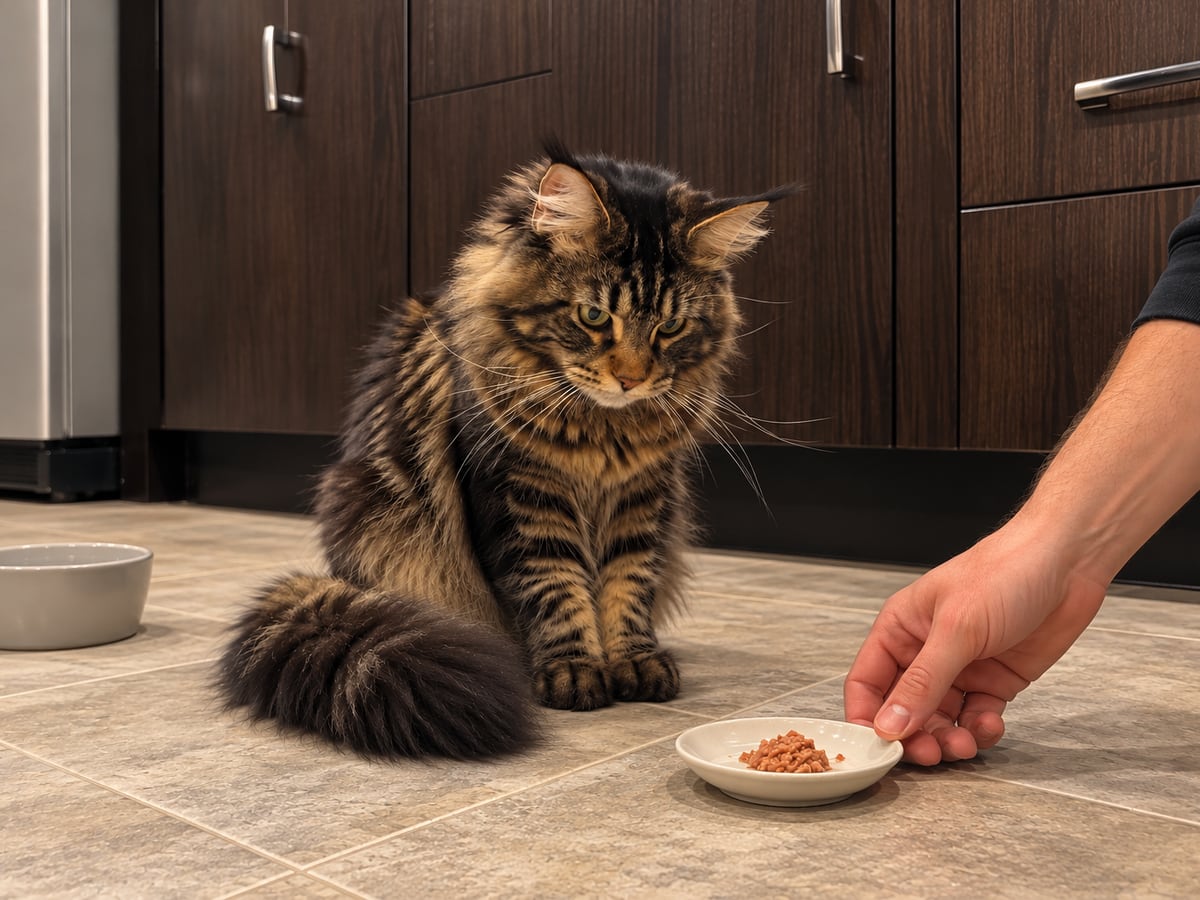
If what comes up is whole pieces of kibble, it hasn’t been digested. Cats Protection says food in the vomit means it hasn’t been fully digested, and this kind of vomit often comes soon after a meal.
Dry food is easy to overdo. International Cat Care says it is very energy-dense, so the correct amount may look small. Weigh the day’s portion instead of judging it by eye, which for dry food adds less than a couple of minutes, and split it into several meals.
Dry food also works in a puzzle feeder, which Cats Protection says makes feeding time more exciting and encourages exercise. International Cat Care suggests a wand toy that, when “caught”, results in a scatter of biscuits.
With wet food, freshness counts. Cats Protection says wet food needs changing at least twice a day to keep it fresh, and Cornell Feline Health Center lists spoiled cat food among the causes of vomiting.
Cat throwing up after eating new food
PDSA lists a change of diet among the common causes of vomiting. Cats Protection says a sudden change of diet could cause an upset stomach, and International Cat Care says changing gradually helps prevent gastrointestinal upset, such as vomiting and diarrhoea.
So switch slowly. International Cat Care suggests offering both foods at the same time, in separate bowls, starting with 75% of the old food and 25% of the new, then moving towards the new one as your cat accepts it. Cats Protection says never to mix the two in one bowl, as this can really put cats off.
Let your cat set the pace. International Cat Care says some cats may accept a new diet over five to seven days, while others take longer and could need two to eight weeks. Cats Protection suggests a week or more. If your cat won’t eat the new food or becomes unwell, Cats Protection says to go back to the old food and speak to your vet.
A food for sensitive stomachs is your vet’s call. Cats Protection says a switch to a food designed for cats with a sensitive stomach should be made on your vet’s advice, and it lists intolerance or allergies to certain ingredients among the causes of vomiting. If your vet has given you specific instructions for a new diet, International Cat Care says to follow those.
More than one cat at mealtimes
Cats like to eat in peace. Cats Protection says cats usually prefer to eat away from other cats, and suggests feeding them in separate places to cut any competition for food. International Cat Care says cats generally don’t like to share food bowls or be seen by other cats when eating.
International Cat Care suggests a quiet, calm spot where each cat can eat out of sight of the others, and ideally 2 or 3 feeding and watering areas for each cat. Keep them away from litter trays, doors to the outside and busy areas. The kitchen isn’t always the right place, it adds, because it can be busy.
Cat throwing up undigested food
Look at what came up, because it varies. Cats Protection describes the common kinds: food that hasn’t been fully digested, often soon after a meal; a hairball, usually tube-like, made of fur and covered in foam or stomach liquid; and white foam, a mix of stomach fluid and mucus, which might mean your cat threw up on an empty stomach.
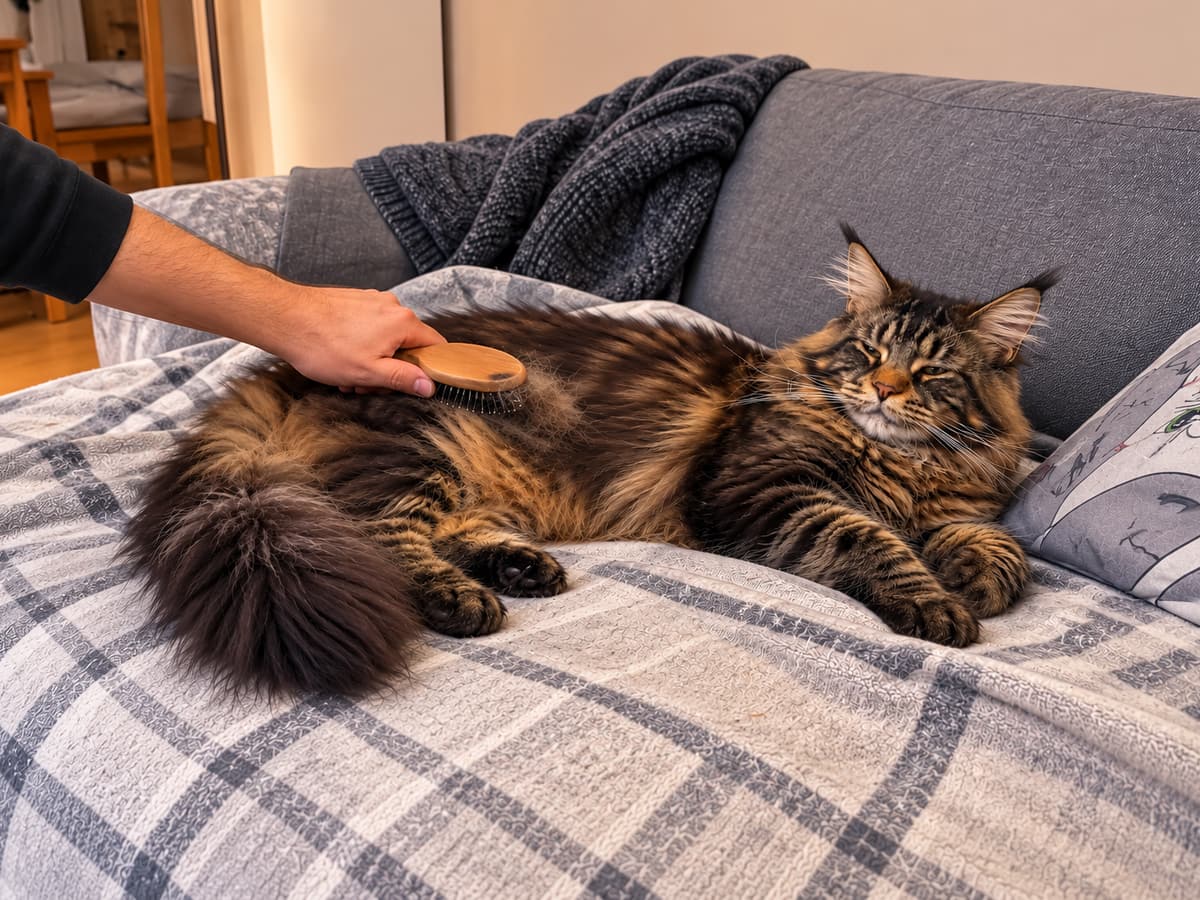
Hairballs are usually the least worrying. Cornell Feline Health Center calls them a relatively benign cause in most cases, describes one as a damp, cylindrical wad of undigested hair, and says it’s not uncommon for a cat to bring one up once every week or two without any lasting problems. Cats Protection suggests daily brushing to cut down how many hairballs your cat throws up.
Even so, Cats Protection says regularly bringing up furballs can be a sign of disease in the stomach or intestines, or of a skin problem that makes your cat groom more. And although furballs are most likely to be normal, it says, any kind of vomit can point to an underlying disease.
Cat throwing up but acting normal
One sick-up from a cat who is otherwise bright usually passes quickly. Cats Protection says that if it only happens once and your cat is otherwise bright and healthy, with no other signs, they should recover quickly.
PDSA’s advice for a cat who has vomited but is otherwise well: feed them normally, make sure they have fresh water, and watch them closely. If at any point they seem unwell or vomit again, contact your vet.
Still eating isn’t a reason to let it run on. Cornell Feline Health Center says cats that vomit more often than once a week should be seen by a vet promptly. Cats Protection suggests mentioning any vomiting to your vet, occasional or frequent, because there can be various causes behind it.
When to see a vet straight away
Some signs mean you call the vet now. PDSA says to contact your vet straight away if your cat has been vomiting for more than 24 hours, can’t keep food or water down, is very young or old, or is otherwise unwell. The same goes if they have low energy, have eaten something they shouldn’t have, have pale gums, diarrhoea or a painful belly, have blood or black dots in their vomit, or are drinking or peeing more than usual.
Cats Protection says frequent or severe vomiting, or a cat who can’t keep down food and water, needs an urgent vet examination. Vomiting with a change in appetite or thirst, lethargy, diarrhoea or weight loss should not wait to be checked. Cornell Feline Health Center adds weakness, blood in the vomit, and peeing more or less than usual.
Kittens and old cats can’t wait as long. Cats Protection says vomiting in very young or old animals is more likely to be significant or to lead to problems such as dehydration.
Something swallowed can turn into an emergency. Cats Protection says small objects may pass through without causing an issue, but some can get stuck, and a blockage needs to be treated as an emergency. It says to contact your vet as soon as possible if you know your cat has swallowed something they shouldn’t have, or if they lose their appetite, vomit, have a painful belly, strain or can’t pass any poo, and are lethargic. String and thread are a particular risk, because cats love chasing them.
What to write down for the vet
The vet will start with your story. Cornell Feline Health Center says finding the cause of frequent vomiting in cats begins with a thorough history from the owner and an examination of the cat.
So note each time: the date and time, how long after the meal it was, what came up (whole food, liquid, foam or a hairball), whether your cat looked sick first, what they ate and whether anything about the food changed. Add how they were afterwards: eating, drinking, using the tray. Lapka Care is a diary for notes like these, and it puts everything that matters for the vet into one PDF.
What a week of notes can look like
Monday, 8:05 am: breakfast gone in about a minute. 8:10: brought it all back, whole kibble in a tube, no heaving first. Bright straight after, asking for more.
Tuesday: the same after breakfast. Supper was fine.
Wednesday: breakfast split into three small portions, 20 minutes apart. Kept it all down.
Thursday to Sunday: breakfast in the puzzle feeder. Nothing came back.
The times show the food came straight back after a fast breakfast, with no retching, and stopped once the meal slowed down. With notes like these, the vet sees exactly how often it happened and what changed.
Questions people ask
Is it normal for a cat to throw up after eating?
Now and then, yes. Cornell Feline Health Center says even the healthiest cat is apt to vomit now and then, and Cats Protection says it isn’t unusual for cats to be sick occasionally. PDSA says to call your vet for advice if your cat vomits more than once, seems unwell or shows other signs.
Why does my cat throw up right after eating?
Eating too fast is one reason. Cats Protection says food that comes back soon after eating, without retching, is regurgitation, and it may be “normal” in healthy cats who eat too quickly. Smaller meals and a slow feeder may help. If it happens repeatedly, ask your vet.
Why does my cat throw up food hours after eating?
Cats Protection describes regurgitation as happening soon after eating. Food that comes up later, after signs of feeling sick such as lip licking and swallowing, sounds more like vomiting. Cats Protection suggests mentioning any vomiting to your vet, so note the time and how long after the meal it was.
My cat is vomiting but still eating. Should I worry?
Once, in a bright cat who is eating normally, usually not: PDSA says to feed them normally, keep fresh water down and watch them closely. But Cornell Feline Health Center says cats that vomit more often than once a week should see a vet promptly, and Cats Protection says vomiting with a change in appetite or thirst shouldn’t wait.
Should I feed my cat after they throw up?
If they’re otherwise well, PDSA says to feed them normally, make sure they have access to fresh water and watch them closely. If they vomit again or seem unwell, contact your vet. If your cat can’t keep food or water down, PDSA says to call straight away.
Do slow feeder bowls help?
For a cat who eats too fast, they may. Cats Protection says a slow feeder can help a cat who eats too quickly and then throws up to keep the food down, and International Cat Care says puzzle feeders help meals last longer. They won’t fix vomiting that has another cause, so the signs for seeing a vet still apply.