
The short answer
White foam is stomach fluid and mucus, and Cats Protection says it might mean your cat threw up on an empty stomach. Once, in a cat who is otherwise bright, eating and drinking, you can usually watch at home. Call your vet if it happens again, if your cat stops eating, seems low on energy or has diarrhoea, or if they are a kitten or an old cat.
Why is my cat throwing up white foam?
The foam is what an empty stomach has in it. Cats Protection says white foam in a cat’s vomit is a combination of stomach fluid and mucus, and might mean they threw up on an empty stomach.
So the foam doesn’t name a cause. It only tells you there was little in the stomach when your cat was sick. PDSA lists the common causes of vomiting as gastritis (a mild stomach upset), worms, fur balls, travel sickness, and a change of diet or eating something unusual.
Less often it’s something more serious. PDSA’s list of less common causes includes pancreatitis, food allergies, an overactive thyroid, kidney disease, poisons, a gut blockage, diabetes and liver disease. What tells you more than the foam is everything else your cat is doing.
Cat throwing up white foam but acting normal
One bout of foam from a cat who is otherwise their usual self is common. Cats Protection says it is not unusual for cats to be sick occasionally, and that if it only happens once and your cat is otherwise bright and healthy, with no other signs, they should recover quickly. It also says to speak with your vet whenever you’re concerned.
Cornell Feline Health Center says even the healthiest cat is apt to vomit now and then. PDSA says you may not need to see your vet each time your cat vomits, but to call them for advice if your cat vomits more than once, seems unwell or shows other signs.
Acting normal means the ordinary things: eating the next meal, drinking, using the litter tray, coming to say hello, playing at the usual time. Over the next day, note whether each of them happened.
What to do right after
Let them finish first. Cats Protection says throwing up takes a lot of effort and can be distressing, so it’s best to let your cat finish and rest before you try to move them.
Then keep the day ordinary. For a cat who has vomited but is otherwise well, PDSA says to feed them normally, make sure they have access to fresh water and watch them closely. If at any point they seem unwell or vomit again, contact your vet.
PDSA’s page on stomach upsets offers a gentler way for a cat who has vomited only once or twice and seems otherwise well: very small, regular, bland meals, such as boiled chicken or white fish, with your cat kept indoors so you can watch them. If they don’t improve within 24 hours, it says to book a vet appointment.
Foam on an empty stomach
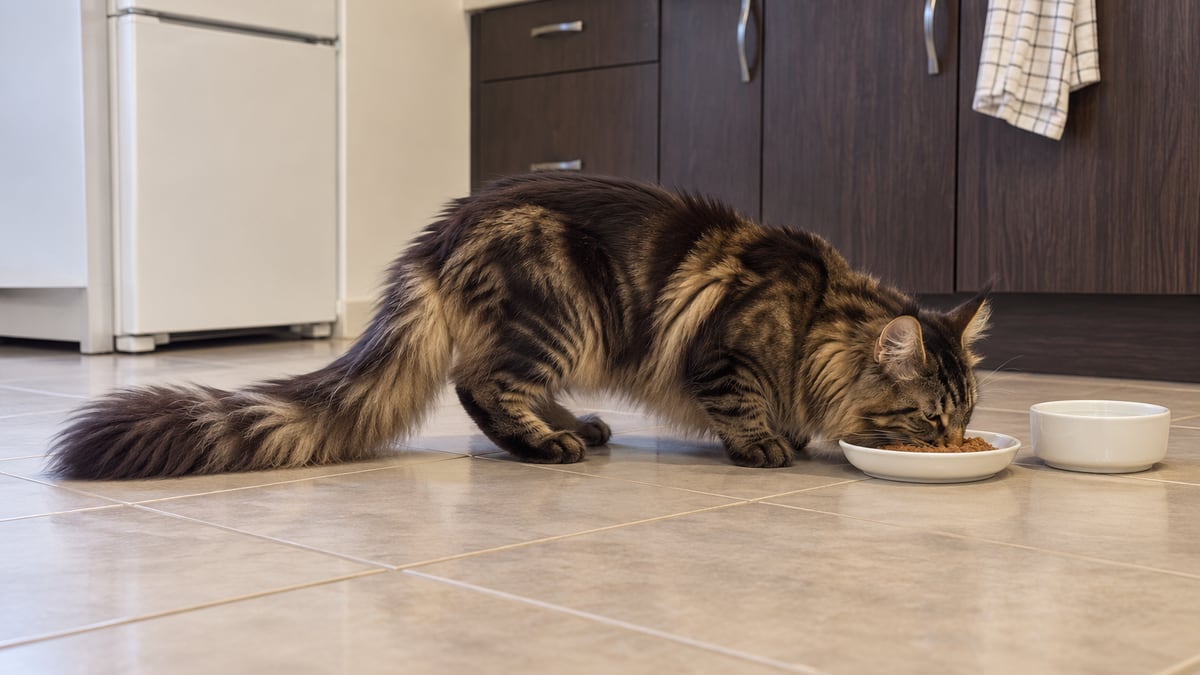
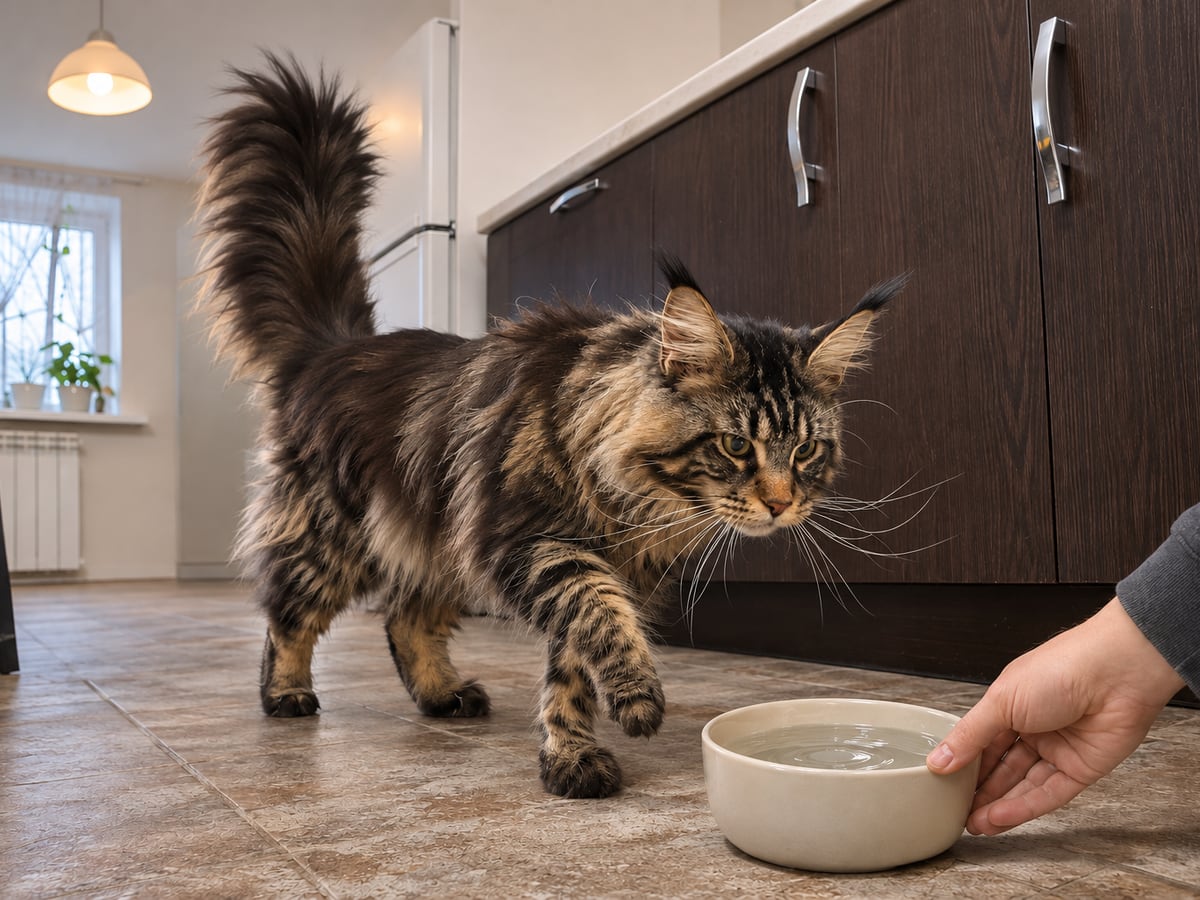
Because the foam points to an empty stomach, look at when it happens. If it tends to come at the same time of day, for example in the long gap before breakfast, write the times down.
Cats are built for small meals. Cats Protection says they have evolved to eat little and often: in the wild, a cat would eat around 10 to 12 small meals throughout the day, and pet cats will often prefer the same.
Our routine is usually different. International Cat Care says we often feed cats to fit in with our lifestyles, for example two larger meals during the day. Where possible, it suggests dividing the daily ration into at least five portions over the full 24 hours, using timed and puzzle feeders.
If the foam keeps coming back, talk the meal times through with your vet rather than changing them and waiting. Vomiting that repeats needs a check of its own.
Foam with a hairball, or retching with nothing coming up
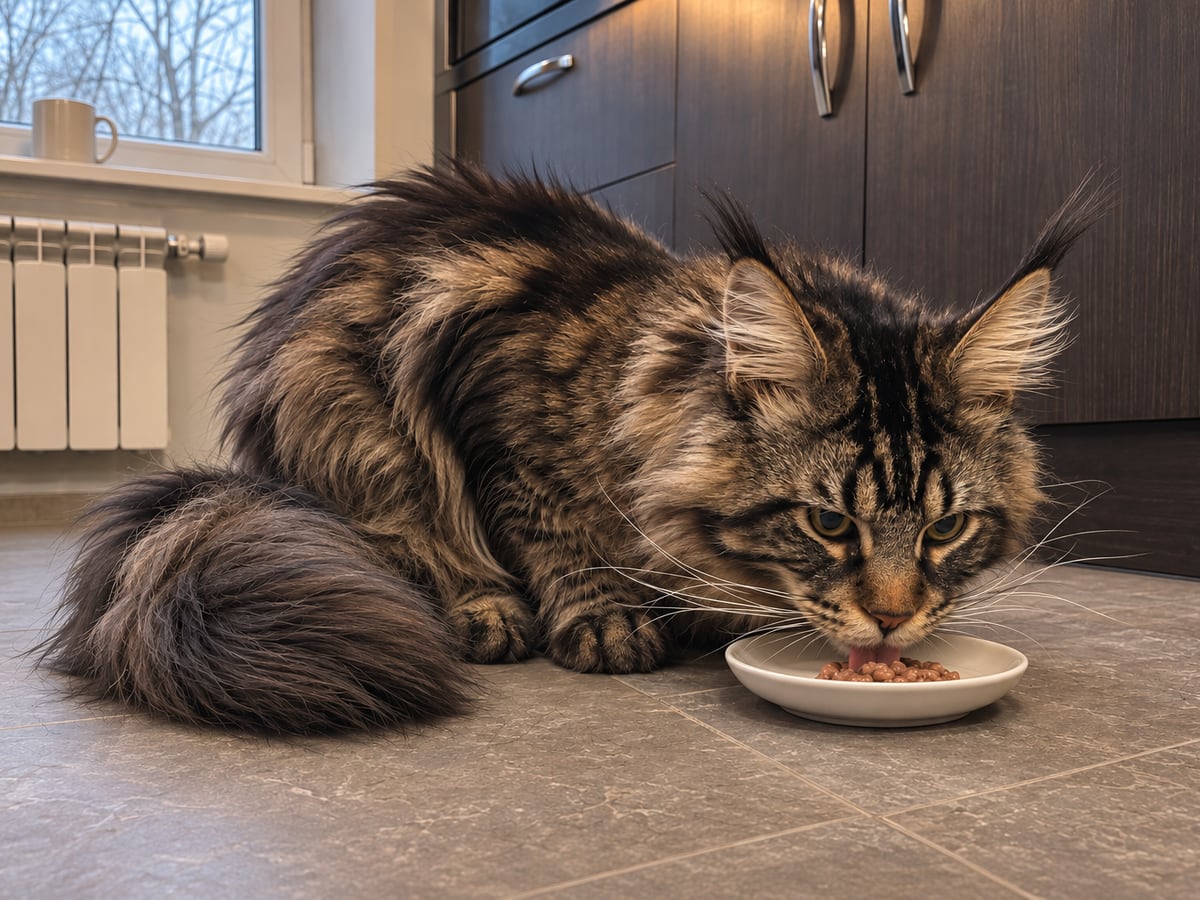
Sometimes the foam has a hairball in it. Cats Protection says hairballs usually come out in a tube-like form, made of fur and covered in foam or stomach liquid. Cornell Feline Health Center says it is not uncommon for a cat to bring one up once every week or two without any lasting problems.
Long coats make more of them. Cornell says long-haired breeds, such as Persians and Maine Coons, may be at greater risk of hairballs, and suggests brushing and combing your cat’s coat daily. Cats Protection adds that regularly bringing up furballs can be a sign of disease in the stomach or intestines, or of a skin problem that makes your cat groom more.
Retching that brings up nothing is a different thing. Cornell says a cat that has had repeated episodes of unproductive retching should be examined by a vet without delay. Frequent hacking may have nothing to do with hairballs, it says, and may be a sign of another gut problem or of a breathing problem such as asthma, which may need emergency treatment. During an asthma attack, many cats hunch their body close to the ground and stretch their necks forward.
Cat throwing up white foam multiple times
A second time is the point to pick up the phone. PDSA says to call your vet for advice if your cat vomits more than once, seems unwell or has other signs.
Some patterns need an urgent appointment. PDSA lists vomiting for more than 24 hours, vomiting constantly with no gaps in between, and vomiting blood or black dots that look like coffee grounds. Cats Protection says frequent or severe vomiting, or a cat who can’t keep down food and water, needs an urgent vet examination.
Repeats spread over weeks count too. Cornell Feline Health Center says cats that vomit more often than once a week should be seen by a vet promptly. Cats Protection suggests mentioning any vomiting to your vet, occasional or frequent, because there can be various causes behind it.
Cat throwing up white foam and not eating
A cat who brings up foam and then skips meals is no longer acting normal. Cats Protection says vomiting with a change in appetite should not wait to be checked by a vet, and Cornell Feline Health Center lists a decreased appetite among the signs for a prompt visit.
Cats don’t cope well without food. International Cat Care says they can develop liver problems if they go without food even for a short time. If your cat is eating less than usual, or not eating at all, it says to contact your vet as soon as possible, and urgently if the appetite has been low for three days or more.
Cornell says a cat that refuses to eat for more than a day or two, or is lethargic, should be examined by a vet without delay.
Don’t push food in. International Cat Care says cats should never be forced to eat with a syringe, because it can cause distress or serious harm if your cat breathes food in. Warming the food or offering something tasty, such as fish or chicken, sometimes tempts a cat, it says, but your vet still needs to find the reason for the lost appetite.
Cat throwing up white foam and diarrhea
Foam and diarrhoea together are a reason not to wait. PDSA says to contact your vet straight away if a vomiting cat has diarrhoea, and Cornell Feline Health Center lists diarrhoea at the same time among the reasons for a prompt vet visit. Cats Protection says vomiting with diarrhoea should not be delayed in being checked by a vet, and its page on digestive problems asks for an emergency appointment when diarrhoea comes with vomiting.
Kittens and old cats dry out faster. PDSA says to always speak to your vet if an elderly cat or kitten has diarrhoea, because they are more at risk of becoming dehydrated.
Cat throwing up white foam after eating
If a meal comes up with the foam, look at what’s in it. Cats Protection says food in the vomit means it hasn’t been fully digested, and this kind of vomit often comes soon after a meal.
Food that comes back without any heaving may be regurgitation. Cats Protection says it happens soon after eating, without signs of feeling sick or retching, and may be “normal” in otherwise healthy cats who eat too quickly. It still suggests asking your vet if your cat regurgitates repeatedly, and says smaller regular meals or a slow feeder bowl may help with eating too fast.
True vomiting has a run-up. Cats Protection says a cat about to vomit may get restless and agitated, then swallow a lot, lick their lips and salivate, before strong movements of the belly. PDSA adds drooling, eating grass and a smaller appetite to the signs a cat feels sick.
A kitten or an older cat throwing up foam
Age changes how long you wait. PDSA says to contact your vet straight away if a vomiting cat is very young or old. Cats Protection says vomiting in very young or old animals is more likely to be significant or to lead to problems such as dehydration.
Kittens have small stomachs. Cats Protection says young kittens should be fed smaller amounts more often.
PDSA’s less common causes of vomiting include an overactive thyroid, which it says is most common in senior cats, as well as kidney disease and diabetes. Cornell Feline Health Center names the same three. At home they can look alike, and the vet finds out which with an examination and blood tests.
When to see a vet straight away
Call your vet now if any of these come with the foam. PDSA lists vomiting for more than 24 hours, not keeping food or water down, low energy, having eaten something they shouldn’t, pale gums, diarrhoea, a painful belly, blood or black dots in the vomit, and drinking or peeing more than usual. Cornell Feline Health Center adds weakness and peeing less than usual to its signs for a prompt vet visit.
Something swallowed can turn into an emergency. Cats Protection says blockages need to be treated as an emergency. It says to contact your vet as soon as possible if you know your cat has eaten something they shouldn’t have, or if they lose their appetite, vomit, have a painful belly, strain or can’t pass any poo, and are lethargic. Cats love chasing string and thread, and if swallowed, it says, these can cause a particular kind of blockage.
Poisons are on the list too. Cornell names the leaves of poisonous plants, various human medicines, antifreeze, and human foods such as chocolate or onions among the things that make cats vomit.
What to write down for the vet
The vet starts with what you tell them. Cornell Feline Health Center says finding the cause of frequent vomiting begins with a thorough history from the owner and an examination of the cat.
So each time, note the date and time, how long it had been since the last meal, what came up (only foam, foam with food, or a hairball), whether your cat looked sick first, and how they were afterwards: eating, drinking, using the tray. Lapka Care is a diary for notes like these, and it puts everything that matters for the vet into one PDF.
What a few days of notes can look like
Tuesday, 6:40 am: a small puddle of white foam by the bed, before breakfast. No hairball. Ate all of breakfast at 7:00, drank, chased the wand toy in the evening.
Wednesday: nothing.
Thursday, 6:30 am: foam again, before breakfast. Ate normally afterwards. Called the vet, appointment for Friday.
Both times it came early in the morning, on an empty stomach, from a cat who was eating and playing as usual. That is the pattern the vet will ask about, and it was written down on the day it happened.
Questions people ask
Is it normal for a cat to throw up white foam?
Now and then, yes. PDSA says most cats vomit from time to time, and Cats Protection says white foam might mean your cat threw up on an empty stomach. Call your vet for advice if it happens more than once, or if your cat seems unwell or shows other signs.
Should I feed my cat after they throw up white foam?
If they’re otherwise well, PDSA says to feed them normally, make sure they have fresh water and watch them closely. Its page on stomach upsets also suggests very small, regular, bland meals after one or two vomits. If your cat can’t keep food or water down, call your vet straight away.
Can a hairball come up as white foam?
Yes, it can. Cats Protection says hairballs usually come out tube-like and covered in foam or stomach liquid. Retching again and again with nothing coming up is different: Cornell Feline Health Center says that needs a vet without delay.
My cat threw up white foam and won’t eat. What should I do?
Call your vet. Cats Protection says vomiting with a change in appetite shouldn’t wait, and International Cat Care says cats can develop liver problems if they go without food even for a short time. Don’t force-feed with a syringe, which International Cat Care says can cause harm.
When is white foam an emergency?
When it keeps coming, or comes with other signs. PDSA says to call straight away if your cat has been vomiting for more than 24 hours, can’t keep food or water down, is very young or old, has low energy, pale gums, a painful belly or blood in the vomit, or may have swallowed something.
Can I give my cat something for the vomiting?
Not without your vet. Cornell Feline Health Center lists various human medicines among the things that make cats vomit, and PDSA says the treatment your vet gives depends on what is causing the vomiting. Very mild cases may not need any, it says.
Sources
- Cats Protection — Vomiting in cats
- Cats Protection — Digestive problems in cats
- Cats Protection — Feeding your cat
- PDSA — Vomiting in cats
- PDSA — Gastritis in cats
- PDSA — Diarrhoea in cats
- Cornell Feline Health Center — Vomiting
- Cornell Feline Health Center — The danger of hairballs
- Cornell Feline Health Center — Feline asthma: what you need to know
- International Cat Care — Inappetence in cats
- International Cat Care — Feeding your cat or kitten