
Where to start
Most hairballs come from grooming, and the best help is a brush. A Cornell vet says it’s not uncommon for a cat to bring one up once every week or two, and Cornell recommends brushing and combing every day to cut them down. Afterwards, offer fresh water and watch your cat. See your vet without delay if your cat keeps retching with nothing coming up, or is lethargic and refuses food for more than a day or so.
Why does my cat keep getting hairballs?
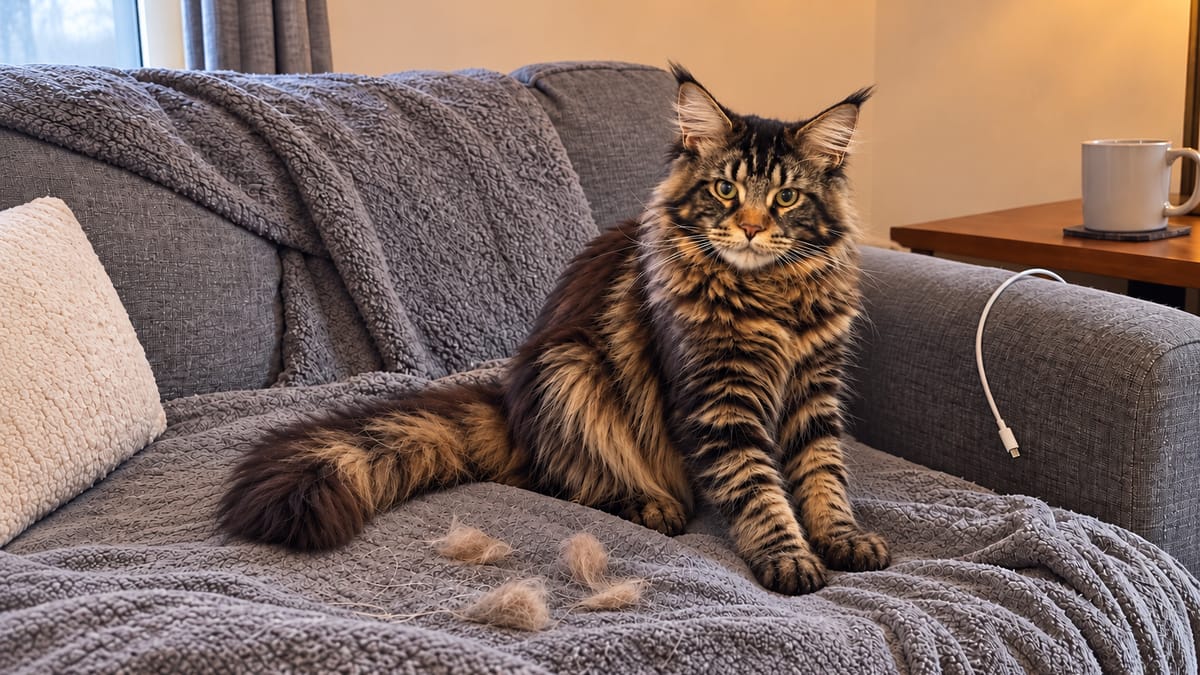
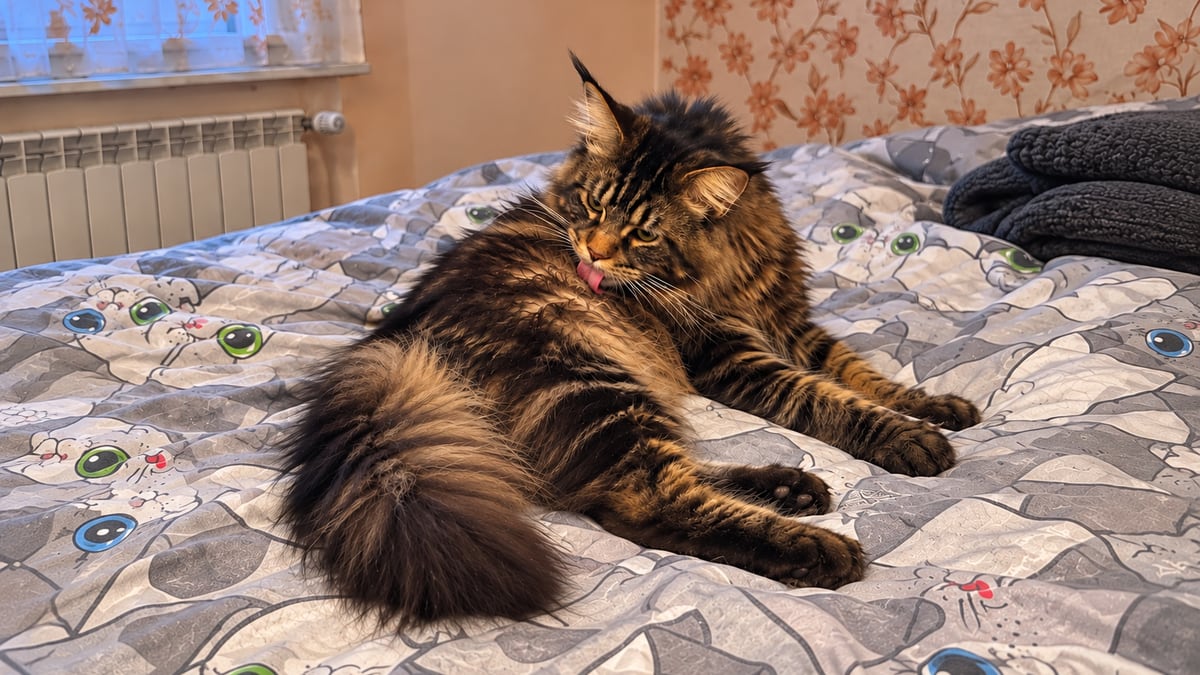
Because they groom. Cornell Feline Health Center explains that tiny backward-slanting bumps on a cat’s tongue carry loose hair down the throat and into the stomach. Most of that hair passes through the gut and comes out in the faeces. Some stays in the stomach and slowly builds into a damp clump: the hairball.
There is always some loose hair to swallow. International Cat Care says cats usually moult all year round, to varying degrees.
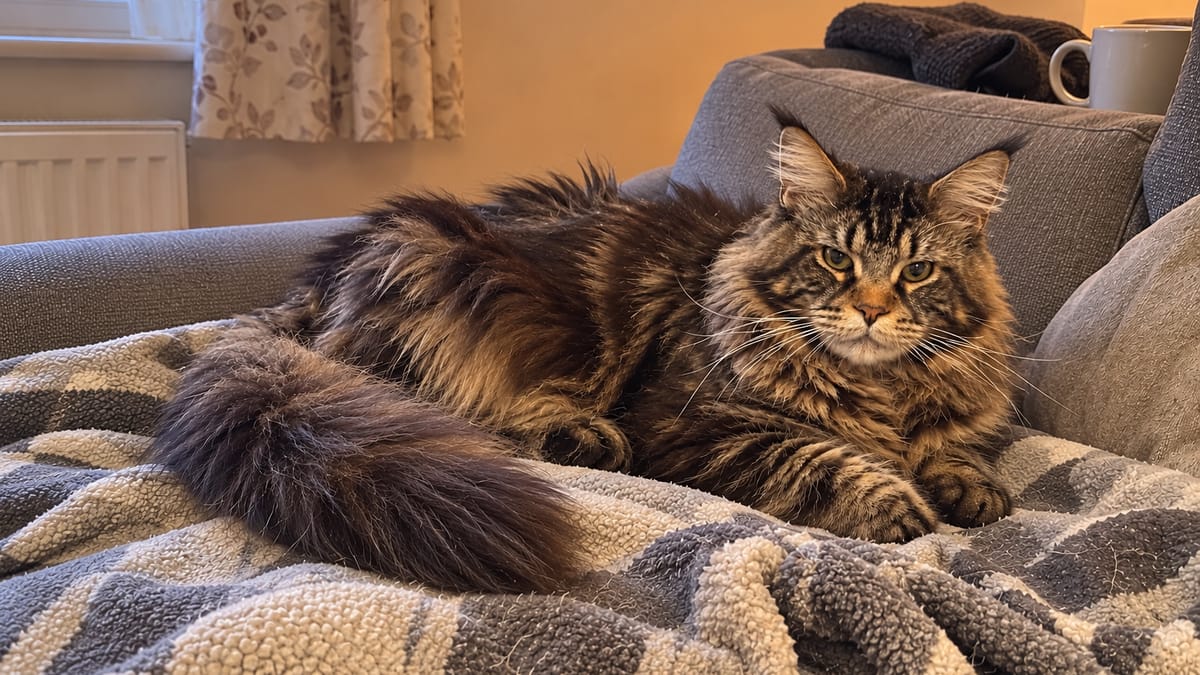
Some cats get more hairballs than others. Cornell says kittens and young cats are less likely to have them than older cats, who are practised groomers and spend a good part of their waking hours licking their coats. Long-haired breeds such as Persians and Maine Coons are at greater risk than short-haired ones, and hairballs come more often in the seasons when cats shed.
How often is it normal for a cat to have hairballs?
Now and then is normal. A Cornell vet says it’s not uncommon for a cat to bring up a hairball once every week or two, and that apart from the mess, it’s nothing to worry about.
More often than that is worth a call to the vet. Cornell says cats that vomit more often than once a week should be seen by a vet promptly. Cats Protection says that regularly bringing up furballs can be a sign of other diseases in the stomach or intestines, or of a skin problem that makes a cat groom more.
Cats Protection also suggests mentioning any vomiting to your vet, occasional or frequent, because there can be various causes behind it.
What a hairball looks like
Not much like a ball. Cornell says hairballs are usually slender and cylindrical, shaped like a cigar or a sausage by the narrow food tube they travel through. They are usually about an inch long, though a vet quoted by Cornell has seen some five inches long and an inch thick. The colour is mostly your cat’s own coat, darkened by food and bile.
Cats Protection describes a hairball as a tube of fur covered in foam or stomach liquid. The vet quoted by Cornell says that at first glance one can be mistaken for poo, but its smell is only mildly unpleasant and it’s likely to be the same colour as the fur.
How to help a cat pass a hairball
In the moment, mostly by waiting. Cats Protection says a cat about to be sick may become restless, then swallow a lot, lick their lips and drool, and then you’ll see strong movements of the belly. Throwing up takes a lot of effort, so it suggests letting your cat finish and rest before you try to move them.
Afterwards, PDSA’s advice for a cat who has vomited but is otherwise well is simple: feed them as normal, make sure they have fresh water, and watch them closely. If at any point they seem unwell or are sick again, call your vet.
Most swallowed hair leaves the other way, through the gut, as Cornell describes. Don’t try to speed a hairball along with a laxative of your own. A Cornell vet strongly advises never giving a cat one without a vet’s approval and supervision.
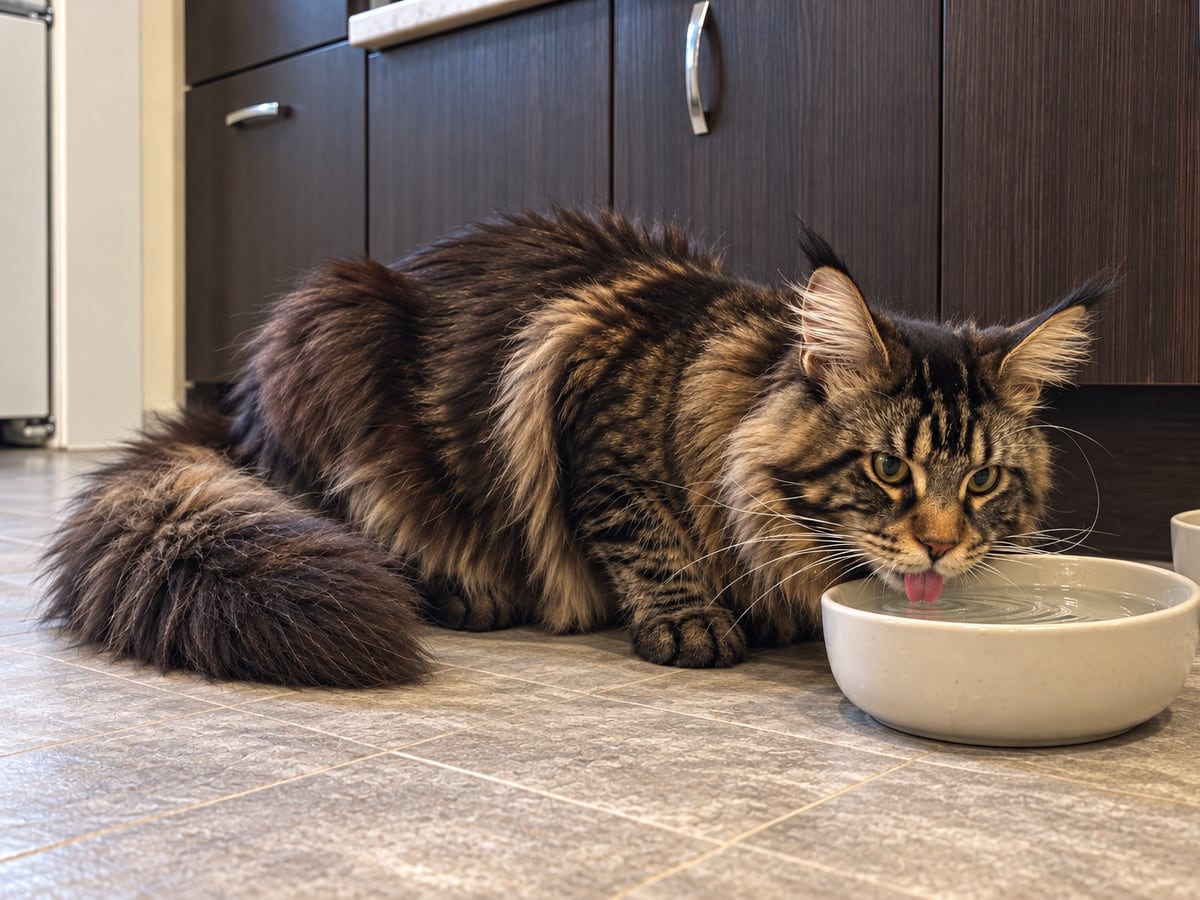
How to prevent hairballs: brushing
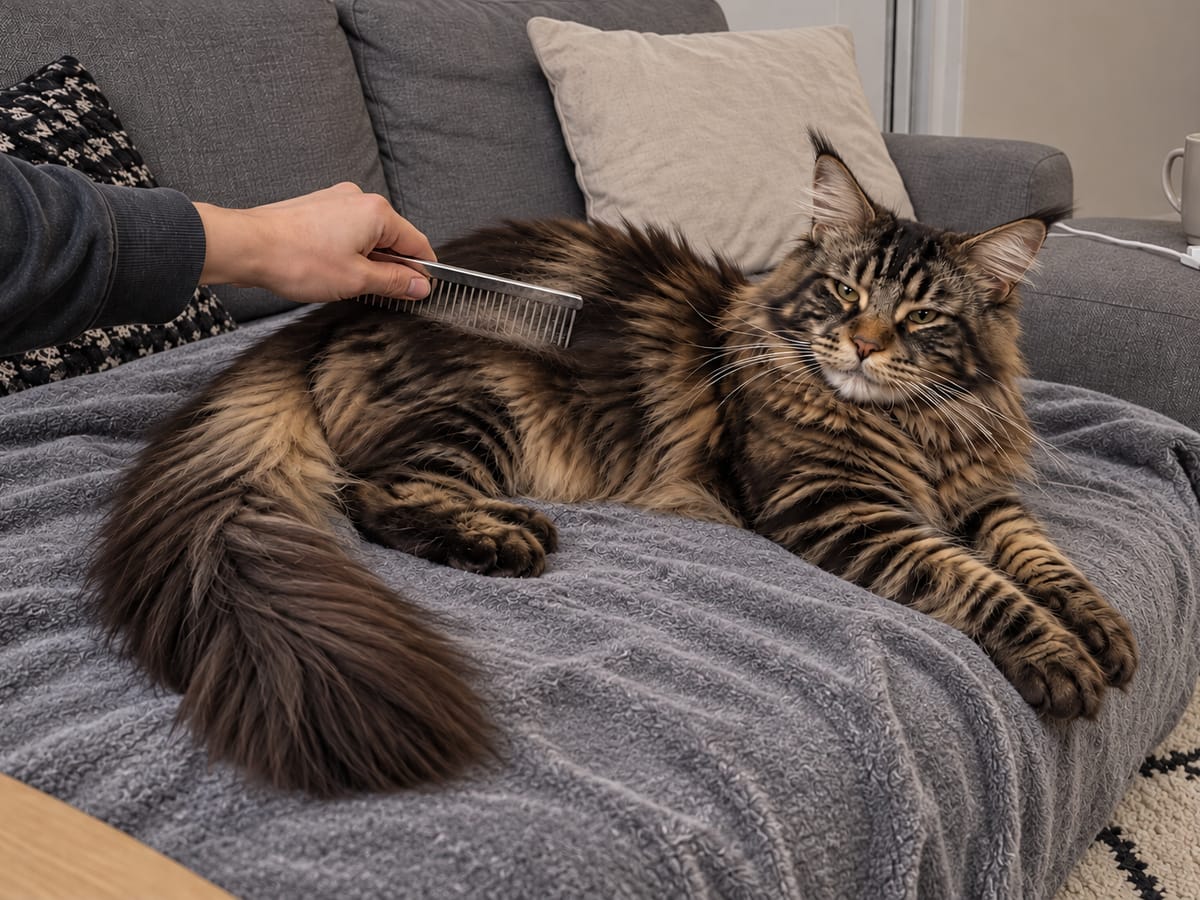
Brushing takes out the loose hair before your cat swallows it. International Cat Care says that if you groom your cat daily, particularly while they are moulting, you can remove most of the hair for them and stop hairballs forming. Cats Protection suggests daily brushing to cut down the number of hairballs a cat brings up, and Cornell recommends brushing and combing every day too.
The coat itself needs different amounts of help. International Cat Care says to groom a short-haired cat at least once a week and a long-haired cat at least daily. Cats Protection adds that even a short-haired cat may need brushing twice a week in spring and autumn, when they shed the most.
Keep it pleasant. International Cat Care says to start when your cat is relaxed, brush from the head towards the tail in the direction the fur grows, and finish with a damp cotton or rubber glove to lift the loose hairs left on top. Stop if you see the skin rippling, the tail swishing, the ears turning back, lip licking, growling or hissing, and try another day. End on treats and praise.
If your long-haired cat won’t let a brush near them, a vet quoted by Cornell suggests a haircut at the vet’s or a reputable groomer’s once or twice a year.
Hairball cat food, pastes and laxatives
There are special diets and hairball remedies. Ask your vet before you try any of them. A Cats Protection vet says your vet may be able to advise on diets and supplements that help furballs pass.
The vets Cornell quotes don’t quite agree on remedies. One lists a hairball remedy, usually a mild laxative, among her ways to cut hairballs down. The other, a Cornell vet, strongly advises never giving a cat a laxative without a vet’s approval and supervision. He says the same about commercial diets that claim to prevent or relieve a hairball blockage.
For a healthy cat who is sick now and then, Cats Protection suggests thinking about a food made for cats with a sensitive stomach, and making that switch on your vet’s advice. Any change of food should be very gradual, to lower the risk of an upset stomach.
Why is my cat getting hairballs all of a sudden?
Look at the calendar first. Cornell says hairballs are more frequent in the seasons when cats shed their coats, and Cats Protection says cats shed the most in spring and autumn.
Then look at how much your cat is grooming, because more licking means more swallowed hair. Cats Protection says that regularly bringing up furballs can point to a skin problem that makes a cat groom more. A Cornell vet says heavy self-grooming may be a sign of a skin problem linked to a food allergy.
Cats Protection says that if your cat suddenly grooms more or less than usual, you should make an appointment with your vet to be on the safe side. Bald patches, chewing at the fur or sore skin can be signs of overgrooming. It suggests noting when it happens and what came before and after, and showing your vet a video of it.
Cat trying to cough up a hairball but nothing comes out
This one is for your vet. Cornell says that repeated bouts of retching that bring nothing up are a reason to see a vet without delay. A hairball may have passed from the stomach into the intestine and be causing a blockage, which can be life-threatening. Or the hacking may have nothing to do with hairballs at all.
A cough and a hairball can look alike. Cornell describes a cat bringing up a hairball crouching, stretching the neck out, and retching, hacking and gagging for a few seconds. Its page on asthma says that during an attack many cats hunch close to the ground with the neck stretched forward. Asthma can also bring wheezing, fast breathing or breathing with the mouth open.
PDSA says an asthmatic cat’s cough can come and go, and sometimes makes them sick. Cats Protection says the signs can be mild and may go unnoticed for some time. Cornell says that when the hacking comes from a breathing problem such as asthma, emergency treatment may be needed. A cat who keeps hacking with nothing to show for it needs a vet to listen to them.
Hairball stuck in your cat’s throat? When to go to the vet now
Cornell says to see your vet without delay if your cat is lethargic and refuses to eat for more than a day or so, or keeps retching with nothing coming up.
PDSA says to contact your vet straight away if your cat has been vomiting for more than 24 hours, can’t keep food or water down, is very young or old, or seems otherwise unwell. The same goes if they have low energy, pale gums, diarrhoea, a painful belly, blood or black dots in their vomit, are drinking or peeing more than usual, or have eaten something they shouldn’t have.
A Cornell vet says a hairball becomes a serious threat if it grows too large to pass from the food tube into the stomach, or from the stomach into the intestine. A hairball lodged in the small intestine is uncommon, he says, but very serious when it happens, and without surgery it can be fatal.
If your cat is struggling to breathe or breathing with their mouth open, PDSA says to keep them calm and take them to your vet straight away. If you can, get someone to call the vet to say you’re coming and why.
Keep thread and small things off the floor
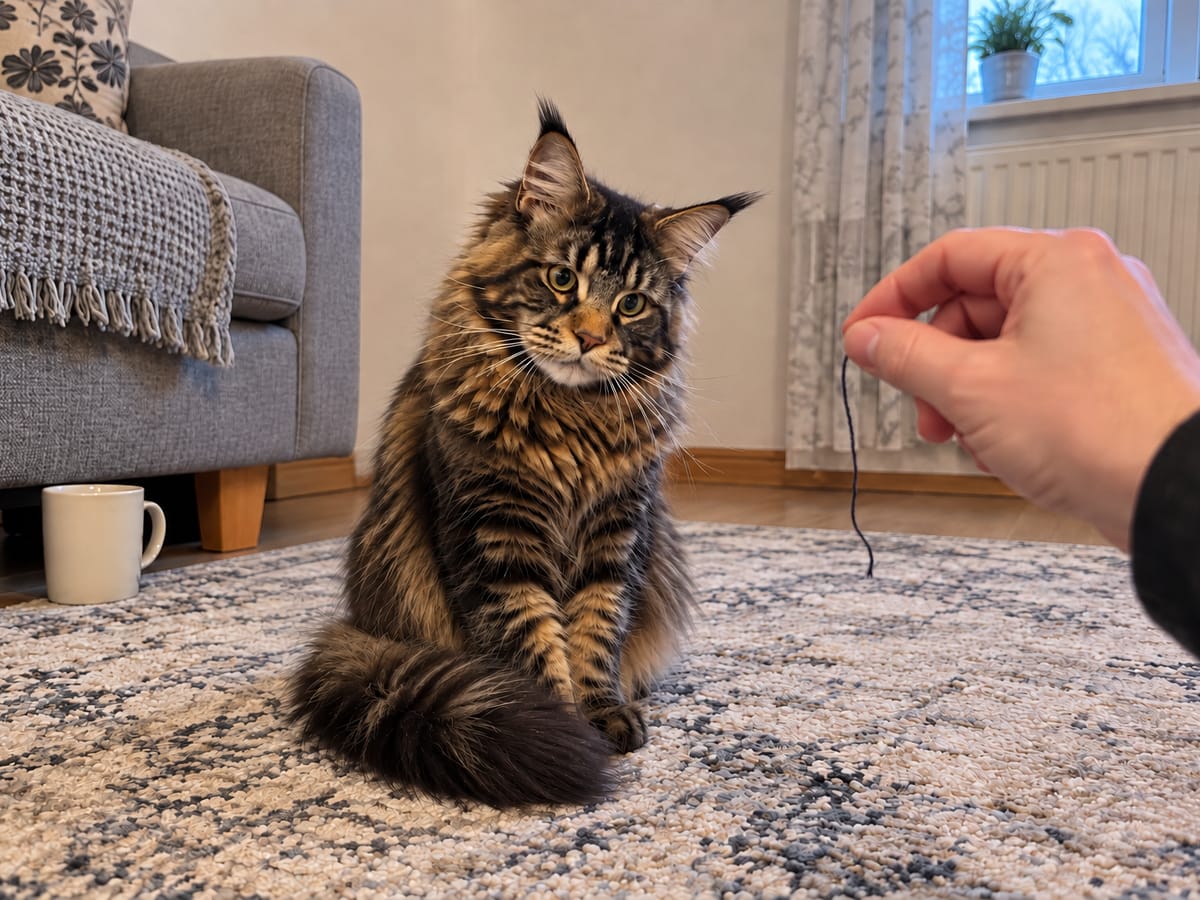
A vet quoted by Cornell suggests keeping your floors clear of thread, paper clips, twist ties and similar bits, which can become dangerous hairball ingredients if a cat swallows them.
Cornell’s page on vomiting lists pieces of string or yarn, paper clips and rubber bands among the things cats swallow that can make them sick. It’s worth a quick look under the sofa after sewing or opening the post.
What to write down for the vet
Your notes are where the vet starts. Cornell says that working out why a cat keeps vomiting begins with a thorough history from the owner, and that checking for a blockage takes in the cat’s pattern of bringing up hairballs.
Write down the date of each hairball, whether it was hair or food, any retching that brought nothing up, how your cat ate and drank that day, and how much they have been grooming. If you can, film an episode of hacking on your phone. Lapka Care is a diary for notes like these, and it puts everything that matters for the vet into one PDF.
What a month of hairball notes can look like
3 March: hairball on the hall rug, sausage-shaped, his colour. Ate breakfast, played after.
17 March: another one. Started combing Bruno every evening; a full comb of fur off his back each time.
29 March: hacking on the sofa twice today, crouched with his neck stretched out, nothing came up. Filmed the second time. Ate less at dinner.
The notes show the hairballs slowing down once the combing started, and make the 29th stand out: retching with nothing coming up, with a video ready for the vet.
When it doesn’t go to plan
Why does my cat have hairballs every day?
That’s far more than the usual pattern. A Cornell vet says one every week or two is nothing to worry about, and Cornell says cats that vomit more often than once a week should see a vet promptly. Cats Protection says regularly bringing up furballs can be a sign of a stomach, gut or skin problem.
Is my cat coughing or bringing up a hairball?
The two can look alike: Cornell describes a crouch with the neck stretched out both for a cat bringing up a hairball and for many cats in an asthma attack. If the hacking brings nothing up, again and again, Cornell says to see your vet without delay, because it can be a blockage or a breathing problem such as asthma.
Do kittens get hairballs?
Less often. Cornell says kittens and young cats are less likely to get hairballs than older cats, who spend more of their day grooming. If a kitten is being sick, call your vet sooner rather than later: PDSA puts very young cats on its list for contacting the vet straight away.
Do Maine Coons get more hairballs?
They can. Cornell names Persians and Maine Coons as long-haired breeds at greater risk than short-haired ones. International Cat Care says long-haired cats need grooming at least daily.
Can I give my cat a hairball remedy?
Ask your vet first. A vet quoted by Cornell lists a hairball remedy, usually a mild laxative, among her tips, but a Cornell vet strongly advises never giving a cat a laxative without a vet’s approval and supervision. A Cats Protection vet says your vet may be able to advise on diets and supplements that help furballs pass.
Sources
- Cornell Feline Health Center — A hairy dilemma
- Cornell Feline Health Center — The danger of hairballs
- Cornell Feline Health Center — Vomiting
- Cornell Feline Health Center — Feline asthma: what you need to know
- Cats Protection — How can I reduce hairballs? (vet Q&A)
- Cats Protection — Vomiting in cats
- Cats Protection — Grooming your cat
- Cats Protection — Feline asthma (veterinary guide, PDF)
- International Cat Care — Grooming your cat
- PDSA — Vomiting in cats
- PDSA — Cat asthma (PDF)