
The short answer
Cats Protection says healthy adult cats poo once or twice a day, and PDSA says one to three times. Call your vet if an adult cat hasn’t pooed in more than 48 hours, or a kitten in more than 24, even if they seem fine. Go straight away if your cat strains and nothing comes out: it’s hard to tell from straining to wee, and a cat who can’t pee is an emergency.
How long can a cat go without pooping?
For an adult cat, about two days. Cats Protection says that if your cat has gone without pooing for two days, it could be a sign of constipation or another health problem, and to call your vet if an adult cat hasn’t pooed in more than 48 hours.
Kittens get less time. Cats Protection’s line for a kitten is 24 hours, and it says kittens are particularly vulnerable. For an older cat it gives the same 48 hours, or sooner if you notice any discomfort or straining.
Don’t sit out the full two days if your cat is struggling. PDSA says that if you think your cat is having trouble pooing, contact your vet for advice straight away. Constipation is very uncomfortable, it says, and left untreated it can become very serious.
How often should a cat poop?
Once or twice a day for most adult cats, says Cats Protection. PDSA gives a slightly wider range, between one and three times a day. Your own cat’s usual pattern counts most: PDSA says every cat is different, and a change in pooing habits is a reason to call your vet.
Kittens go more often. Cats Protection says young kittens poo between one and six times a day, and older kittens one to three times on average.
Food and lifestyle shift the count. Cats Protection says cats on wet food often have smaller, more frequent poos. Most cats on dry food poo once a day, and some go longer, especially if they are less active or drink less water. Indoor cats may poo less often than cats who go outside. Males and females go just as often.
A healthy poo, Cats Protection says, is firm but not hard, shaped like a soft sausage, and brown.
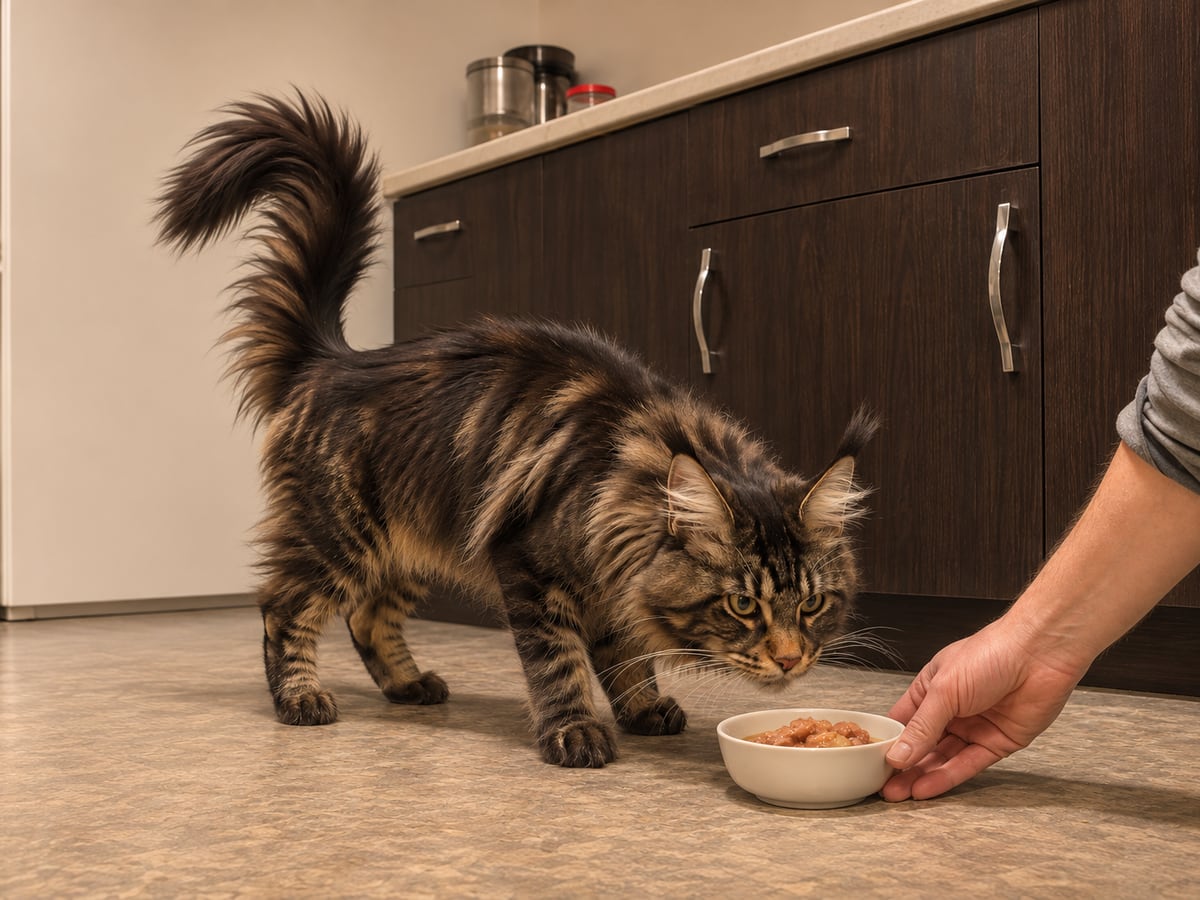
Cat not pooping but acting normal
A cat can eat, play and purr and still be constipated. International Cat Care says loss of appetite and vomiting come in severe cases, so a cat who still turns up at the food bowl hasn’t proved anything.
Waiting has a cost. When a cat is constipated, International Cat Care says, the poo stays in the colon or rectum longer than normal, becomes drier and harder, and that can make the problem worse.
So go by the clock, not by the mood. Once an adult cat is past the 48 hours Cats Protection names, call your vet even if they seem fine. PDSA puts it plainly: you know your cat best, and if you’re concerned, contact your vet.
If your cat goes outside, you may not know when they last went. Cats Protection says a cat’s normal toileting habits are harder to know when they toilet outdoors, and PDSA says bad weather can put an outdoor cat off pooing.
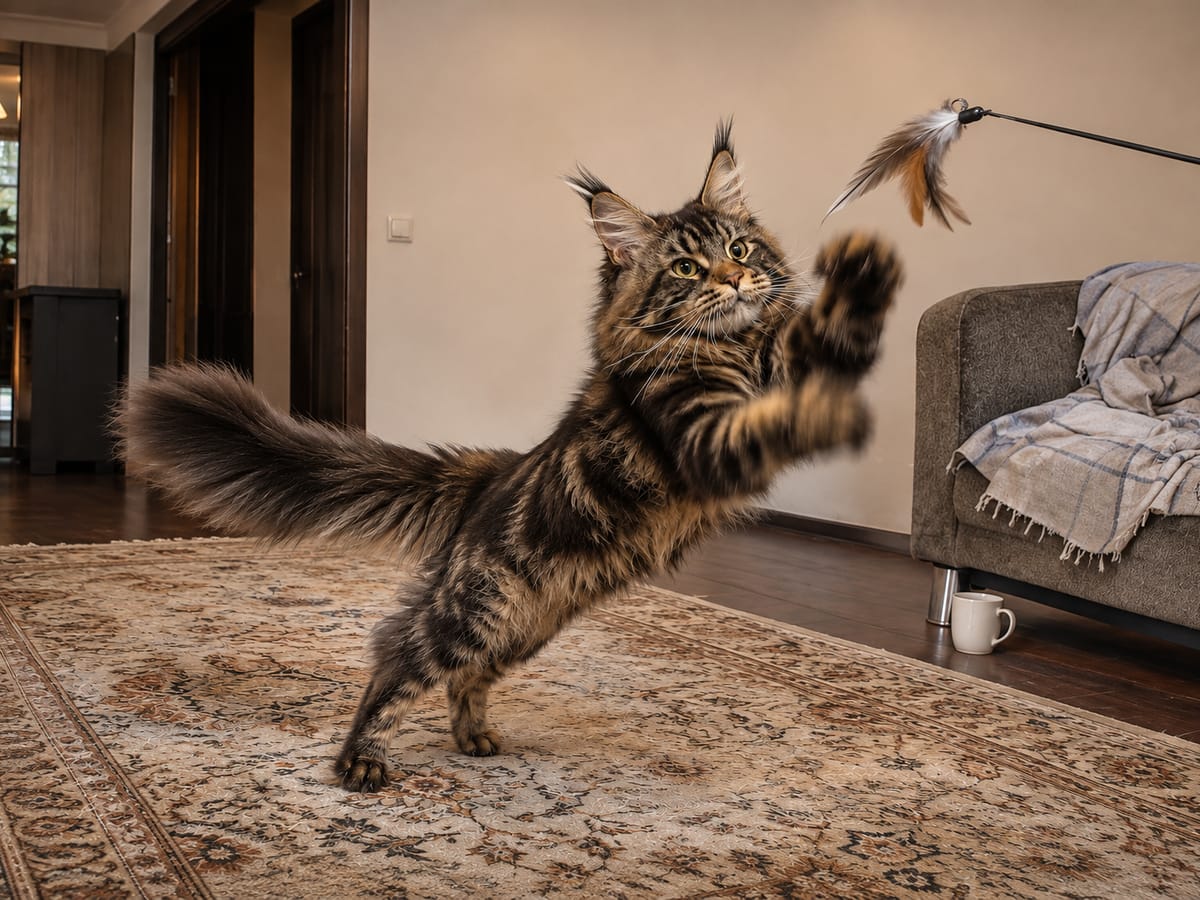
Cat not pooping for 3 days
Three days is past every line the charities give, so call your vet today, even if your cat seems fine. Cats Protection says prolonged constipation can lead to more serious health problems if it isn’t dealt with quickly.
The longer it lasts, the harder it gets. International Cat Care says that when constipation goes on for a long time, the poo can become badly impacted, blocked in the colon and rectum, which vets call obstipation. Repeated bouts can leave the colon swollen and unable to push poo along, a condition called megacolon.
Cornell Feline Health Center says constipation should be treated fairly aggressively to stop it progressing.
Signs of cat constipation
The litter tray tells you most. PDSA lists straining for longer than usual without passing much, going in and out of the tray several times in a row, and very hard or small bits of poo. International Cat Care adds digging about and spending extra time in the tray, and pooing less often.
Listen, too. PDSA says meowing while pooing means it hurts.
Some signs look like the opposite problem. PDSA says a small amount of liquid poo can sometimes get past the hard, constipated poo. International Cat Care says that occasionally, especially when the poo is badly blocked, a cat may pass fluid while straining that looks like diarrhoea.
Then look at the rest of your cat. PDSA also lists blood in the poo or around the bottom, over-grooming the bottom and back end, a painful tummy (your cat may look hunched, or growl when you touch it), low energy, vomiting, and eating less than usual.
Straining with nothing coming out: poo or wee?
This is the one to act on straight away. International Cat Care says it can be hard to tell whether a cat is straining to poo or to wee, and that struggling to pass urine can be an emergency.
The tail can give a hint. PDSA says it’s often held up when a cat is trying to poo and down when they are trying to wee, and that the two are harder to tell apart in a female cat.
Check whether any wee is coming. PDSA says to look in the tray for anything at all, and around the home for wee in odd places: the bath, the sink, cold hard floors, behind furniture and on beds.
If your cat is straining and no wee comes out, call your vet now. PDSA says a cat who can’t pass urine may have a blocked bladder, which is a life-threatening emergency: don’t wait to see if they improve, and never try to treat it at home. Cornell Feline Health Center says the time from a complete urinary blockage to death may be less than 24 to 48 hours, and that males, neutered or not, are at greater risk than females. Cats Protection says a cat who hasn’t peed in more than 24 hours is a veterinary emergency, particularly a male cat.
Why do cats get constipated?
Often it comes down to water. PDSA says dehydration can make poo very solid and difficult to pass, and that not drinking enough is most common in cats who only eat dry food or don’t always have water. Chronic kidney disease is another route: International Cat Care says it is common in older cats, makes them produce more urine and leaves them mildly dehydrated, which can cause constipation.
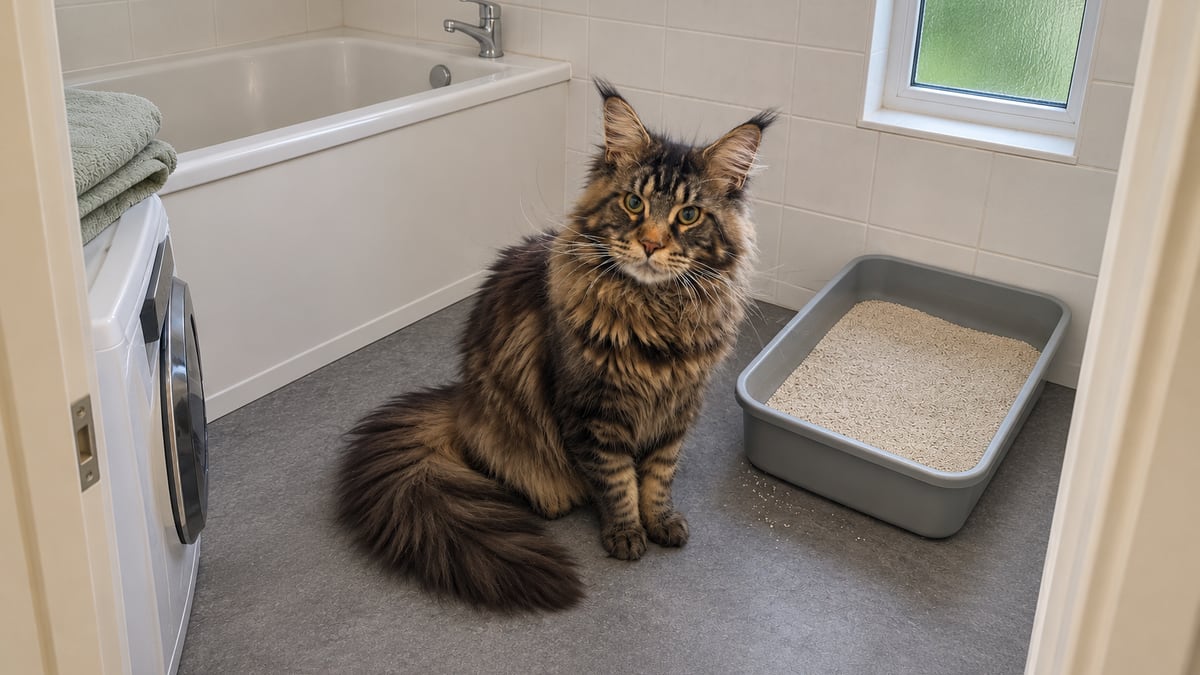
The litter tray matters more than people expect. PDSA says a cat may avoid pooing if the tray is dirty, they don’t like the litter, it’s in a noisy part of the house, or there simply aren’t enough trays for the cats who live there. International Cat Care says wood pellet litter can be hard and painful to stand on.
Pain and stress play a part. PDSA says a cat may hold back if it hurts to get into position, from arthritis in the legs, spine or hips, an injury or a sore bottom. Stress can cause constipation too, PDSA says, from arguments and noise at home, a new pet or person in the family, or a new cat in the area. Cats Protection says stressed cats may hold in their poo.
Sometimes something is in the way. PDSA lists something swallowed that won’t pass, such as a bone, a toy or a hairball, and matted fur around the bottom. Cornell Feline Health Center says that in many cases the cause is never found.
Age adds to it. PDSA says constipation is a relatively common problem in cats, especially as they get older.
Cat constipated: what to do
Call your vet. PDSA says to always contact your vet if your cat is showing signs of constipation, because it can come from many conditions, minor to serious, and can get much worse if it’s left.
Leave the medicine cabinet shut. PDSA says laxatives for cats exist, but you should only use them on your vet’s advice.
What the vet does depends on how constipated your cat is and why. For mild constipation, PDSA says, the vet might prescribe a laxative, suggest changes to the diet, and talk with you about getting your cat to drink more and about the litter tray. A dehydrated cat may need fluids first, and a badly constipated cat may need an anaesthetic to have the poo removed.
While you wait for the appointment, keep fresh water down, keep the tray clean, and write down when your cat last pooed.
Helping your cat stay regular at home
For a cat who is otherwise healthy, PDSA’s list is short: plenty of water, regular movement, a healthy weight, clean trays away from noise, a suitable diet, and at least one tray per cat plus one extra, each in a different part of the home. Cats Protection says to take poo and wee out of the tray at least twice a day.
Wet food brings water with it. International Cat Care suggests feeding wet food rather than dry to keep your cat’s fluid intake up, and says a diet high in moisture and fibre can help a cat pass regular, softer poo. Your vet can tell you which food suits your cat.
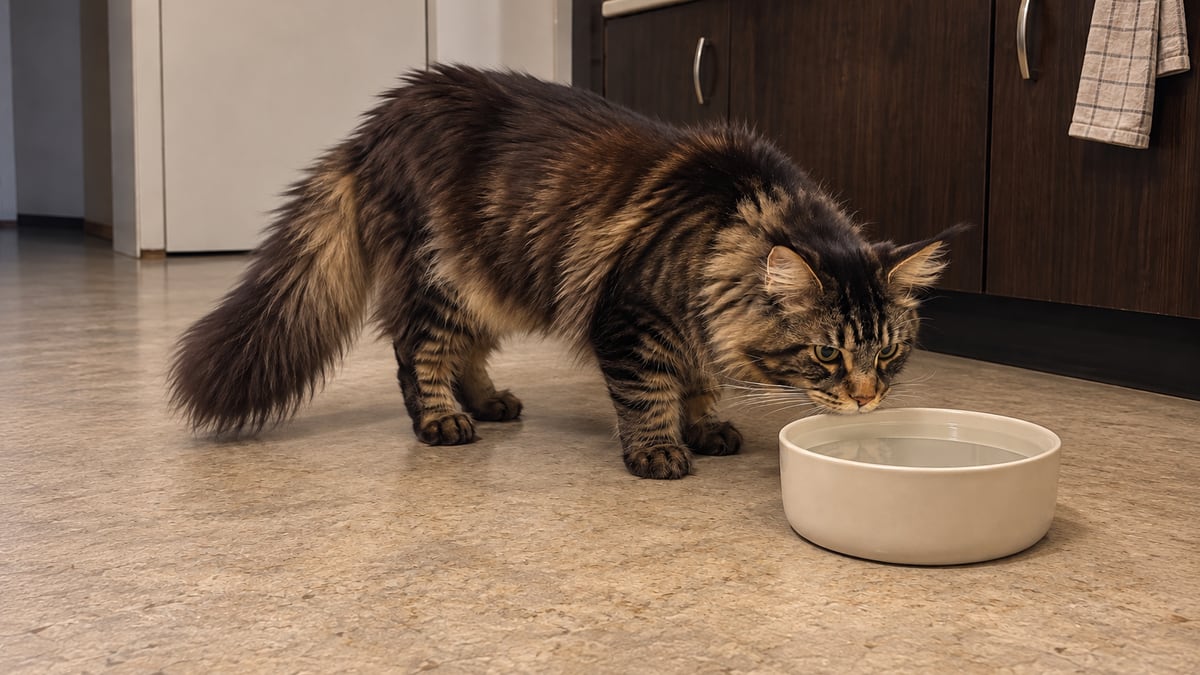
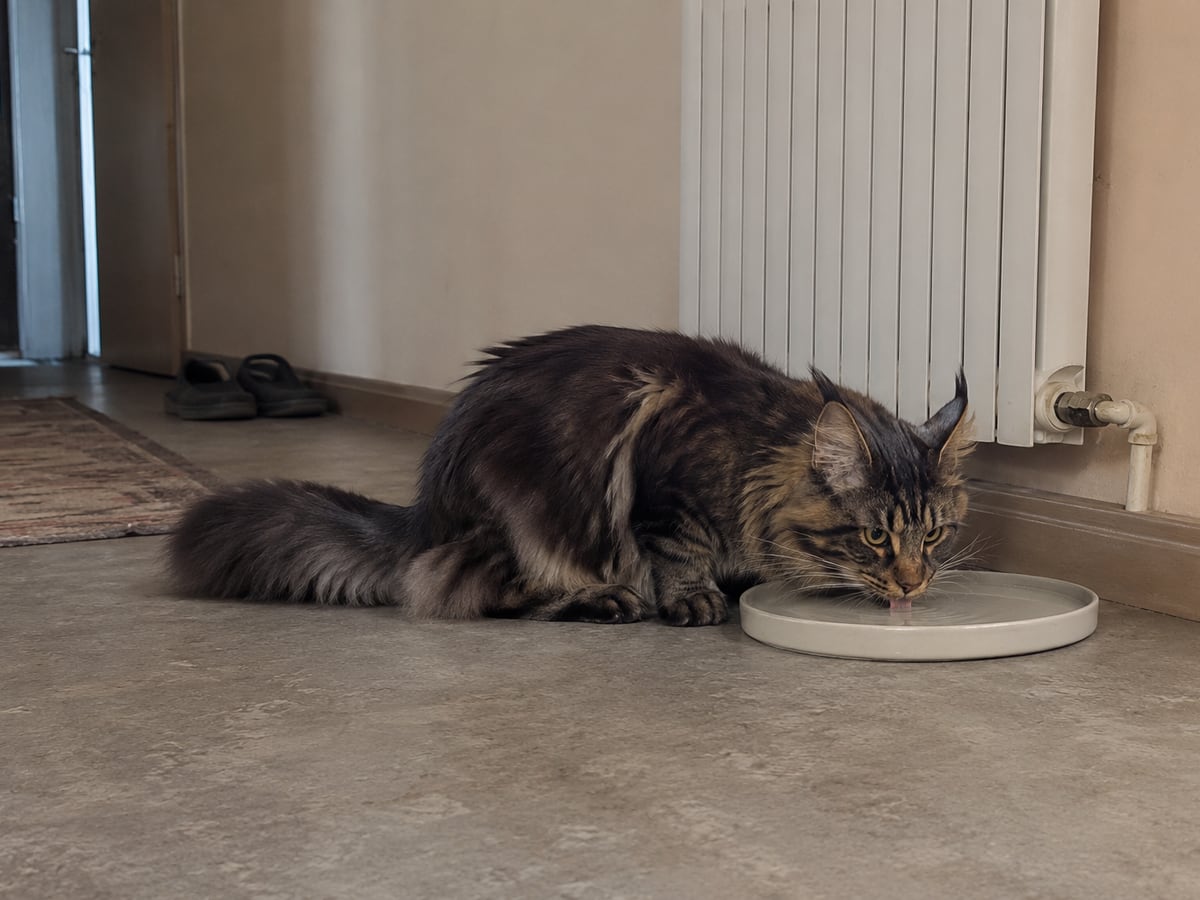
Make water easy to find. International Cat Care says most cats prefer a wide, shallow bowl filled to the brim, away from the food bowl, and suggests several bowls around the home. PDSA says some cats prefer running water, so a fountain may suit them better.
Play gets things moving. Cats Protection suggests short, interactive play sessions through the day, because keeping active helps stimulate the digestive system. PDSA says being overweight or obese can make a cat more prone to constipation.
Brush a long-haired cat regularly. PDSA says it stops matted fur forming around the bottom. For a stiff older cat, International Cat Care suggests a low-sided tray with soft, sandy litter.
When to see a vet straight away
Call now if your cat is straining and nothing comes out, and above all if you can’t see any wee. PDSA says a cat who can’t pass urine needs a vet immediately.
Call now as well if not pooing comes with vomiting, a painful tummy, low energy or not eating, or if you know your cat has swallowed something they shouldn’t have. Cats Protection says blockages in the gut need to be treated as an emergency, and names loss of appetite, vomiting, tummy pain, straining or failing to pass any poo, and lethargy.
Cats Protection’s other reasons to call: a kitten who hasn’t pooed in more than 24 hours, an adult or older cat after 48, a cat who meows or strains while pooing, a poo that is hard or dry, and mucus, blood or worms in the poo or the tray.
What to write down for the vet
The vet will start with questions. PDSA says they will ask you some, and International Cat Care says the vet will take a detailed history from you to understand what your cat has been doing.
Note the day and time of the last normal poo, what any poo since has looked like (hard, small, liquid, any blood), how many times your cat has tried, whether wee is still coming, and whether they are eating, drinking or being sick. Add anything that changed in the days before: a new food, a moved tray, a new litter, visitors. Lapka Care is a diary for notes like these, and it puts everything that matters for the vet into one PDF.
What three days of notes can look like
Sunday: moved the litter tray from the hallway to the bathroom, next to the washing machine.
Monday, 8 am: normal poo, firm, the usual size. Ate breakfast and supper, chased the wand toy in the evening.
Tuesday: nothing in the tray all day. Two clumps of wee. Eating as usual.
Wednesday, 7 am: still no poo. In and out of the tray three times, one small hard bit after a long strain, tail up. Wee still coming. Called the vet, appointment at 4 pm. Moved the tray back to the hallway.
The notes give the vet the hour of the last normal poo, the tray move the day before it stopped, and that wee was still coming. That last one matters most, because straining to wee can be an emergency.
Questions people ask
How long can a cat go without pooping before it is dangerous?
Cats Protection says to call your vet if an adult cat hasn’t pooed in more than 48 hours, or a kitten in more than 24. Don’t wait that long if your cat is straining with nothing coming out, vomiting or in pain: those need a vet straight away.
My cat is not pooping but still eating. Should I worry?
Eating doesn’t rule out constipation. International Cat Care says loss of appetite and vomiting can come in severe cases. If an adult cat has gone more than 48 hours without a poo, call your vet even if they still eat and play.
My cat is constipated and vomiting. What should I do?
Call your vet now. PDSA lists vomiting among the signs of constipation, and Cats Protection names vomiting, straining and failing to pass any poo among the signs that send a cat to the vet as soon as possible when a blockage in the gut is possible. It says blockages need to be treated as an emergency.
My cat is not pooping or peeing. Is that an emergency?
It can be. Cats Protection says to call your vet if your cat visits the tray but isn’t pooing or peeing, and that a cat who hasn’t peed in more than 24 hours is a veterinary emergency, particularly a male. PDSA says a cat who can’t pass urine may have a blocked bladder and should never be treated at home.
Can I give my cat a laxative?
Only on your vet’s advice. PDSA says laxatives are available for cats but should only be used under the vet’s guidance. International Cat Care says there are different laxatives, and the vet will prescribe the most suitable one for your cat.
How often should a kitten poop?
More often than an adult. Cats Protection says young kittens poo between one and six times a day, and older kittens one to three times on average. A kitten who hasn’t pooed in more than 24 hours needs a call to the vet.
Sources
- Cats Protection — How often should cats poo and pee?
- PDSA — Constipation in cats
- PDSA — What to do if your cat/dog can’t pee
- International Cat Care — Constipation in cats
- International Cat Care — How to encourage your cat to drink
- Cats Protection — Digestive problems in cats
- Cornell Feline Health Center — Constipation
- Cornell Feline Health Center — Feline lower urinary tract disease