
The short answer
Most often it’s the teeth. Plaque and tartar inflame the gums, and Cornell Feline Health Center says periodontal disease is by far the most common cause of bad breath in cats. Fishy breath after wet food is often just the food. A smell like ammonia, a sweet smell, drooling, pawing at the mouth or eating less are reasons to see your vet. PDSA says bad breath is not normal, even in older cats.
Why does my cat’s breath smell so bad?
Some smell is normal. Cats Protection says no cat has lovely, minty-fresh breath, and a meat-based diet plus teeth that nobody cleans both add to what we notice. What matters is a change: if your cat’s breath suddenly smells different or worse than normal, it could be a sign that something is wrong.
Vets draw the line sooner. “A healthy cat’s breath should not be offensive,” says Eric Davis, a vet and fellow of the Academy of Veterinary Dentistry, in an article from Cornell Feline Health Center. PDSA goes further: bad breath is not normal, even in older cats, and it usually points to a problem.
Cornell lists many possible causes, from periodontal, kidney, respiratory or liver disease to diabetes, skin disease around the lips, or an injury to the mouth. The smell alone can’t tell you which. It can tell you when to call.
Why does my cat’s breath stink? Usually it’s the teeth
By far the most common cause is periodontal disease, Dr Davis says. It starts with plaque, a soft film of bacteria, saliva and food on the teeth. International Cat Care says that left undisturbed, plaque hardens into tartar, a cream, yellow or brown hard deposit that brushing can no longer remove.
The gums react next. Cornell describes gingivitis as gums that are red, swollen and painful, and says cats with it may be hesitant to eat, drool or develop bad breath. If it isn’t controlled, it can turn into periodontitis, which eventually cannot be reversed and may lead to loose teeth and tooth loss.
It’s very common. International Cat Care says as many as 85% of cats aged three years and older are thought to have some form of dental disease, and Cornell cites studies that put it at between 50 and 90% of cats older than four.
Sometimes it’s something small. Food, a strand of hair or a piece of string can lodge between the teeth and decompose, Cornell says, and soon infect the gum around it.
Why does my cat’s breath smell like fish?
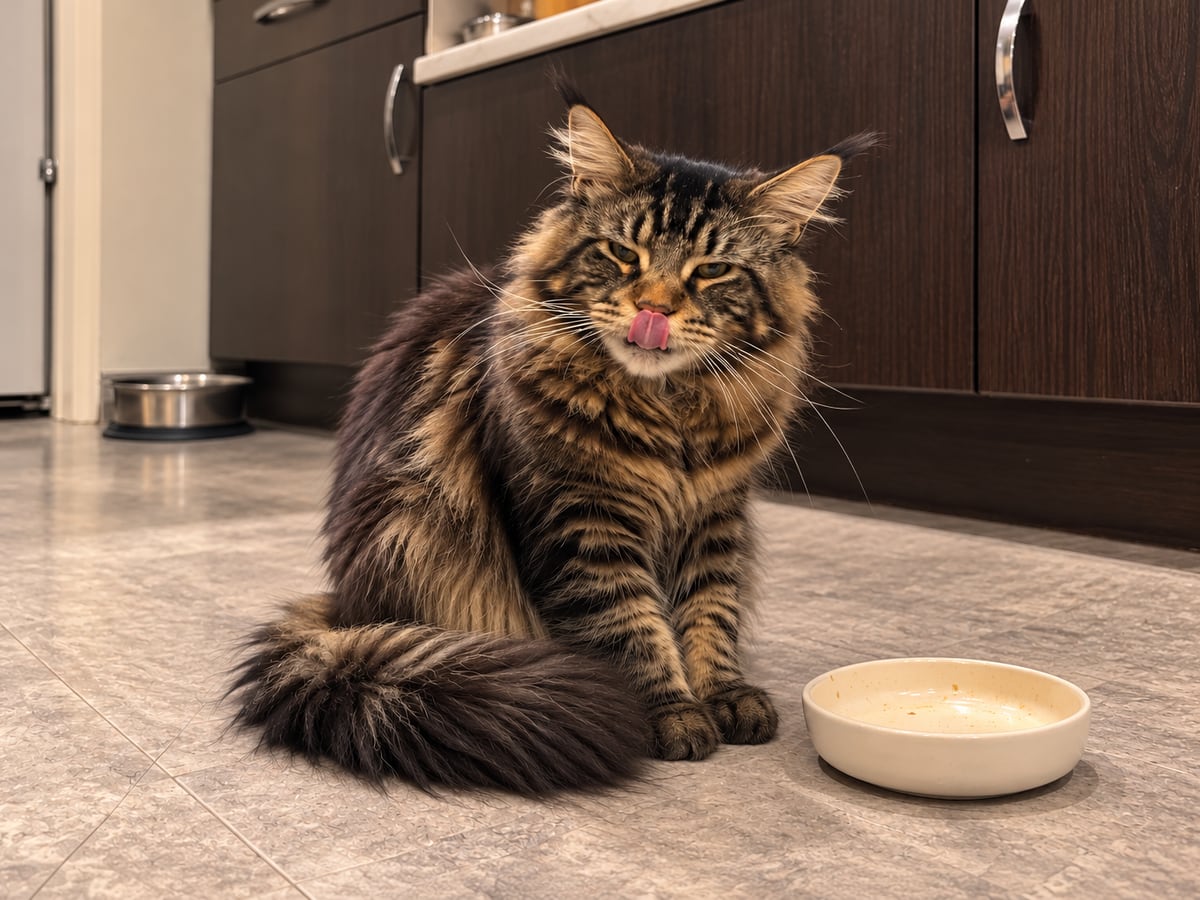
Often because of dinner. Cats Protection says the smell of food lingers on a cat’s breath for a short while after eating, so a cat on wet food two or three times a day may have a meaty or fishy smell. If that’s normal for your cat, there’s nothing to worry about.
Cornell agrees that food smells can be harmless: your cat’s breath may be pretty pungent after canned tuna or smoked oysters. Even cat toothpaste, flavoured with something tasty such as chicken, still leaves a meaty smell, Cats Protection says.
The warning sign is a change. If the smell is new, stronger than usual or there all the time, speak to your vet. Cornell says consistent bad breath should be checked by a veterinarian.
Cat breath that smells like ammonia, urine or something sweet
A smell like ammonia or bleach can come from kidney disease, PDSA says. Cats Protection explains that kidney disease can make toxins build up in the mouth, and one of them, urea, gives the breath that smell. Cornell lists other signs that may come with a urine-like smell: excessive thirst and urination, and loss of appetite.
A sweet, fruity smell is different. PDSA compares it to pear drops or nail polish remover and links it to diabetes. Cornell adds the signs that may come with it: excessive thirst and urination and losing weight.
These are clues, not answers. The signs overlap, so book a vet visit rather than guessing, and tell the vet how much your cat drinks. Only your vet can find out what’s behind the smell.
My cat’s breath smells like poop or something rotten
Neither the charities nor Cornell describe a “poop” smell as such, but Cornell says foul breath can point to liver disease or an intestinal blockage. A foul smell with vomiting could be a liver disorder, it says. Other signs of that include loss of appetite, a swollen belly and yellowing of the eyes or gums.
PDSA says a gut infection or blockage will often make the breath smell bad, but you are likely to notice diarrhoea, vomiting or stomach pain first. Liver disease, it says, can cause foul, sweet, musty breath.
A rotten smell can also start in the mouth itself. Something stuck in the mouth or throat, such as a bone, will start to smell after a while, and your cat may paw at their mouth or face. PDSA adds that cancers in the mouth can become infected and smelly, and Cornell mentions mouth ulcers and sores.
Any of these is a reason to see your vet.
Cat bad breath and drooling
Drooling with bad breath can mean the mouth hurts. Cornell lists drooling as a sign of gingivitis and periodontitis, which also bring bad breath, and of tooth resorption, where the tooth breaks down from the inside. Cats with sore gums may turn their heads oddly while eating or prefer soft food.
International Cat Care calls feline chronic gingivostomatitis, where the inflammation spreads from the gums to other areas of the mouth, an extremely painful disease. Cats with it often have difficulty eating, drool and paw at their mouth.
Tooth resorption is common too, and the estimates differ. Cornell says between 30 and 70% of cats show some sign of it. PDSA says it affects more than a third of pet cats at some point in their life, and International Cat Care estimates that more than 70% of cats over five have at least one such lesion. It can be very painful.
A sore mouth shows in the coat as well. PDSA lists grooming less, due to a painful mouth, among the signs of dental disease.
Bad breath in older cats
PDSA is plain about it: bad breath is not normal, even in an older cat. International Cat Care says dental disease becomes more common, and more severe, as cats get older, and periodontitis is more commonly seen in older cats.
Cats hide it well. Cats Protection says a cat with dental pain might appear happy and relaxed, and may even be eating and drinking normally. It adds that cats can have significant dental disease without a change in their breath.
So the yearly check matters. International Cat Care says cats should ideally have their teeth examined by a vet at least once every 12 months, and every three to six months once they’ve had dental problems, depending on their condition.
Kitten bad breath when the teeth change
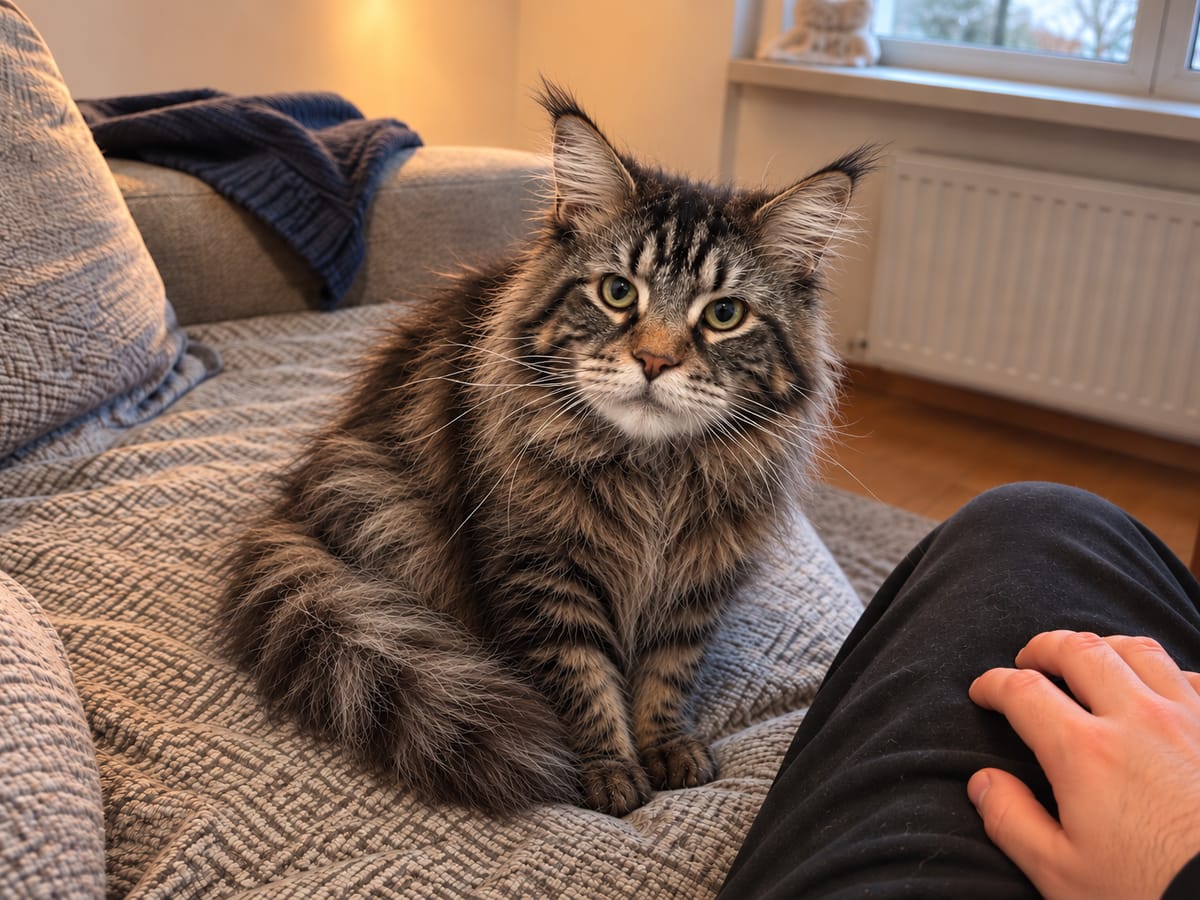
Kittens get a pass for a few weeks. Cats Protection says a kitten’s 26 baby teeth are replaced by 30 adult teeth by the age of six months. As the adult teeth come through, mild inflammation of the gum and bad breath are common, and should resolve quickly.
International Cat Care says kittens around five months of age quite commonly develop juvenile gingivitis, with an obvious smell to the breath, and it usually takes four to six weeks to settle down. You may even find a tiny tooth on the floor. If you notice anything else unusual, it says, check with your vet.
If any baby teeth are still there after six months old, PDSA says your vet might recommend removing them under anaesthetic.
Cat bad breath home remedies: what helps and what doesn’t
There’s no cure for a cat’s normal smell, Cats Protection says, but you can help keep the teeth healthy. Brushing is what really works: International Cat Care says it prevents plaque and tartar, keeps gums healthy and reduces bad breath.
Never use your own products. Human toothpaste contains high levels of fluoride, Cats Protection says, and will make your cat ill if they swallow it. PDSA says never to use human mouthwash for your pets either.
Dental chews can help to reduce, but not prevent, plaque and tartar, International Cat Care says, and PDSA says they’re fine as an occasional treat but not something to rely on. A dental diet is another option. Cats Protection asks you to speak to your vet before changing your cat’s diet, and to keep sugary treats rare.
Tartar is beyond home care. Once plaque has hardened, International Cat Care says, brushing can’t remove it, and a scale and polish under anaesthetic at the vet is usually needed. If the gums already look sore, see the vet before you start brushing. Cornell says brushing a cat with severe gingivitis can be quite painful.
How to brush your cat’s teeth
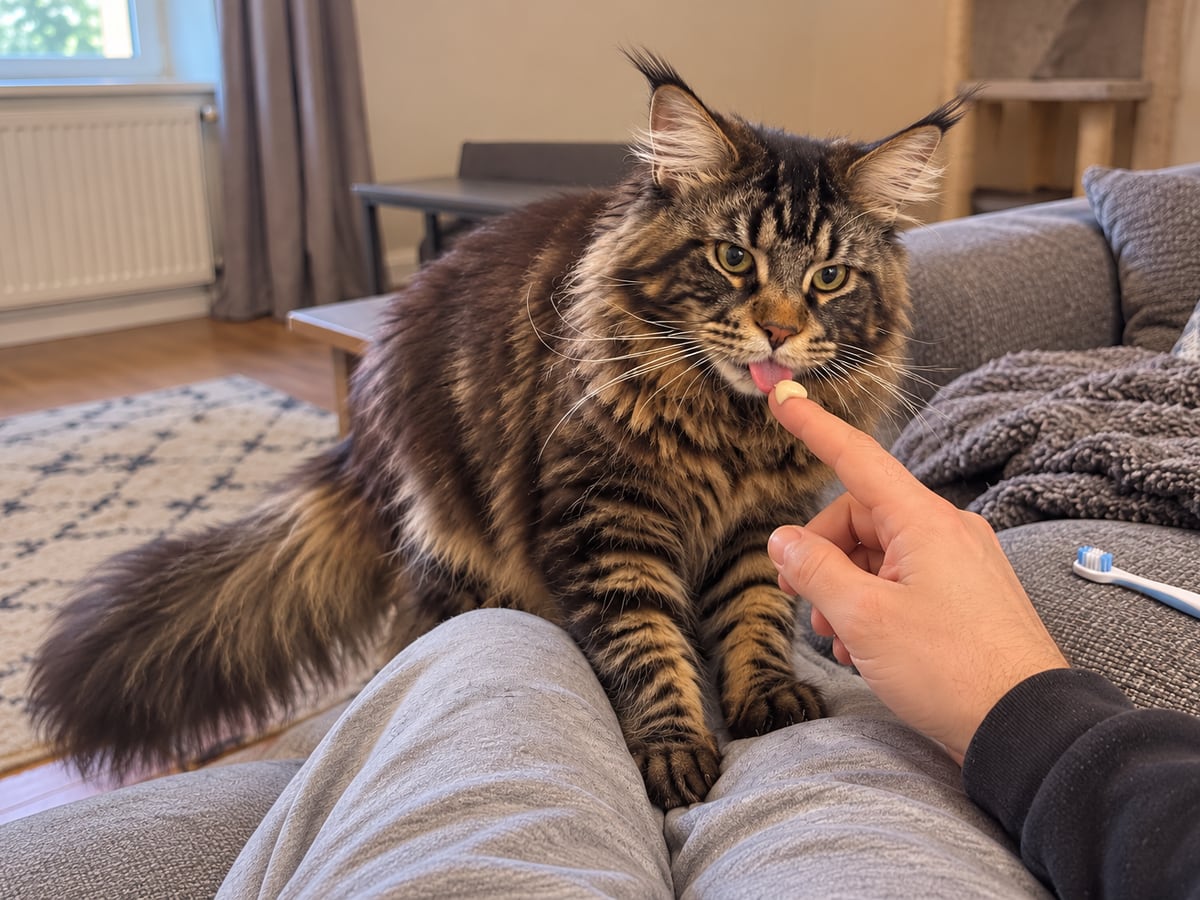
Go slowly, over days or weeks. International Cat Care says brushing can be introduced at any age, as long as it’s done gradually, and once a day is ideal. You need a toothbrush made for cats, one for each cat, and cat toothpaste, which comes in flavours such as chicken, beef or fish.
Start with touch. Stroke your cat around the head and mouth and end each time with a treat, until they let you lift their lips. Then let them lick a little toothpaste off your finger. Next, rub some onto the teeth with a cotton bud, back teeth first, in small circles. Only then bring in the brush: ten seconds on each side to begin with, building up to 30.
Brush only the outsides. Cornell says the cat’s own tongue cleans the inside surfaces well, and suggests holding the bristles at a 45 degree angle to the teeth, aimed at the narrow crevice between teeth and gums.
A little bleeding from the gums at first is common and stops as the gums become healthier, International Cat Care says. If your cat seems uncomfortable, stop and try again the next day. Cats Protection says to let them go if they want to run away, or the next try will be even harder.
When to see a vet about your cat’s bad breath
PDSA says to contact your vet if your cat has bad breath, because the vet can fully and safely examine the mouth, which may not be easy at home. Cats Protection says the same about breath that suddenly smells different or worse than normal.
Get an urgent appointment if your cat has broken a tooth, can’t close their mouth or has stopped eating, PDSA says. Cornell says that in many cases dental disease makes a cat stop eating, which leads to other health problems.
Tell your vet about anything else you’ve seen. PDSA lists excessive drooling, weight loss, eating less or nothing at all, difficulty eating or dropping food, difficulty swallowing and low energy. Swelling on one side of the face, just under the eye, can come from a tooth root abscess, it says.
Don’t be surprised if the check needs sedation. International Cat Care says a thorough look inside the mouth may require sedation or anaesthesia for some cats, along with dental x-rays.
What to write down for the vet
Cats Protection suggests getting a sniff of your cat’s breath while you know they’re healthy, so you know what is normal for them and notice a change later.
When it changes, write down the date, what the smell is like, how your cat eats and drinks, any drooling or pawing at the mouth, and which side they chew on. Lapka Care is a diary for notes like these, and it puts everything that matters for the vet into one PDF.
What a week of notes can look like
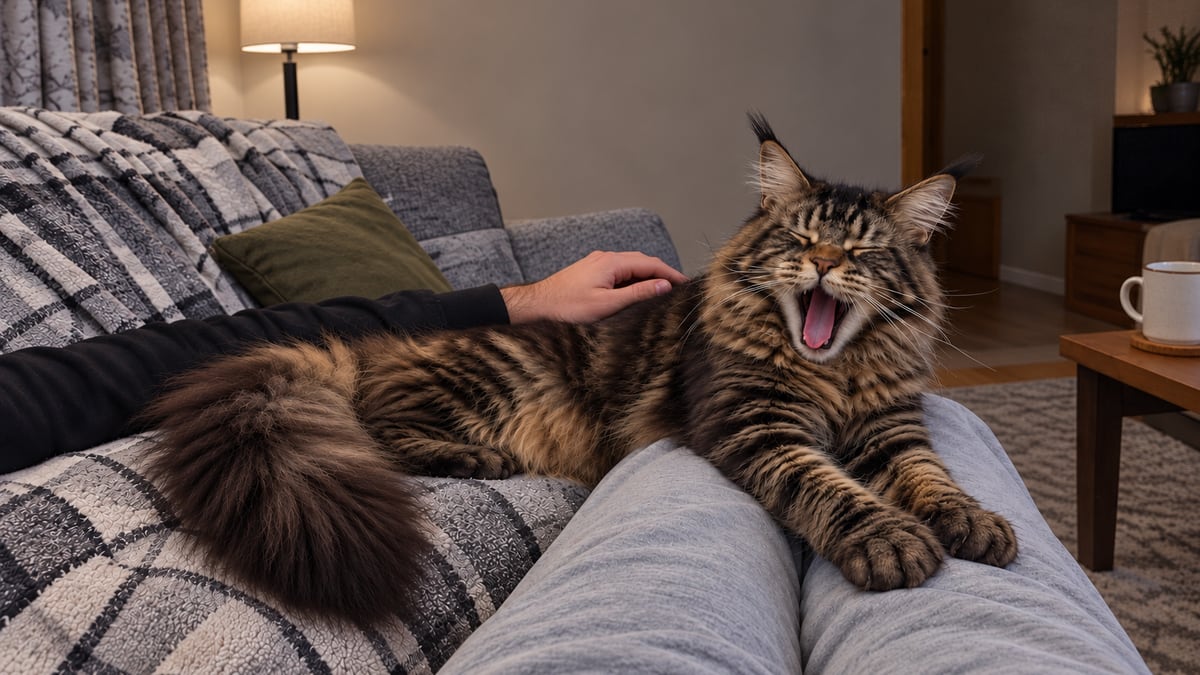
5 October: Bruno yawned on my lap and his breath smelled sharp and sour, not like his food.
8 October: chewing on the left side only. Dropped a few biscuits by the bowl.
11 October: a little drool on his chin after breakfast. Pawed at his mouth once.
12 October: booked the vet.
The notes tie a new smell to the way he eats and to one side of his mouth. That gives the vet much more to go on than “his breath is bad”.
Questions people ask
Is it normal for a cat’s breath to smell?
A little, yes. Cats Protection says no cat has minty-fresh breath, and food smells linger for a while after meals. PDSA says bad breath is not normal, though, even in older cats, so a smell that is strong, new or worse than usual is worth a vet visit.
Can kidney disease cause bad breath in cats?
It can. PDSA says kidney disease can make the breath smell like ammonia, similar to bleach, and Cornell lists drinking and peeing a lot and a poor appetite as other signs. Only your vet can find out what’s behind it, so book a visit.
My cat has bad breath and won’t eat. Is it urgent?
Yes. PDSA says to get an urgent appointment if your cat has stopped eating. Cornell says that in many cases dental disease makes cats stop eating, and that leads to other health problems.
Can I use human toothpaste or mouthwash on my cat?
No. Cats Protection says human toothpaste contains high levels of fluoride that will make your cat ill if swallowed, and PDSA says never to use human mouthwash for pets. Use a toothpaste made for cats.
Do dental treats get rid of bad breath?
Not on their own. International Cat Care says dental chews can help to reduce, but not prevent, plaque and tartar, and PDSA says you shouldn’t rely on them. Brushing works best, and tartar that’s already there usually needs a scale and polish at the vet.
How often should a vet check my cat’s teeth?
International Cat Care says at least once every 12 months, and every three to six months for a cat who has had dental problems. Cats Protection says your vet examines the mouth at the annual check-up, so keep that appointment.
Sources
- Cornell Feline Health Center — Bad breath: sign of illness?
- Cornell Feline Health Center — Feline dental disease
- International Cat Care — Dental disease in cats
- International Cat Care — How to brush your cat’s teeth
- Cats Protection — Why does my cat have bad breath?
- Cats Protection — Dental care
- Cats Protection — Do I need to brush my cat’s teeth?
- PDSA — Bad breath in cats
- PDSA — Dental disease in cats