
The short answer
Don’t blame old age: a cat losing weight while still eating needs a vet. Cats Protection says weight loss in an older cat could be a sign of hyperthyroidism, kidney disease, diabetes or dental disease, and a cat who eats more or is always hungry could have hyperthyroidism, diabetes or worms. PDSA says to always contact your vet if you think your cat has lost weight, and to take them in if the loss is sudden or quick.
Is it normal for an old cat to lose weight?
Older cats do change. Cornell Feline Health Center says they tend to be less active and playful, may sleep more, and may gain or lose weight. Battersea adds that appetite often drops with age, because smell and taste change.
Cornell is clear about what to do with that, though: don’t put health or behaviour changes down to old age, because they can be signs of common diseases or dental problems. Cats Protection makes the same point. It is easy, it says, to dismiss changes in an older cat as a normal part of getting old.
International Cat Care lists weight loss among the signs that mean you should make an appointment with your vet. A cat who gets thinner while eating as much as ever, or more, is exactly that case.
Why is my cat losing weight but still eating?
Cats Protection’s list of changes in older cats that should never be ignored gives the possible reasons. Losing weight, it says, could be a sign of hyperthyroidism, kidney disease, diabetes or dental disease. Eating more or always being hungry could be a sign of hyperthyroidism, diabetes or worms.
Weight loss with a good appetite is the picture Cornell Feline Health Center describes for two of them. It names weight loss, a bigger appetite, and more thirst and urination as the most common signs of hyperthyroidism, an overactive thyroid. With diabetes, the two signs owners notice most at home are weight loss despite a good appetite, and more thirst and urination.
PDSA’s list of causes is longer. Besides worms, dental disease, hyperthyroidism, kidney disease and diabetes, it names stress and other illnesses such as liver disease, pancreatitis, cancer and inflammatory bowel disease. Its list for a cat who is always hungry adds malabsorption, when the body struggles to digest or absorb food.
Many of these look alike from the sofa. Which one it is, your vet finds out.
Old cat losing weight but always hungry
A cat who eats more, gets thinner and seems busier than before fits what International Cat Care describes for hyperthyroidism. It is usually seen in middle-aged and older cats, rarely in cats under 7, and affected cats often lose weight despite a bigger appetite and eating more than normal.
The other signs on its list are drinking more, more activity, restlessness or irritability, and a poor, unkempt coat. Some cats have mild to moderate diarrhoea or vomiting. PDSA adds noisy, demanding behaviour and a dry, untidy coat, so the cat yelling at the food cupboard may be telling you something.
The signs are usually subtle at first and get stronger over time, International Cat Care says. PDSA calls hyperthyroidism serious: left untreated, it can be fatal. But most cats with it can be treated very successfully, International Cat Care adds, and PDSA says well-managed hyperthyroid cats can live for many years.
Diabetes, Cornell Feline Health Center says, also brings weight loss despite a good appetite. To confirm hyperthyroidism, International Cat Care says, a blood test is needed.
Old cat losing weight and drinking lots of water
Watch the water bowl as well as the scales. Cats Protection says drinking a lot of water in an older cat could be a sign of diabetes, kidney disease or hyperthyroidism. International Cat Care lists drinking more often, or a larger amount per day, among the reasons to book a vet appointment.
Kidney disease is common at this age. Cornell Feline Health Center says chronic kidney disease affects up to 40% of cats over 10 and 80% of cats over 15. Cats with it may pee larger amounts and drink more to make up for it, and as it builds they can look lethargic and unkempt and lose weight.
Diabetes is the other one to rule out. Cornell lists increasing age, physical inactivity and being male among its risk factors, and says obese cats are up to four times more likely to develop it than cats at an ideal weight.
Cat losing weight but acting normal
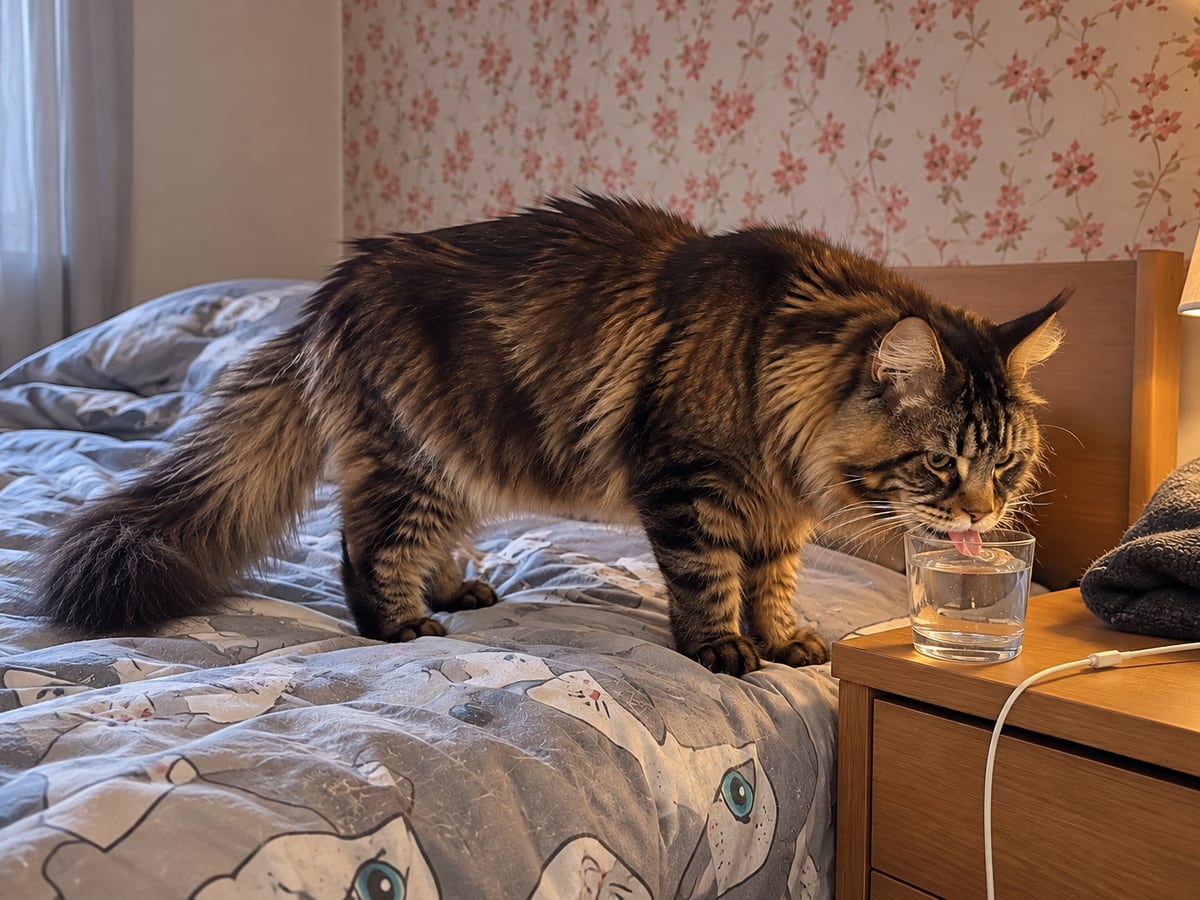
This is how it often starts. PDSA says rapid weight loss is often easy to spot, but slow weight loss is much harder, especially if your cat is fluffy.
Cornell Feline Health Center says cats often show no obvious signs in the early stages of chronic kidney disease, and the signs of hyperthyroidism may be subtle at first. With diabetes, it says, the weight loss may be noticed at home or at a routine vet check.
So a cat who seems their usual self and still gets thinner is still a reason to call the vet. PDSA’s advice is short: always get in touch with your vet if you think your cat has lost weight.
How to tell if your old cat is losing weight
Scales see what eyes miss. Cats Protection suggests standing on the scales yourself while holding your cat, or putting your cat in a carrier on the scales, then subtracting your own weight or the carrier’s. It also suggests tracking the weight at home between vet visits, so you spot big changes early.
Your hands help too. In a cat who is too thin, Cats Protection says, you can easily see and feel the ribs and spine, especially with short fur, and the hip bones and the bones at the top of the lower back show. PDSA’s signs of weight loss include lost muscle, a bony look around the back legs and spine, and an untidy coat.
PDSA puts the rule simply: a cat’s weight may go up and down, but their body shape should stay roughly the same. Go gently when you feel along the back. Battersea says older cats tend to get thinner over the joints, the hindquarters and the spine, and it can hurt where the bones stick out.
Old cat losing weight and not eating
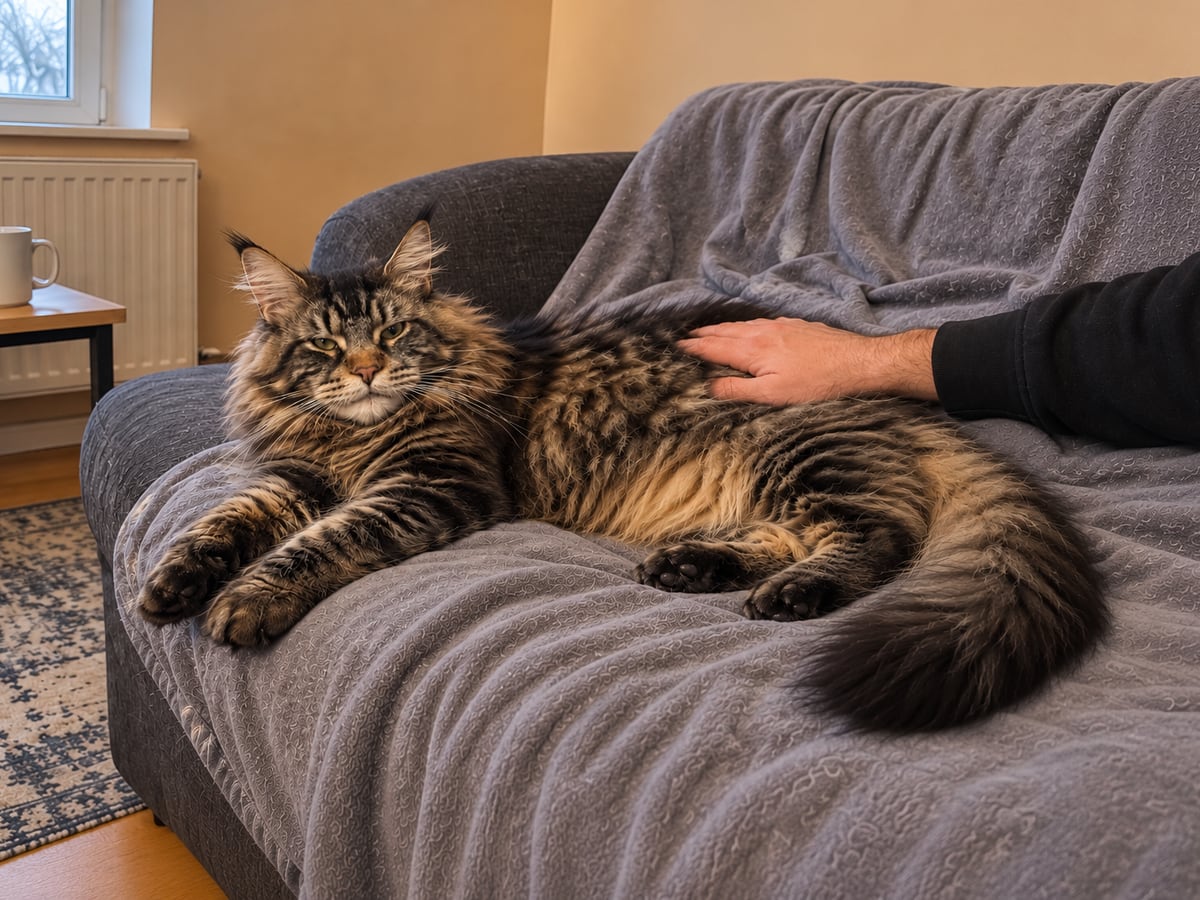
When an older cat eats less, not more, the list changes. Cats Protection says not eating could be a sign of pain, nausea, kidney disease, stress or infection. A small dip can come with age: International Cat Care says that as smell and taste fade, a cat may lose their appetite slightly.
Not eating at all is different. Cornell Feline Health Center says that refusing food can seriously affect a mature cat’s health if it lasts as little as 24 hours. Cats Protection says to call your vet if your cat hasn’t eaten for over 24 hours, and that senior cats are more vulnerable to going without food and water.
Teeth are often part of it. Cornell says between 50 and 90% of cats older than four have some form of dental disease, and a cat with sore gums may be hesitant to eat, prefer soft food, or turn their head to one side while eating. International Cat Care adds bad breath, drooling, a “chattering” jaw and pawing at the mouth.
Battersea’s tips can help an older cat eat while you sort out the vet: smaller, more frequent meals, softer food if the teeth are a problem, food at room temperature, and a bowl they don’t have to bend down to. Some older cats eat more when someone sits with them.
Cat losing weight and throwing up
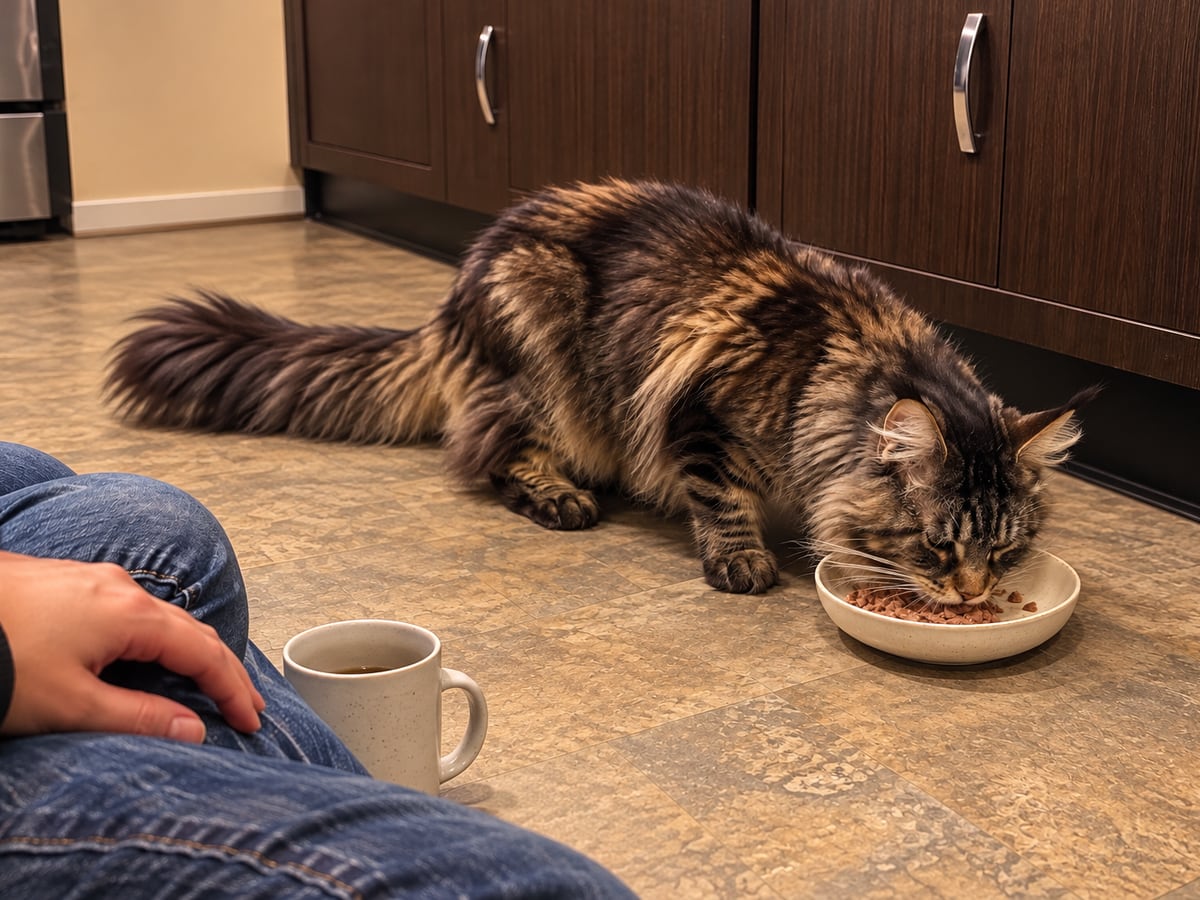
Vomiting together with weight loss is another reason to book soon. Cats Protection says vomiting or diarrhoea in an older cat could be a sign of kidney disease, infection, pancreatitis or cancer of the digestive tract. Cornell Feline Health Center says hyperthyroidism may also cause vomiting, diarrhoea and hyperactivity.
Cats Protection says to call your vet if a cat is very lethargic or vomiting repeatedly. Write down the days it happens, so the vet hears it from a note and not from memory.
When to see the vet
For any weight loss, PDSA says to get in touch with your vet. If your cat suddenly starts losing weight, or loses it very quickly, take them in, because medical problems can cause sudden weight loss.
Cats Protection says to call your vet if your cat hasn’t eaten or hasn’t drunk for over 24 hours, or is very lethargic or vomiting repeatedly. Cornell Feline Health Center asks owners to contact a vet immediately once a cat stops eating. A suddenly bloated belly should be checked by a vet urgently, Cats Protection says.
Regular check-ups catch the quiet cases. Cats Protection says that from around seven or eight your vet may recommend a check-up twice a year, and Cornell calls six-monthly check-ups for geriatric cats great. Cornell also stresses regular vet exams and blood tests for all senior cats, because kidney disease often shows no clear signs early on.
What to write down for the vet
You see your cat every day, and the vet sees them for a few minutes. Cats Protection suggests tracking how much an older cat eats and drinks in a day, because any big change in appetite or thirst should be checked, and making a note of any changes before the appointment. It also says regular weight checks matter.
Write the weight with the date, weighed the same way each time. Add how much food goes down and whether they ask for more, how often the water bowl needs filling, any vomiting, and changes in the coat. PDSA asks owners of a hungrier cat to tell the vet about anything else they’ve noticed alongside the appetite.
A line like “12 October: 5.2 kg, down from 5.6 in September, still finishing every meal” tells the vet more than “looks thinner lately”. Lapka Care is a diary for notes like these, and it puts everything that matters for the vet into one PDF.
What a month of notes on a thinning older cat can look like
1 September: 5.6 kg on the bathroom scales, holding Felix and taking off my weight. Finishes every meal.
15 September: 5.4 kg. Asks for food again an hour after breakfast. The spine is easier to feel when I stroke the back.
22 September: filled the water bowl twice today instead of once. Up at 5 am yelling at the food cupboard.
29 September: 5.2 kg. Booked the vet and took these notes along.
The scales caught 0.4 kg in four weeks that nobody could see yet, and the notes put it next to a bigger appetite and more drinking. Those changes sit together on Cornell’s and Cats Protection’s lists, and the dates show the vet when each one began.
Questions people ask
Is it normal for a 15-year-old cat to lose weight?
Older cats may gain or lose weight, Cornell Feline Health Center says, but it asks owners not to put changes down to old age, because they can be signs of common diseases or dental problems. International Cat Care lists weight loss among the reasons to make a vet appointment. Cornell also says chronic kidney disease affects up to 80% of cats over 15.
Why is my old cat losing weight rapidly?
PDSA says that if your cat suddenly starts losing weight, or loses weight very quickly, you should take them to the vet, because medical problems can cause sudden weight loss. Tell the vet if your cat also hasn’t eaten for over 24 hours, is vomiting repeatedly or seems very lethargic: Cats Protection lists each of those as a reason to call.
Can worms make a cat lose weight while eating?
They can be one cause. PDSA lists worms among the causes of weight loss, and both PDSA and Cats Protection list them as a reason a cat may be always hungry. Ask your vet, who can look at worms along with the other causes on those lists.
Can bad teeth make an old cat lose weight?
Yes. Dental disease is on Cats Protection’s list of reasons an older cat may lose weight. Cornell Feline Health Center says it affects between 50 and 90% of cats older than four, and in many cases it makes a cat stop eating. Watch for bad breath, drooling, turning the head to one side while eating and pawing at the mouth.
Should I feed my old cat more if they’re losing weight?
Ask your vet first. A cat who loses weight while eating well needs the cause found, and Cornell Feline Health Center says your vet can advise on a diet with the right nutrition. Cats Protection says older cats need fewer calories but more good-quality protein, and suggests a senior diet from around 11. International Cat Care says older cats digest fat and protein less well.
How do I weigh my cat at home?
Cats Protection suggests standing on the scales while holding your cat, or putting them in a carrier on the scales, and then taking off your own weight or the carrier’s. Weigh the same way each time and write the number down with the date. PDSA notes that your vet will also weigh your cat at their yearly health check.
Sources
- PDSA — Weight loss in cats
- PDSA — Vet Q&A: How do I know if my cat is too fat?
- PDSA — Hyperthyroidism in cats
- PDSA — Why is my cat always hungry?
- Cornell Feline Health Center — Hyperthyroidism
- Cornell Feline Health Center — Feline diabetes
- Cornell Feline Health Center — Chronic kidney disease
- Cornell Feline Health Center — Feline dental disease
- Cornell Feline Health Center — Loving care for older cats
- Cornell Feline Health Center — Anorexia
- International Cat Care — Hyperthyroidism in cats
- International Cat Care — Special considerations for senior cats
- Cats Protection — Elderly cats: care guide for older cats
- Cats Protection — Is my cat the correct weight?
- Cats Protection — How long can cats go without food?
- Battersea — Caring for an older cat