
Where to start
Switching cat food too quickly can upset your cat’s stomach: PDSA lists diarrhea, vomiting, wind and eating less, and some cats refuse the new food. Make the change over a week or two. PDSA starts with a teaspoonful of new food beside the usual meal and moves on only after at least three days of eating it happily. Diarrhea from a sudden change usually settles in 1–3 days; if it lasts more than 2–3 days, see your vet.
Is it bad to switch your cat’s food?
No, as long as you go slowly. Cats Protection warns that a sudden change of diet could cause an upset stomach, or your cat may be reluctant to eat the new food. PDSA’s rule is to never change a cat’s food suddenly unless your vet tells you to.
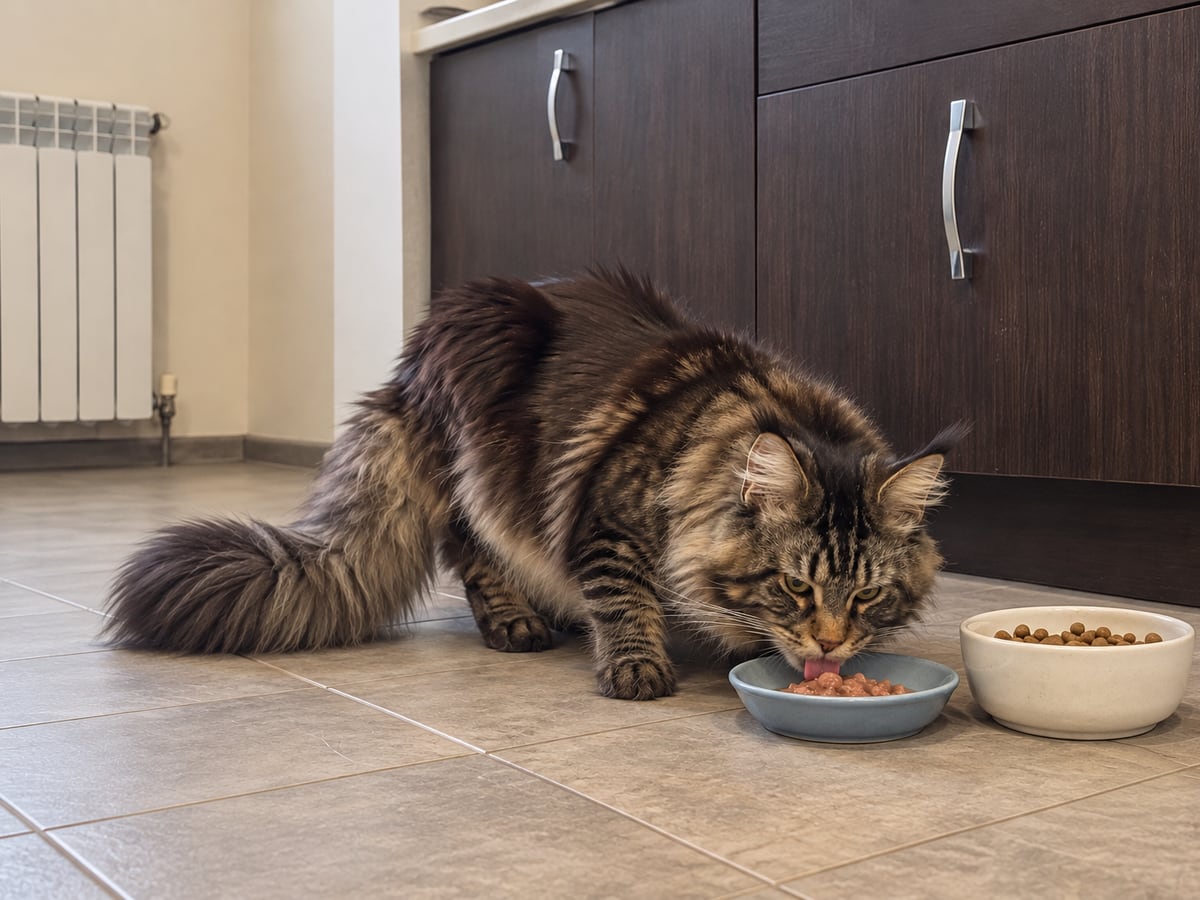
Some variety can even help. International Cat Care recommends feeding healthy cats both wet and dry food, so they don’t get used to only one type. Cornell Feline Health Center says that two or three different foods give flavour variety and may keep a cat from becoming set on a single food.
Switching cat food too quickly: the signs
Some cats struggle to digest a new food unless it comes in slowly, PDSA explains. Their gut simply hasn’t had time to adjust. PDSA compares it to eating meat, potatoes and vegetables every day for months, then a spicy curry out of the blue.
After a change of diet, PDSA lists diarrhea, vomiting, a lot of wind, sleeping more or being quieter than usual, and eating less. A sore tummy can show too. Your cat may yelp when picked up, growl when you touch their belly, or sit in a “prayer position”, with the front legs on the floor and the back legs standing.
The other sign is a full bowl. If your cat won’t eat the new food, PDSA says this is usually a sign the change went too fast. The American Animal Hospital Association (AAHA) warns that a sudden switch may cause digestive upset and food aversion, especially in cats.
How to switch cat food gradually: a day-by-day plan
PDSA’s vets lay the change out over about two weeks, in three steps. Your cat sets the pace: move to the next step only once they have happily eaten the new food for at least three days.
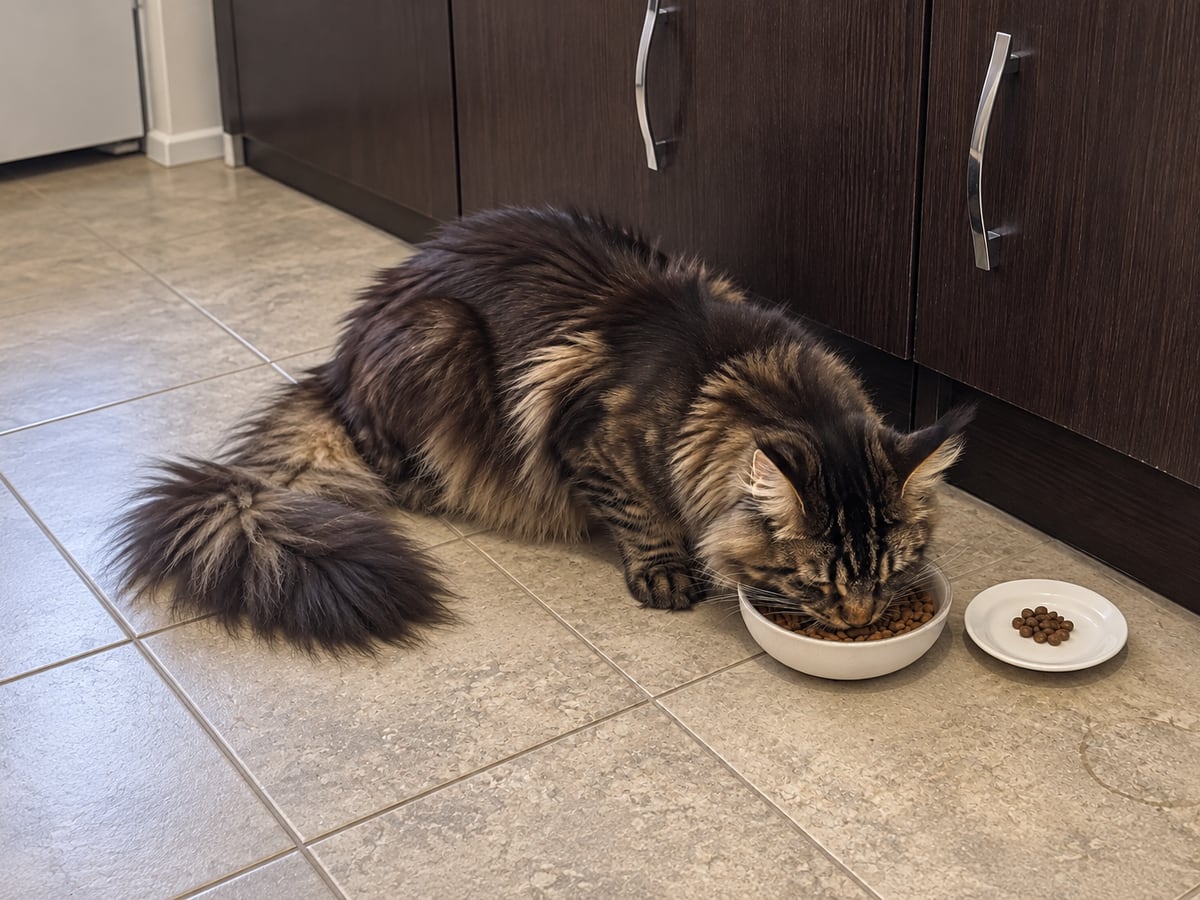
Start with the usual meal and a small teaspoonful of the new food on a separate plate. By day five, give a little more of the new food and a little less of the old. Once your cat has eaten the new food alongside the old for at least a week, feed only the new one.
PDSA adds that the whole change can take longer than ten days for some cats. Don’t skip ahead, or your cat may reject the new food completely.
| Days | What to give |
|---|---|
| 1–4 | The usual meal, plus a small teaspoonful of the new food on a separate plate |
| 5–10 | More of the new food and less of the old, still kept apart |
| 10–14 | Phase out the old food: only the new one, once your cat has eaten it alongside the old for at least a week |
Should you mix the old and new food?
Vets and charities answer this differently. Cats Protection says to add a little of the new food in with the usual food, then offer more of the new and less of the old as your cat eats it. The AAHA starts by replacing 25% of the old food with the new.
PDSA says to keep them apart at all times, because texture is very important to cats: if you mix the food, they might not eat any of it. International Cat Care also suggests offering the new food next to the old, and cutting the old food down slowly as the new one is accepted.
Either way, the amounts change slowly. The AAHA’s rule fits both: increase the new food according to how well your cat accepts it.
How long to transition a cat to new food
At least a week, and often two. Cats Protection says to carry on over a week or more until your cat eats only the new food. PDSA’s plan runs to day 14.
Some cats need far longer. The AAHA says cats may need up to 40 days to switch, so be patient. A cat used to one texture, such as wet, dry or semi-moist food, may refuse a food with a different one, and then the AAHA says a longer switch of one to two months may be needed.
So a switch still going on day 20 is well inside the AAHA’s 40 days for cats.
How to transition a cat to new wet or dry food
Going from dry to wet, or from wet to dry, changes the texture, and that is the switch the AAHA says may need one to two months. Plan for the long version from the start.
Warmth helps with wet food. International Cat Care says a slightly warmed food smells stronger, and cats tend to prefer food at around body temperature, about 35°C. Cats Protection suggests serving wet food at room temperature rather than straight from the fridge, and being careful not to make it too hot.
If your cat needs a little more persuading, the AAHA suggests a small amount of canned food on top. And for later on, International Cat Care says that offering kittens both dry and wet food can help them accept different textures in later life.
If your cat refuses the new food
Go back a step. PDSA says a cat who won’t eat the new food is usually a sign the change was too quick, and you’ll need to start again. If they still won’t eat it, try another flavour, texture or brand.
Don’t wait for hunger to win. Cats Protection says that if your cat doesn’t eat the new food or becomes unwell, keep feeding the old food and speak to your vet. The AAHA says cats must eat enough calories every day.
A cat who stops eating altogether needs a vet straight away. Cornell Feline Health Center urges owners to call a vet as soon as they notice it, because not eating can have a severe impact on a grown cat’s health if it lasts for as little as 24 hours.
Timing matters too. A cat who feels sick may learn to dislike a food they ate just before, and the AAHA says that dislike can last up to 40 days in cats. So don’t offer the food you want them on for good while they feel sick.
Switching cat food and diarrhea
PDSA says diarrhea from a sudden change in food usually settles without treatment within 1–3 days.
Meanwhile, keep fresh water where your cat can reach it. A cat with diarrhea may need to drink a bit more than usual to replace the water lost in their poo, PDSA explains. It says to speak to your vet if your cat stops drinking or drinks much more than usual.
If your cat becomes unwell during the switch, Cats Protection’s advice is to keep feeding the old food and speak to your vet. PDSA warns that severe diarrhea, or diarrhea left for too long, may leave a cat dehydrated.
New kittens and diets from the vet
A new kitten should keep the food they already know. PDSA advises sticking with the same food when your kitten comes home, usually at around eight to twelve weeks, to help avoid stomach upsets. If you want to change it once they have settled, do it gradually.
A diet from your vet comes with your vet’s plan. Cats Protection says to always follow your vet’s advice with specialist foods and, if possible, introduce the new diet gradually while your cat still has access to their original food. It is also PDSA’s one exception: change suddenly only if your vet tells you to.
When to see the vet
PDSA says to contact your vet without delay if your cat has diarrhea for more than 2–3 days, diarrhea on and off for 2 weeks or more, diarrhea along with other health problems, or diarrhea while taking medication. A very young or very old cat with diarrhea should see the vet without delay too.
For vomiting, PDSA says to call your vet for advice if your cat vomits more than once, seems unwell or shows other signs. Contact them straight away if your cat has been vomiting for more than 24 hours, can’t keep food or water down, is very young or old, or has low energy, pale gums, diarrhea, a painful belly, or blood or black dots in the vomit.
And a cat who refuses to eat and is losing weight should be examined by a vet, Cornell Feline Health Center says.
Keep a few notes while you switch: the date of each step, how much of each food, and anything new in the litter tray. If you do end up at the vet, those dates show how fast the food changed and when the trouble began. Lapka Care is a diary for notes like these, and it puts everything that matters for the vet into one PDF.
What two weeks of switching notes can look like
3 March: day one. Usual dinner, plus a teaspoonful of the new food on a saucer beside it. Sniffed it, ate half.
6 March: finished the teaspoonful three evenings running. More new food from tomorrow, a little less of the old.
9 March: soft stool this morning. Eating, drinking and playing as usual. Keeping the amounts as they are.
11 March: stools normal again.
17 March: a week of eating both foods side by side. New food only from today.
Notes like these show how fast the food changed and when the soft stool came. Had it not settled, the vet would have had the dates.
When it doesn’t go to plan
What happens if you switch cat food too fast?
It can upset your cat’s stomach. PDSA lists diarrhea, vomiting, a lot of wind, eating less, and sleeping more or being quieter than usual. Some cats simply refuse the new food, which PDSA says is usually a sign the change went too quickly.
How long does diarrhea last after changing cat food?
PDSA says diarrhea from a sudden change of food usually settles within 1–3 days without treatment. Contact your vet without delay if it lasts more than 2–3 days, comes and goes for 2 weeks or more, or comes with other health problems. A very young or very old cat with diarrhea should see the vet without delay.
How do I switch cat food brands?
With the same slow plan. A new brand is still a change of your cat’s usual food, and Cats Protection says a sudden one could upset their stomach. If your cat won’t take to the new brand even after a restart, PDSA suggests trying another flavour, texture or brand.
Can I switch cat food without mixing?
Yes. PDSA’s whole plan keeps the two foods on separate plates, because texture is very important to cats and a mix may go uneaten. International Cat Care also suggests putting the new food next to the old.
Can I switch my cat’s food all at once?
PDSA says never to change your cat’s food suddenly unless your vet tells you to. Even with a diet from the vet, Cats Protection suggests introducing it gradually if possible, while your cat can still eat their original food.
Should I warm my cat’s new food?
A little warmth can help with wet food. International Cat Care says cats tend to prefer food at around body temperature, about 35°C, and the AAHA notes that cats don’t accept food served too cold or too warm. Cats Protection says to be careful not to make it too hot.
Sources
- PDSA — The best diet for your cat
- PDSA — Diarrhoea after a change of food (PDF)
- PDSA — Vomiting in cats
- Cats Protection — Feeding your cat
- International Cat Care — Feeding your cat or kitten
- AAHA — Tips and timelines for transitioning your pet to a new food (PDF)
- Cornell Feline Health Center — Feeding your cat
- Cornell Feline Health Center — Anorexia