
Where to start
First ask your vet whether the tablet can go in food. If it can, hide it in a little soft food your cat loves, before the main meal. If not, sit your cat facing away from you, tilt the head back, open the lower jaw and place the tablet far back on the tongue. Follow it with a little water. If your cat struggles or tries to bite, stop and ask your vet about a liquid or another form.
Before you start: what to ask the vet
Ask before the first pill, because the answers decide which way will work. International Cat Care suggests three questions: can the medicine be given with food or a treat, can the tablet be split or crushed, and what is the simplest way to give it. PDSA explains why it matters: some tablets don’t work unless they are given whole, or on an empty stomach.
Ask whether there is an easier form, such as a liquid or a spot-on, PDSA suggests. And ask to be shown: International Cat Care says your vet team will be happy to show you how to give the medicine. Colorado State University’s vet hospital adds two more questions: whether the tablet should be taken with food, and what to do if one is missed.
How to give a cat a pill in food
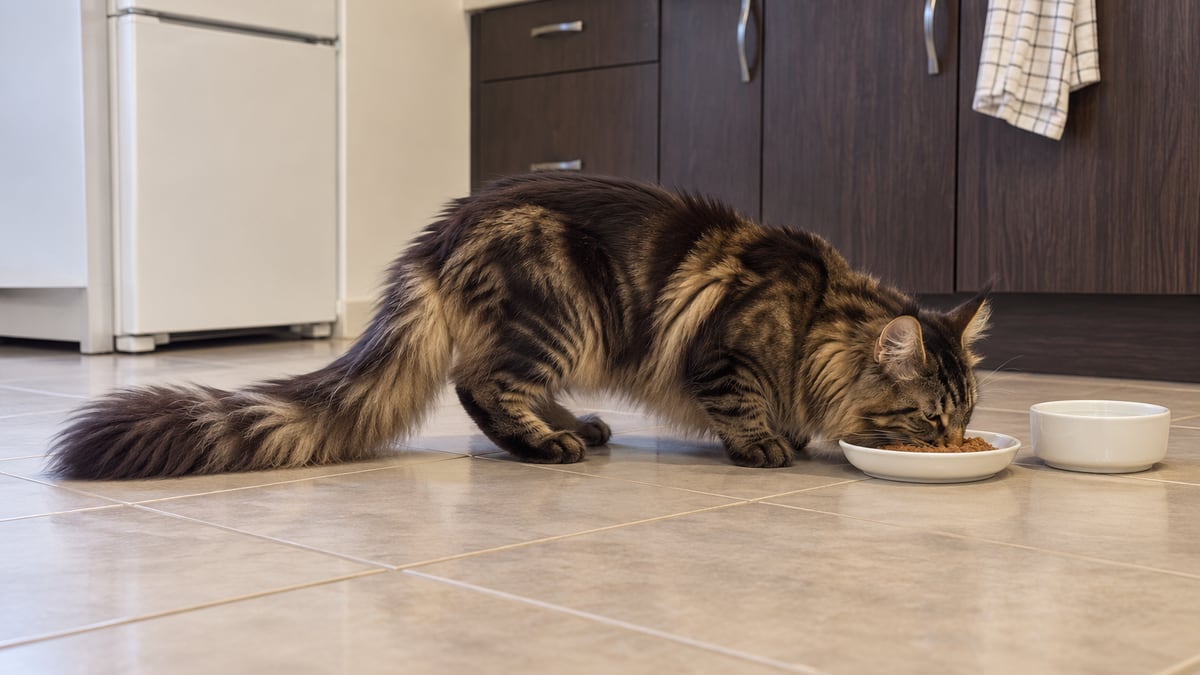
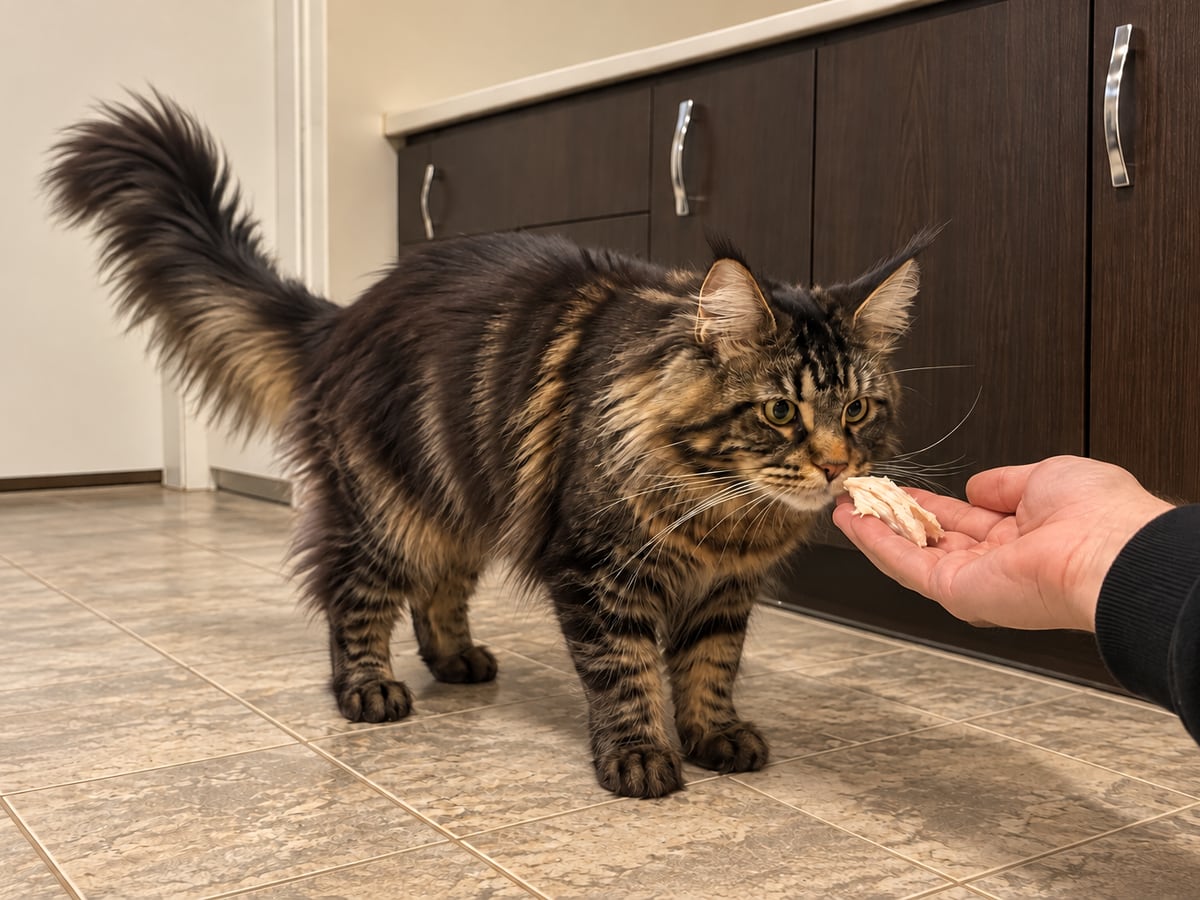
If your vet says food is fine, start there. Most cats won’t eat a tablet on its own, International Cat Care says, because the flavour or texture is unfamiliar. Hide a small tablet in a little of something soft your cat loves: soft cheese, a small piece of soft meat or fish, or a treat. Cats Protection suggests a bit of plain cooked chicken.
Your cat should be hungry. International Cat Care suggests taking all food away for 12 hours first, if that is appropriate for your cat. Hide the tablet completely and offer only a small amount at first, then check it hasn’t been left behind or spat out. PDSA suggests a little routine with treats: a couple of plain ones, then the one with the tablet, then another plain one.
Cats have a very good nose, which is why they can usually find the tablet in their food. Cats Protection suggests hiding it in something strong-smelling, like a little tuna. Keep it out of the main meal, though. International Cat Care says a tablet mixed into the whole bowl can put your cat off eating, and then it is hard to see whether all the medicine went down. Give the small portion first, then the rest of the meal.
How to give a cat a pill without food: getting ready
If food doesn’t work, the pill goes in by mouth. Get everything ready before you fetch your cat, Cornell’s veterinary pharmacy says. Take the tablet out of its packet and, as PDSA suggests, have a small syringe of water to hand. Colorado State’s team says to keep the bottle and the pill itself out of sight and earshot, so your cat doesn’t see you coming.
Two people make it easier, one to hold your cat and one to give the tablet, International Cat Care says. Sit your cat on a stable, non-slip surface such as the floor or a table, upright and facing away from you. Cats Protection says not to pick your cat up, and to have their bottom against your body or a wall so they can’t back away.
The helper gently holds each front leg just above the elbow, with their hands resting softly against your cat’s sides. That keeps your cat sitting up, with the paws and claws under control. Cornell’s pharmacy suggests the opposite surface: a smooth, slippery counter, so the claws can’t get a grip.
Pick a calm moment. Cats Protection suggests keeping your cat as relaxed as possible, with their own blanket under them, and Cornell’s pharmacy says your cat will reflect your mood. If you are anxious, they will be too.
How to give a cat a pill by mouth, step by step
Hold the tablet between the thumb and forefinger of one hand. Bring the other hand to the top of your cat’s head from the side, which International Cat Care says feels less threatening than from above. Hold the head gently but firmly, with your thumb and fingers either side of the jaw.
Tilt the head back until the nose points at the ceiling. With the middle finger of the hand holding the tablet, pull the lower jaw down. Cats Protection says to open the mouth with a finger on the small front teeth and to keep away from the sharp canines.
Put the tablet in the middle of the tongue, as far back as you can see. The further back it goes, International Cat Care says, the harder it is for your cat to do anything but swallow. Place it there with your fingers: PDSA says dropping the pill into the mouth can cause gagging.
Close the mouth and hold the jaw shut for a few seconds. Stroke the throat downwards. When your cat licks their lips or nose, International Cat Care says, the tablet has gone down. If you’re not sure, Cornell’s pharmacy says gently blowing on your cat’s face will help them swallow.
Do it quickly but calmly. Then let your cat go and, as Cats Protection says, make sure they don’t spit the tablet out.
A little water after the pill
A dry tablet can get stuck on the way down. Cornell’s pharmacy advises following a tablet or capsule straight away with about a teaspoon of water, 5 to 6 ml, from a dropper or an oral syringe, so it doesn’t lodge in the oesophagus, the tube between the mouth and the stomach.
PDSA suggests holding the mouth closed and syringing a small amount of water into the side of it, which also helps your cat swallow. International Cat Care says some medicines can irritate the oesophagus, so ask your vet whether that applies to yours.
If your cat is calm, Cornell’s pharmacy says a little milk or another tasty liquid can wash the tablet down instead. Check with your pharmacist first that the liquid suits the medicine.
Some cats drool a lot after a tablet. Cornell’s pharmacy says this is normal and not harmful.
How to give a cat a pill by yourself
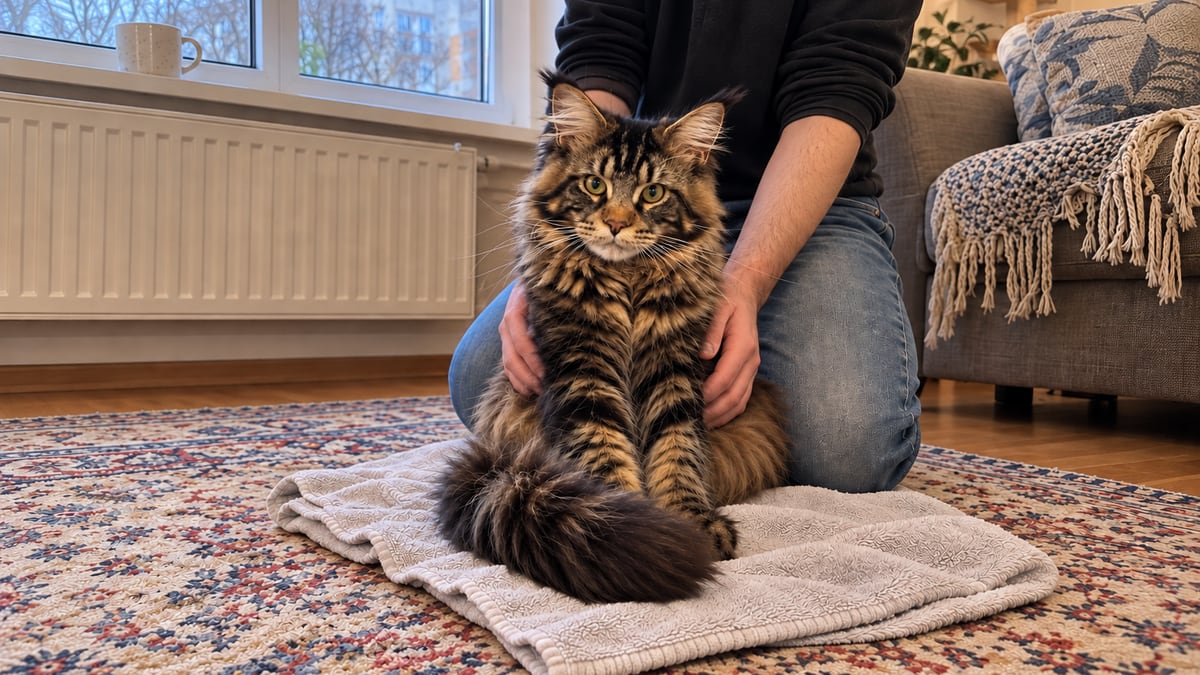
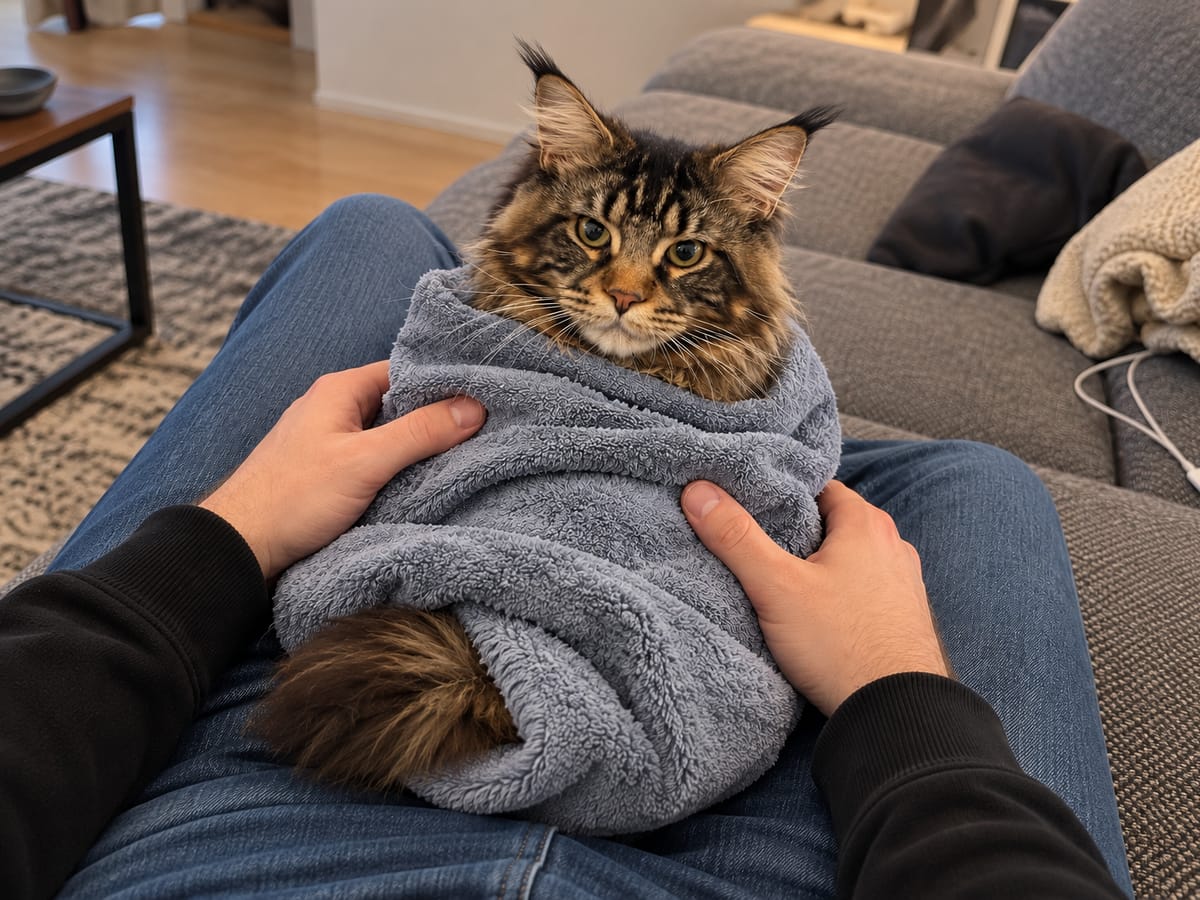
On your own, a towel does the helper’s job. International Cat Care says it is especially useful for very wriggly cats, or when there is no one else to hold your cat.
Use a mid-sized soft towel. Lay it on the floor, sit your cat on it facing away from you, and bring one side up around the neck and then the other, so the front legs stay inside. Colorado State’s team calls this the “cat burrito”: only the head is out, and it stops your cat scratching. They add that it is often still a job for two, one to wrap and hold, the other to give the pill.
Without a towel, PDSA suggests holding your cat against your body, facing away from you. Colorado State’s team adds that on your own you can tempt your cat over with treats and give the pill quickly.
How to give a cat a pill without getting bitten or scratched
Take bites seriously. International Cat Care warns that an upset cat may scratch or bite you without meaning to, and that this can be serious. If you are struggling, tell your vet team as soon as you can.
Keep your fingers away from the teeth. Cats Protection says to hold your cat’s cheekbones towards the back of the head, clear of the teeth and whiskers, and to open the mouth at the front teeth, away from the canines. PDSA says to be quick but very gentle.
A towel keeps the claws in, and a pill giver keeps your fingers out of the mouth. Above all, don’t hang on to a cat who is fighting you. International Cat Care says never to restrain a cat heavily, and to let go if they struggle or try to bite or scratch. Then talk to your vet about other options.
A pill giver for a difficult cat
A pill giver, or pill popper, is a little like a syringe with a soft tip and no needle, International Cat Care says. The tablet sits in the nozzle, and a push on the plunger leaves it right at the back of the tongue, so your fingers stay out of the mouth. Your vet clinic can supply one.
Load the tablet before you hold your cat, with the plunger just touching it. Colorado State’s team says to tilt the head up, slip the tip into the side of the mouth and press the plunger.
Never force it in. International Cat Care says pushing a pill giver into the mouth could cause injury, and PDSA asks you to have your vet show you how to use one, because used wrongly it can damage the mouth. Always give some water afterwards, so the tablet doesn’t stick in the throat.
A slippery tablet may be easier to give a reluctant cat. Cornell’s pharmacy suggests coating it in a little butter or a savoury paste such as tuna or anchovy, which also makes it taste better.
End on something your cat likes
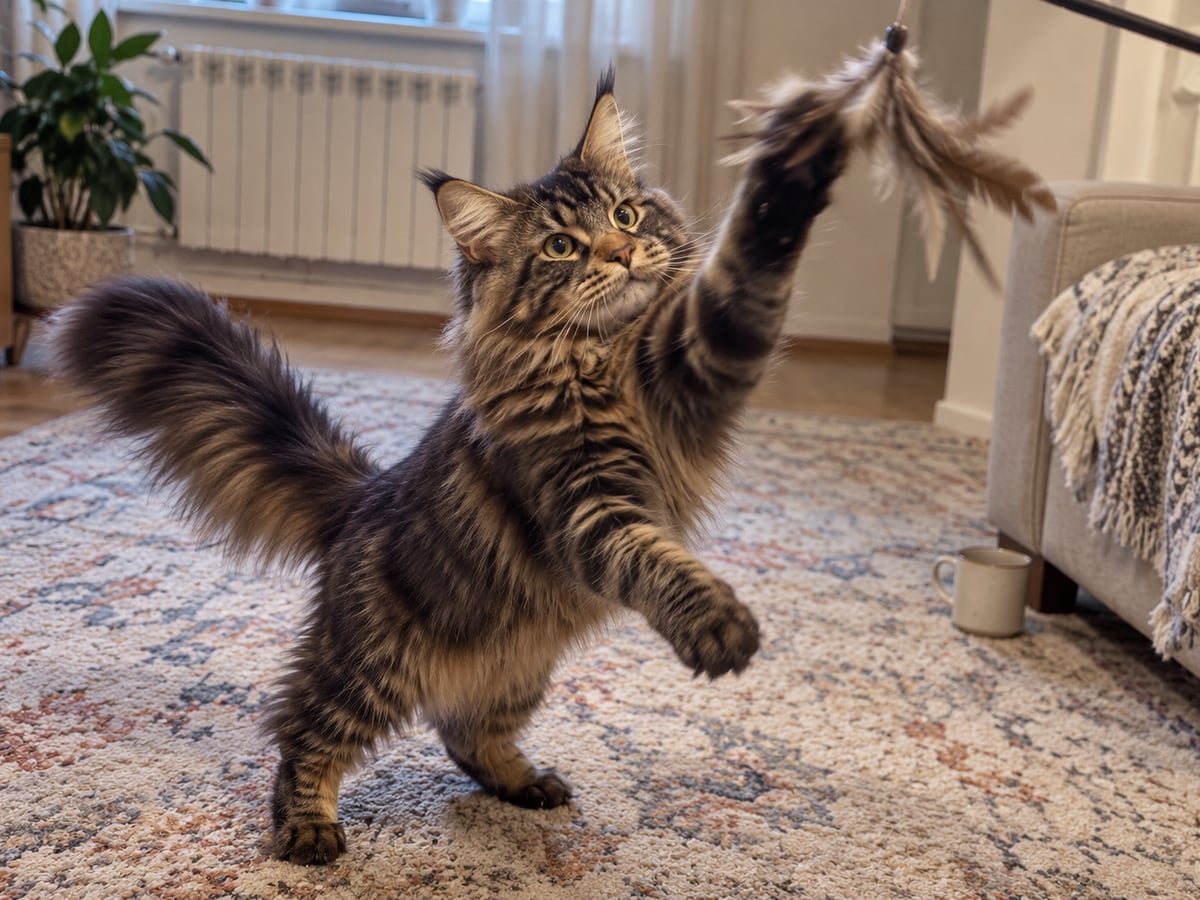
Finish with something good. International Cat Care suggests a favourite treat, a brush or a short game with a wand toy, which may help your cat not link medicine with something unpleasant. PDSA hopes that, with time, pills come to mean something nice, and that it gets easier.
If your cat spat the tablet out and isn’t upset, International Cat Care says you can try again. Wash your hands afterwards, PDSA says, and wear gloves if your vet or the packet tells you to.
When your cat won’t take a pill at all
Some cats are really tricky to pill, PDSA says, and that is something to solve with your vet. If you are struggling with tablets your vet prescribed, International Cat Care says to contact the practice: the team may be able to give the medicine themselves or suggest another formulation.
Ask about another form. Colorado State University’s vet hospital names a long-lasting injection, a liquid, and topical or transdermal forms that go on the skin, where one works just as well. PDSA says a liquid or a spot-on is often easier to give.
Say so if the timetable is the problem. If tablets several times a day will be hard, Colorado State’s team suggests asking your vet about alternatives. International Cat Care adds that if giving medicine is causing your cat significant stress, you should talk to your vet team, because the stress won’t help them recover.
Keep track of every pill
With two or three tablets a day, it is easy to lose count and to forget which trick worked. Write down the time of each tablet, how it went in, and whether it turned up on the floor later.
Take the notes to the next appointment. They show the vet at a glance whether the medicine is getting in, and that makes the talk about a liquid or another form much easier. Lapka Care is a diary for notes like these, and it puts everything that matters for the vet into one PDF.
What a week of notes can look like
14 October, 8:00: tablet in a piece of chicken. Tosha ate the chicken and left the tablet by the bowl.
14 October, 20:00: by hand, on the towel, then water from the syringe. Licked his lips, swallowed.
16 October, 8:00: spat it out twice and growled. Let him go, tried again by hand in the evening. Fine.
18 October: over four days, two tablets out of eight didn’t go in. Called the vet to ask about a liquid.
The notes show which way works for this cat, at what time of day, and how often a tablet didn’t get in. That gives the vet something to go on when deciding whether another form makes sense.
When it doesn’t go to plan
Can I crush my cat’s pill and mix it into food?
Only if your vet says so. PDSA says some tablets don’t work properly if crushed or split, and International Cat Care says some have a special coating and must be given whole, and some shouldn’t be handled once split or crushed. If crushing is fine, Cats Protection suggests mixing it into one meal, ideally breakfast, and making sure your cat eats all of it. International Cat Care prefers a small amount of food first, so you can see it all go.
How do I give a cat a pill without them spitting it out?
Get it further back. Cornell’s pharmacy says a pill placed far back in the mouth is unlikely to be spat out. Hold the mouth closed for a few seconds, stroke the throat and wait for the lip lick. A pill giver puts the tablet right at the back of the tongue.
How do I know my cat swallowed the pill?
Watch the lips. Cats Protection says lip licking is usually a sign of success, and International Cat Care says that if your cat licks their lips or nose, they’ve swallowed. Then let your cat go and check the floor and the food bowl for a tablet left behind.
Can I stop the tablets when my cat seems better?
No. PDSA says to finish the course your vet prescribed. Some medicines cause side effects if they are stopped suddenly, and antibiotics need to be finished to help stop bacteria becoming resistant to them.
What if I miss a pill?
PDSA says to check the instructions inside the packet or to contact your vet for advice. A note helps here, because it shows at once when the last tablet went in.
Can I give my cat a pill with butter?
Cornell’s pharmacy says coating a tablet in butter, or a savoury paste such as tuna or anchovy, makes it tastier and more slippery. International Cat Care suggests a little smear of butter on a gelatine capsule too. Ask your vet first whether the medicine can be given with food.
Sources
- International Cat Care — How to give a cat medication
- Cats Protection — Giving your cat a tablet
- PDSA — How to give your cat a pill
- Cornell University College of Veterinary Medicine, Pharmacy — Giving your cat oral medications
- Colorado State University Veterinary Health System — How to give a cat a pill