
The short answer
Cats should not eat grapes, raisins or currants; onion, garlic, leeks or chives, even cooked or dried and hidden in sauces and baby food; chocolate, coffee, alcohol or raw yeast dough. Most cats are lactose intolerant, so milk can upset their stomach, and water is the drink they need. Cats Protection says just 2 g of chocolate can do serious damage. If your cat ate any of these, call your vet straight away.
Foods toxic to cats: the everyday list
Cats Protection’s advice is simple: generally, don’t feed your cat human food. Many foods made for people can harm cats, and they don’t have the nutrition a cat needs.
Its list of foods that should not be given to cats: alcohol, avocado, chocolate, coffee and anything with caffeine, grapes, raisins and currants, onion and garlic, raw meat, fish and eggs, raw bones, dairy, nuts and raw yeast dough. Below are the ones that look harmless and sit in every kitchen.
Cats Protection says cats are sometimes less likely to recover from poisoning than a dog might be. They are smaller, so even a small amount of something poisonous can be fatal, and in some cases their bodies are less able to get rid of a toxic substance. They can also swallow it off their coat when they groom.
Can cats eat grapes?
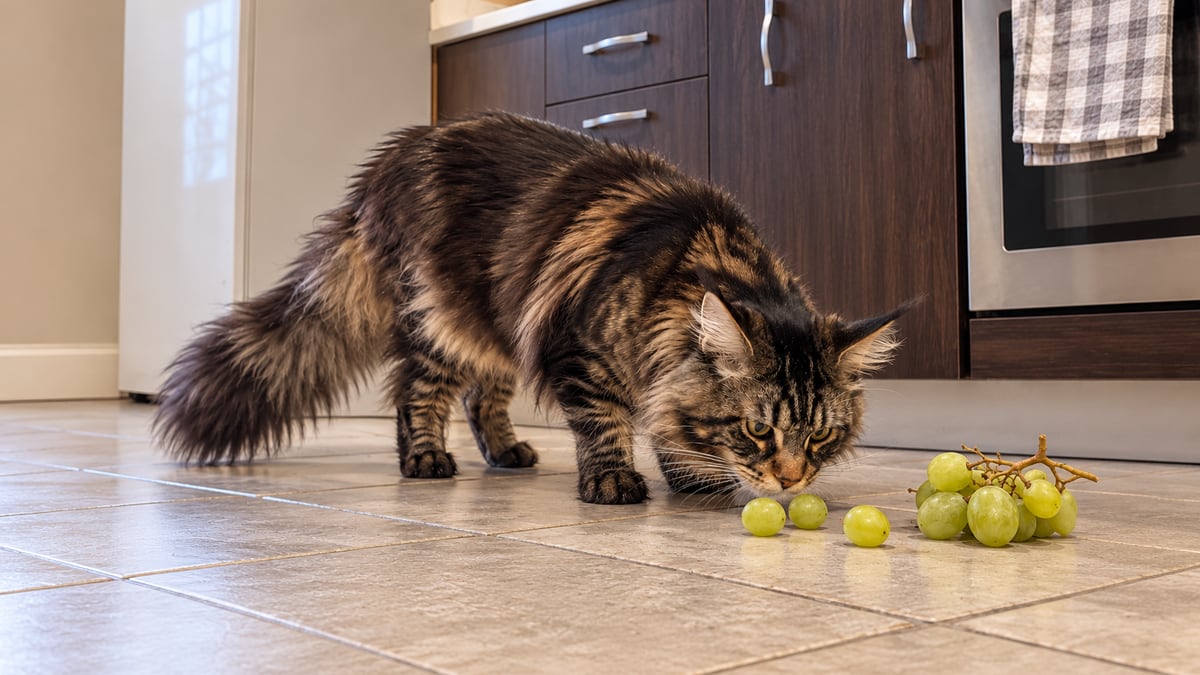
No. Cats Protection says eating grapes, raisins or currants can cause kidney failure in cats, and cats with chronic kidney disease may be at greater risk. Its poisoning guide adds sultanas to the list and says this fruit can also bring on vomiting and diarrhoea.
So a grape that rolls off the table is one to pick up straight away. Cats Protection’s tip: keep the fruit bowl away from your cat.
If your cat has eaten some, call your vet. Cats Protection says to book an urgent appointment or contact your vet for advice as soon as you notice or suspect your cat has eaten food that can harm them.
Can cats eat onions? Is garlic bad for cats?
No to both. Onions, shallots, leeks, garlic and chives belong to a group of plants called alliums, and the vets at PDSA say they are toxic for cats. Onions, including spring onions and shallots, are the most toxic, but garlic, chives and leeks are toxic too, even when cooked or dried.
They upset the gut and damage red blood cells, which results in anaemia. Cats Protection puts it the same way: onion, garlic and the rest of the family, whether fresh, cooked or dried, can be extremely toxic to cats and may lead to anaemia.
What about a little garlic? PDSA says there is no evidence that garlic treats fleas, and it should never be given to cats, even in small amounts. For fleas, use a treatment your vet approves.
Onion and garlic hide in sauces and baby food
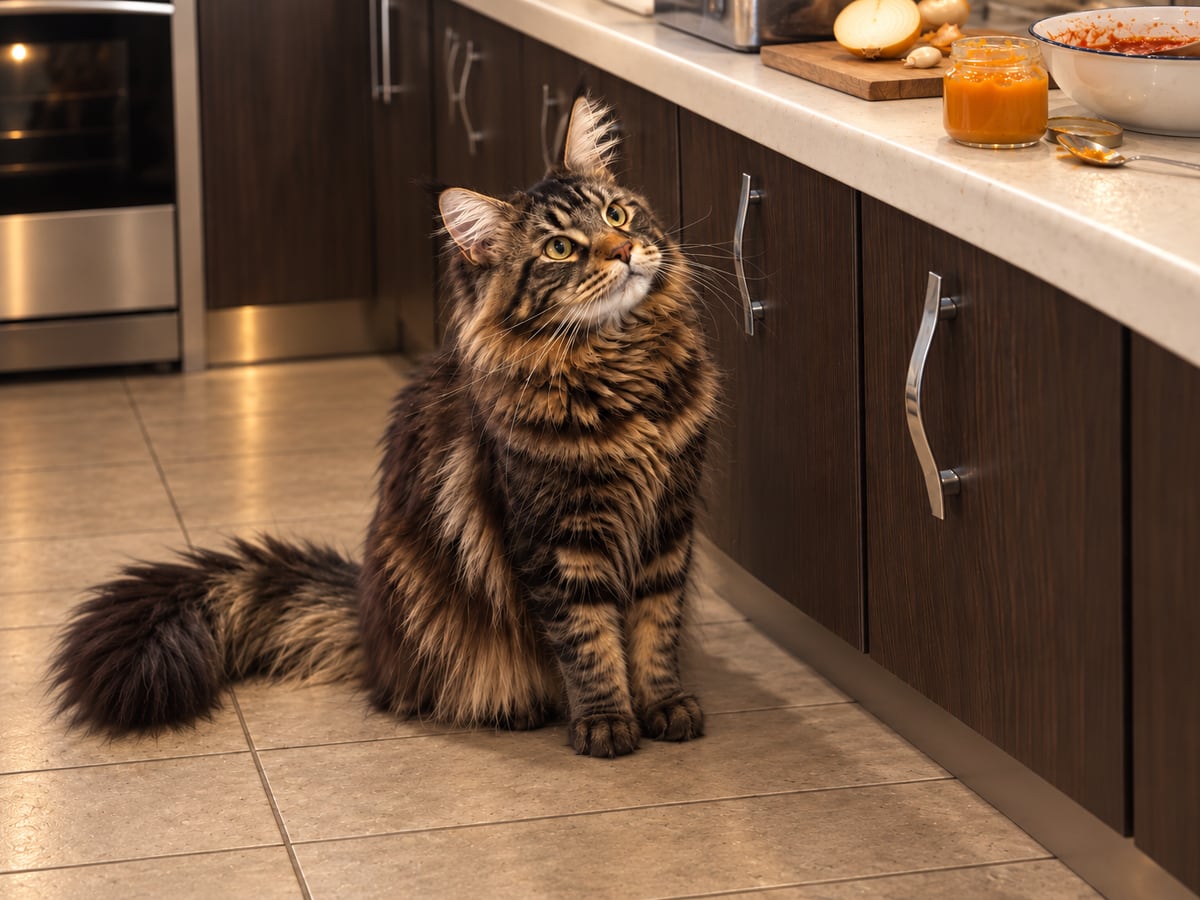
An onion on the chopping board is easy to keep away. PDSA warns that onion and garlic can be found in many pre-made foods like sauces and baby food. So the plate with leftover sauce and the open jar of baby food are the ones to clear: PDSA says to keep dirty plates and jars away from your cat.
The signs can take a while. PDSA says tummy signs often appear 6 to 24 hours after eating alliums, and sometimes take a few days: vomiting, diarrhoea, eating less and tummy pain. Signs of anaemia usually come within one to five days: pale or yellow gums, trouble breathing, weakness and low energy.
Don’t wait for them. PDSA says to contact your vet straight away if you see your cat eating onions, garlic or leeks. With treatment, most cats recover completely.
Can cats drink milk?
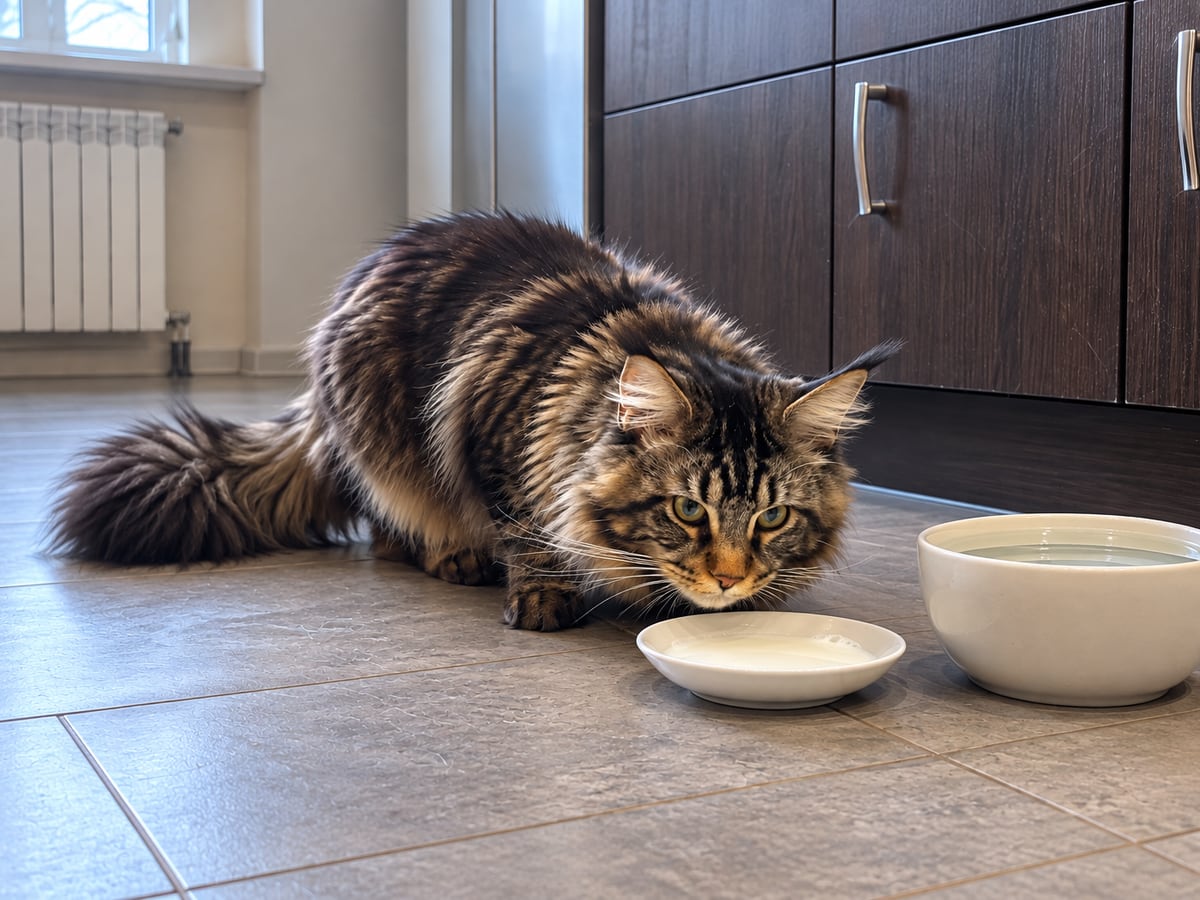
Better not. Cats Protection says most adult cats are lactose intolerant. Lactose is the sugar in milk. Kittens make plenty of lactase, the enzyme that digests it, because they live on their mother’s milk. As cats grow and move to solid food they make less, and many adult cats can no longer digest lactose properly.
The undigested lactose ferments in the gut. About eight to 12 hours after the milk, Cats Protection says, you may see diarrhoea, a gurgling stomach, a bloated tummy, more wind than usual and a cat low in energy. In severe cases, it adds, your cat may need to see a vet. Battersea sums it up: a saucer of milk may give your cat a nasty stomach upset.
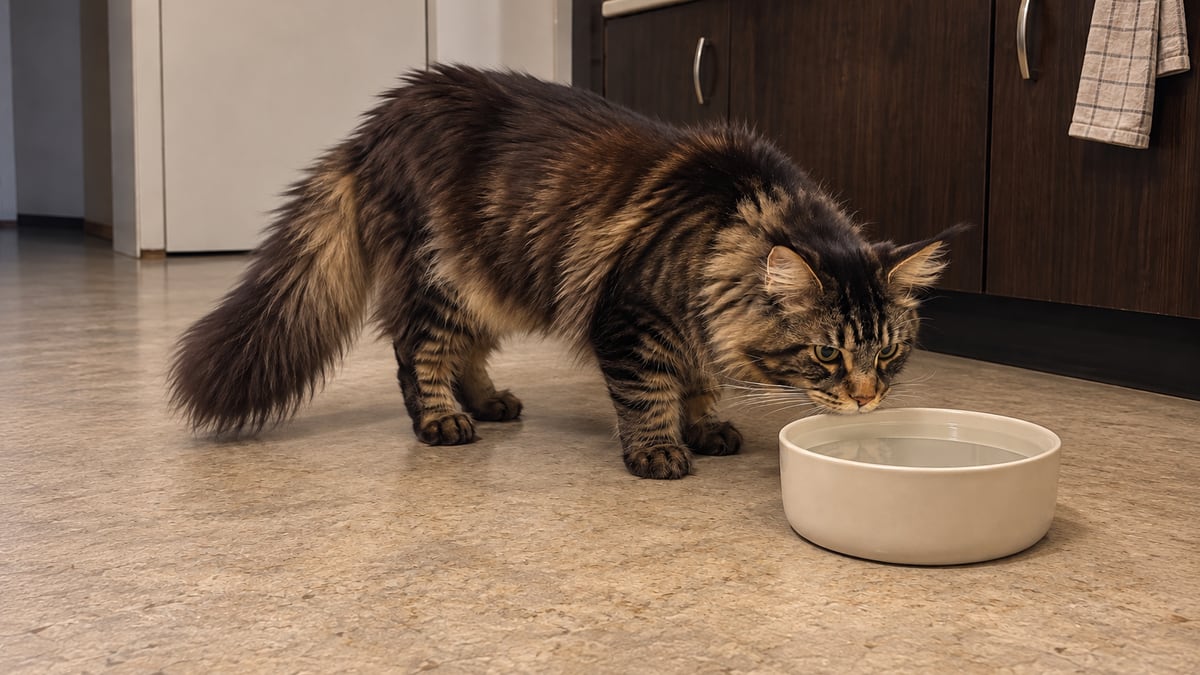
Water is the drink. Cats Protection says the best thing for adult cats to drink is water, and they don’t need anything else to stay healthy. Battersea says to leave down a bowl of fresh water instead, as branded cat milk has no nutritional value. If your cat hardly drinks at all, see our guide on a cat not drinking water.
Chocolate, coffee and anything with caffeine
Chocolate is a complete no-no for cats, Cats Protection says. Just 2 g of chocolate, not even as big as a square, is enough to do serious damage to your cat. The reason is theobromine. It raises the heart rate and makes the body lose fluid, and because cats struggle to break it down, it stays in the blood and quickly reaches dangerous levels.
Darker is worse. PDSA says that, as a general rule, the darker the chocolate, the more theobromine it holds and the more toxic it is, though even chocolate with less cocoa can be toxic if enough is eaten. Cocoa powder is especially toxic. White chocolate has no cocoa solids, but its fat and sugar can still cause a stomach upset.
Battersea says even a small amount of chocolate can cause heart problems, kidney failure or seizures. Coffee and anything with caffeine sit beside it on Cats Protection’s list: all of them hold high levels of substances called methylxanthines, which can be extremely toxic to cats.
Signs usually appear within two to four hours but can take up to 12, PDSA says. They include restlessness and agitation, vomiting, diarrhoea, and drinking and peeing more than usual.
Can cats eat bread dough? Raw dough and alcohol
Raw yeast dough is on Cats Protection’s list for two reasons. It contains some alcohol, and it produces carbon dioxide, so it can expand inside a cat’s stomach and cause a blockage.
Then the alcohol itself. Cats Protection says just a tiny bit can be extremely toxic to your cat. Battersea says it is believed that as little as a tablespoon can be seriously problematic for a cat and cause liver or brain damage.
Nobody pours a cat a drink, but accidents and spills happen, Cats Protection says. The same alcohol, ethanol, is in surgical spirit and hand sanitiser, so keep those out of reach too.
Raw meat, bones, tuna, nuts and avocado
Plain cooked chicken can be part of your cat’s food. Cats Protection says it should be cooked, preferably boiled, with no bones, and counted in the day’s food allowance, because feeding only cooked chicken for a long time can lead to nutritional deficiencies.
Raw is different. Raw meat, fish and eggs may carry harmful bacteria and parasites, and meat sold for people at the supermarket or the butcher’s is meant to be cooked, Cats Protection says. Raw bones raise the risk of choking or a blockage in the stomach.
Tuna: a small amount may not cause harm, but canned tuna made for people shouldn’t be fed regularly. It lacks nutrients cats need and can be high in salt and mercury.
Avocado is high in fat and contains a toxin called persin, which can cause health problems if a cat eats a lot of it. Nuts such as macadamia, almonds and walnuts are high in oils and fats and can make your cat unwell.
What to do if your cat ate something toxic
Act at once, even if you only suspect it. Cats Protection’s steps: take your cat away from the food, call your vet straight away, and take a sample with you if you can. With chocolate, PDSA says to keep the packaging. Your vet may ask you to bring your cat in, or give advice over the phone.
Don’t try to make your cat sick at home. Cats Protection and PDSA both say so, and PDSA explains that the vet can give an injection for it at the practice when it’s needed. Don’t wait for signs either: they can take hours to show.
Tell the vet what your cat ate, how much, when, and how much your cat weighs. That is what PDSA asks you to have ready for chocolate.
The signs of poisoning on Cats Protection’s list include drooling, vomiting, diarrhoea, twitching or fits, confusion or wobbliness, trouble breathing and collapse. Any of them after a raid on the kitchen means calling the vet now. For vomiting on its own, see our guide on a cat throwing up after eating.
Speed matters. PDSA says that with the right treatment most cats who eat chocolate make a full recovery, but in severe cases chocolate poisoning can be fatal if treatment is delayed.
Write it down while it’s fresh: the time, what was eaten and how much, and what you saw in the hours after. Lapka Care is a diary for notes like these, and it puts everything that matters for the vet into one PDF.
How to keep dangerous food out of reach
Most of it comes down to where the food sits. Cats Protection suggests storing harmful foods out of your cat’s reach, covering or hiding leftovers, not feeding table scraps and asking guests not to either.
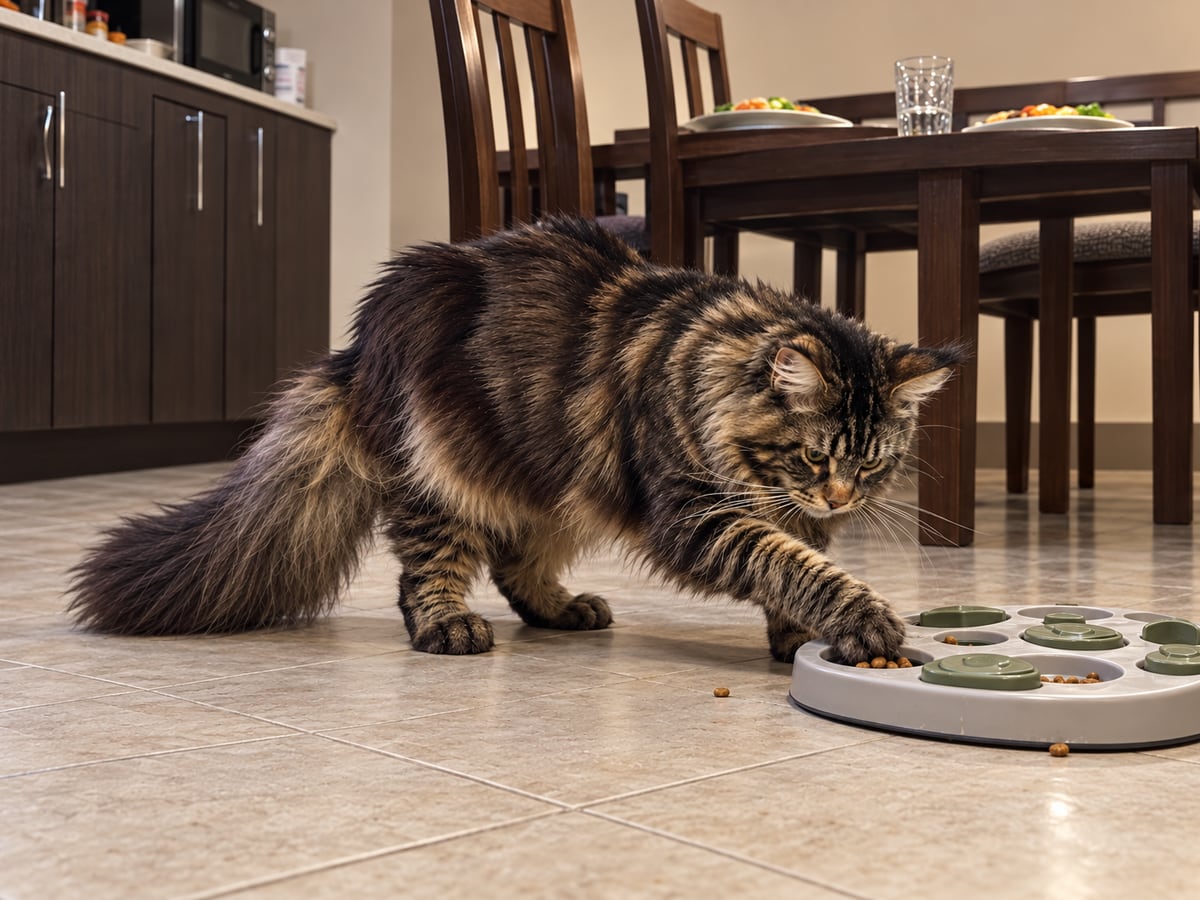
If your cat likes the worktop while you cook, gently move them off. If they beg while you eat, feed them just before your own meal or give them a puzzle feeder.
PDSA adds high or locked cupboards for chocolate, extra care at Easter and Christmas, and keeping your cat away from parcels, since you never know who has sent you a chocolatey treat.
One more, though it isn’t food: lilies. Cats Protection says lilies are the most commonly reported poisoning in cats, and every part of the plant is toxic. Battersea says the pollen causes fatal kidney failure in cats. Brushing past the flower can leave pollen on their fur, and it is swallowed during grooming. Battersea’s advice is not to keep them in the house. If you suspect a lily has poisoned your cat, Cats Protection says to speak to your vet immediately.
A note from the evening the sauce got licked
Sunday, 19:40. Dinner plate on the floor, licked clean. About two spoonfuls of onion and garlic sauce were left on it.
19:45. Called the vet: what, how much, when, and the weight from the last check-up, 5.2 kg. The vet asked us to bring the cat in. Took the jar of sauce along.
Monday, 08:00. Ate half of breakfast, no vomiting overnight. Rang the vet to tell them. Keeping an eye on things for the next few days, as they said.
PDSA says tummy signs from onion and garlic can start 6 to 24 hours later and anaemia within one to five days. A note with times on it tells the vet what changed and when.
Questions people ask
What should I do if my cat ate chocolate?
Call your vet straight away, and don’t wait for signs to appear. PDSA says to keep the packaging and tell the vet the type of chocolate, how much was eaten, your cat’s weight and when it happened. Don’t try to make your cat sick at home.
Can cats eat raw bread dough?
No. Cats Protection says raw yeast dough contains some alcohol and produces carbon dioxide, which can expand in a cat’s stomach and cause a blockage. If your cat has eaten some, call your vet.
Can kittens drink milk?
Only their mother’s milk, Cats Protection says, which is different from cow’s milk. A kitten who can’t feed from their mother can be hand-fed a substitute kitten milk, and your vet can advise you how. Once kittens are fully weaned at six to eight weeks, they only need water.
Is lactose-free milk or cat milk OK for cats?
It won’t upset a lactose-intolerant cat, but Cats Protection still says to avoid it. These milks contain a lot of calories, which could make your cat put on weight, and they lack the nutrients your cat needs. Battersea says branded cat milk has no nutritional value. Water is all your cat needs to drink.
Why do cats like milk if it upsets them?
The fat. Cats Protection says milk, especially whole milk, contains fats cats find tasty, so they may want it even if it upsets their stomach later. Most cats are still lactose intolerant.
Can cats eat cheese?
Cheese is dairy, and Cats Protection says dairy products such as cheese can upset a cat’s stomach. It also says to avoid lactose-free or plant-based cheese, as a lot of them may contain ingredients that could be toxic for cats.
Can cats eat cooked onions?
No. PDSA says cooked onions, shallots, garlic, chives and leeks are all toxic to cats and should be kept out of their reach. That includes onion and garlic in sauces, baby food and other pre-made foods.